
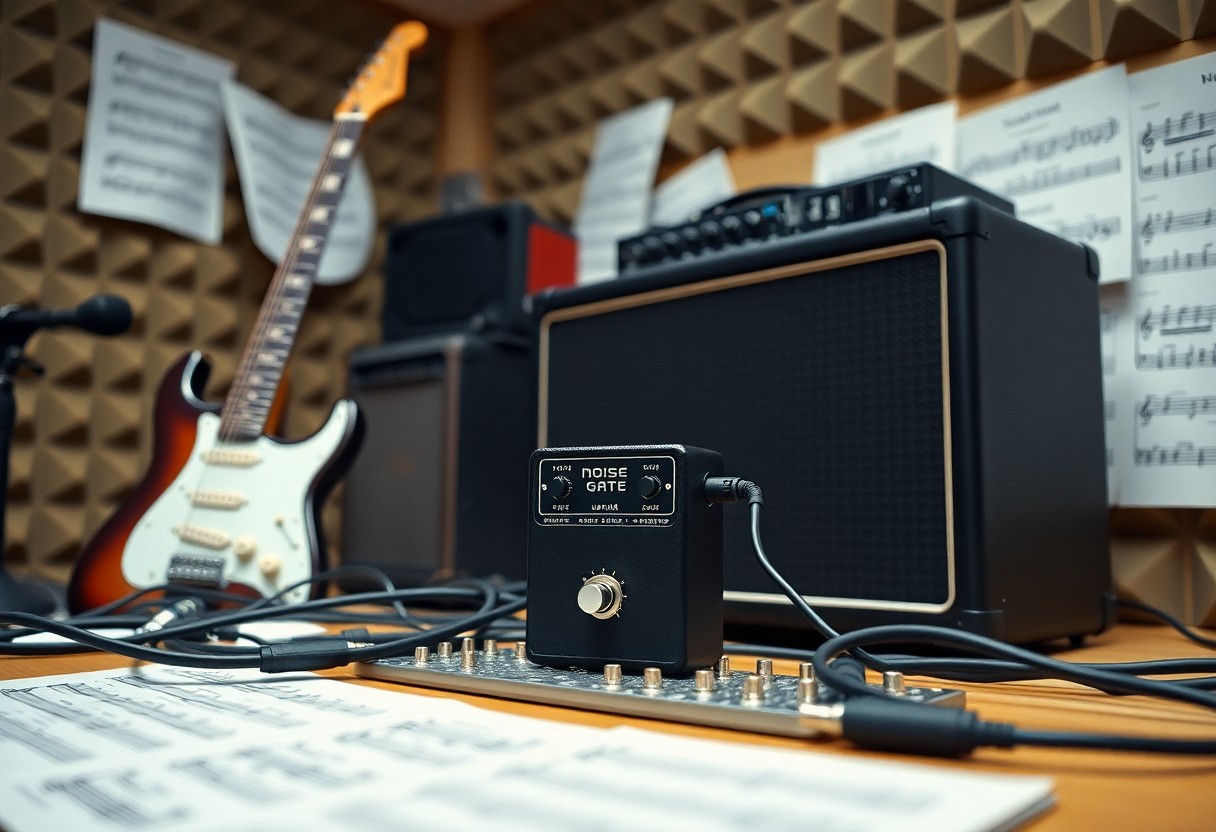

Guitar playing can be significantly enhanced by using a noise gate pedal, which helps eliminate unwanted noise and feedback. By understanding how to properly set up and utilize this pedal, you can achieve a cleaner sound, allowing your playing to shine. This guide will walk you through imperative techniques and settings, empowering you to integrate the noise gate effectively into your rig. With the right approach, you’ll elevate your guitar experience and enjoy a more focused and refined tone.
The Role of a Noise Gate Pedal in Your Setup
A noise gate pedal is an important tool in any guitarist’s setup, primarily designed to manage unwanted sound during performances or recordings. By effectively cutting off signals that fall below a specified threshold, you can maintain a clean tone and focus on your desired sound. This not only enhances the clarity of your playing but also allows for more dynamic control, ensuring that your guitar cuts through the mix without interference from background noise.
Cutting Out Unwanted Noise
Unwanted noise can originate from various sources, such as amplifier hum, pickup buzz, or even the ambient sounds in a live setting. A noise gate pedal actively monitors your guitar signal and silences any hum or hiss when you’re not playing. This allows you to achieve a cleaner tone, especially in high-gain situations where feedback and noise can become prominent. Additionally, you can fine-tune the gate’s threshold to strike the perfect balance between cutting noise and retaining your sound’s natural sustain.
Enhancing Your Tone and Dynamics
Utilizing a noise gate pedal not only cleans up your sound but also amplifies the dynamic range of your playing. By eliminating the noise floor, you can articulate notes more distinctly, allowing your nuances and subtle techniques to shine through. The result is a punchier tone that doesn’t feel masked by unwanted interference, letting your playing feel more expressive and alive.
Focusing on tone and dynamics, setting the noise gate to an optimal threshold can enhance your attack and sustain. For instance, during aggressive playing styles, a quick response from the gate can ensure that only your pronounced notes are heard, adding clarity to intricate riffs. This setup aids in emphasizing clean notes and staccato rhythms while minimizing unwanted artifacts. Ultimately, a noise gate brings out the best in your playing dynamics, allowing for a more professional and polished performance.
Key Features to Look for in a Noise Gate Pedal
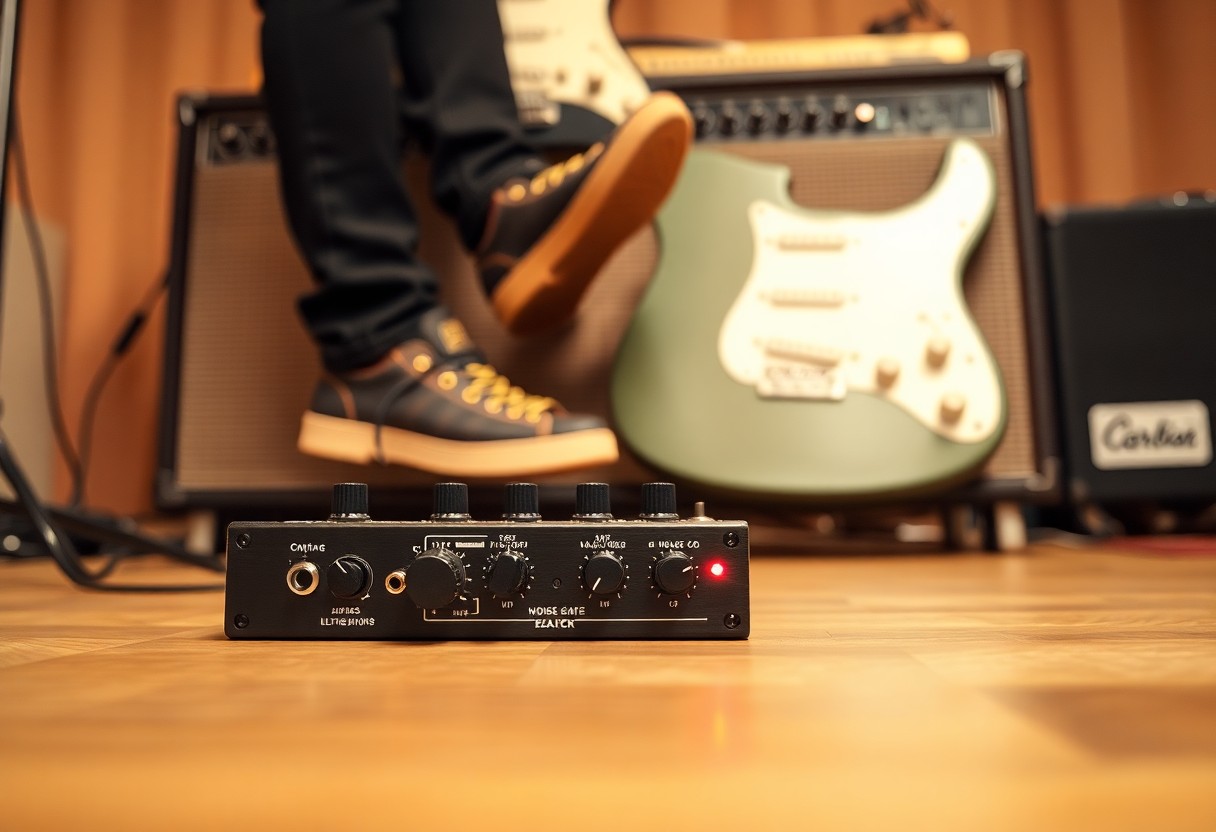
Choosing the right noise gate pedal can significantly impact your guitar’s tone and performance. Look for the following key features:
- Threshold Control
- Attack and Release Settings
- Dry Mix Option
- True Bypass Switching
- LED Indicators
- Compact Design
- High-Quality Sound Processing
Recognizing these features will help you select a pedal that complements your playing style and tone preferences.
Threshold Settings: Finding Your Sweet Spot
Setting the threshold determines when the noise gate engages, allowing you to strike a balance between maintaining tone and cutting out unwanted noise. The ideal setting varies depending on your playing environment and dynamics. Experiment with different thresholds to find where your sound remains clear without unnecessary background noise.
Attack and Release Controls: Tailoring Your Sound
Attack and release controls shape how quickly the gate responds to your playing. A faster attack can make your sound punchier, while a slower one can create a smoother transition. Adjust the release to maintain a natural decay of notes, as letting too much sustain can render the gate ineffective. Experimenting with these settings helps you achieve a more refined tone that suits your style.
Paragraph on Attack and Release Controls:
Adjusting attack and release settings can deeply influence your overall sound. For instance, a rapid attack might suit aggressive playing styles, emphasizing percussive notes. Conversely, a slower release enables notes to breathe, ideal for more melodic approaches. Finding the right combination allows you to enhance dynamics, ensuring each note transitions smoothly and maintains its character. Experiment with these controls to showcase your unique voice through the instrument.

How to Integrate a Noise Gate Pedal into Your Guitar Rig
Positioning in Your Signal Chain
Integrate your noise gate pedal early in the signal chain, ideally right after your guitar and before any distortion or overdrive pedals. This placement captures unwanted noise from your guitar and effects, effectively reducing background hum and hiss before it gets amplified. For example, if you have a pedalboard setup, position the noise gate after your tuner and compressor but ahead of any gain-based effects. This arrangement ensures that the gate activates at the correct moments, contributing to a cleaner overall tone.
Choosing Between Serial and Parallel Routing
Selecting between serial and parallel routing for your noise gate affects your tone and effectiveness. In serial routing, the signal passes through the gate in a linear fashion, providing a more straightforward application. Conversely, parallel routing allows you to blend a processed and unprocessed signal, maintaining some original character without completely cutting off unwanted noise. Each approach has its merits; testing both methods will help you find the right balance for your sound.
In serial routing, the noise gate fully controls your signal, ensuring that any sound below the set threshold is cut off completely. This method suits players looking for thorough noise suppression, especially with high-gain settings. On the other hand, parallel routing lets you maintain dynamics and sustain, as only a portion of the signal goes through the noise gate. You can utilize this to retain the natural tone while achieving noise reduction, making it invaluable for more nuanced playing styles. Experimenting with both configurations in your rig will highlight their unique characteristics and effectiveness in noise management.

Practical Tips for Setting Up Your Noise Gate
Setting up your noise gate requires careful adjustments to optimize its performance in your rig. Start by setting the threshold level, ensuring it effectively reduces background noise without cutting off your guitar’s sustain. You may also want to experiment with the attack and release settings to achieve the desired response. Consider the following tips:
- Use a clean guitar tone for initial adjustments.
- Advance the threshold slowly to find the sweet spot.
- Test different attack and release settings to suit your playing style.
- Pay attention to sustain – avoid loss of musical character.
Knowing the intricacies of your setup will lead to a more refined sound.
Monitoring Your Settings in Real-Time
Having an audio source playing alongside your guitar will help you gauge how well your noise gate is performing. Use a loop pedal or backing track to simulate playing conditions while you fine-tune your settings. This real-time monitoring allows you to hear how the noise gate interacts with your playing dynamics, helping you make necessary adjustments instantly.
Avoiding Common Mistakes During Setup
Setting the threshold too high can lead to cutting out desired notes, while too low may not effectively reduce noise. It’s also easy to overlook the attack and release times, which can dramatically affect your tone. Checking these settings in context with your full rig rather than in isolation ensures a more realistic sound.
Avoiding common mistakes during setup involves regularly revisiting your configuration as you make changes. After adjusting the threshold, listen for undesirable noise levels or cutoffs, varying your attack and release for different styles and situations. Analyze your specific genre needs; what works for heavy distortion may not suit a clean sound. Taking the time to refine these parameters will prevent unwanted interruptions in your playing, ensuring a polished performance.
Exploring Creative Uses for a Noise Gate Pedal
A noise gate pedal can serve as a powerful tool for enhancing your sound in innovative ways. By manipulating the threshold settings and attack/release times, you can achieve unique sonic textures that go beyond mere noise reduction. Experiment with settings during practice sessions to discover unexpected effects, and consider how they can add character to your performance.
Utilizing Noise Gates for Special Effects
Building Unique Soundscapes in Live Performances
In live settings, a noise gate pedal can transform your performance by creating atmospheric layers and textures. Using the gate’s settings strategically lets you define how and when your guitar is heard. For instance, allowing a gradual fade of sound can evoke tension before a climactic moment. This technique not only engages your audience but also adds dynamic shifts that keep the overall performance compelling.
Leveraging the noise gate during live performances involves creativity and timing. For instance, setting your threshold low and experimenting with longer release times can yield ambient soundscapes where notes emerge slowly, building anticipation. This technique can be particularly effective in ballads or cinematic pieces, where emotional impact matters. By alternating between clean and gated sounds in your playing, you can maintain listener interest and highlight different sections of your set, making your performance truly memorable.
Conclusion
To wrap up, using a noise gate pedal effectively enhances your guitar playing by controlling unwanted hum and noise. Ensure you set the threshold correctly to allow your notes to come through while cutting off background sounds. Experiment with attack and release settings to find what suits your style best. Regularly assess your overall tone and make adjustments as needed to achieve clarity and precision in your sound. With practice, you’ll master the use of a noise gate pedal, elevating your performance to new levels.
FAQ
Q: What is a noise gate pedal and how does it work?
A: A noise gate pedal is a device that reduces unwanted noise in your guitar signal. It works by allowing the signal to pass through only when it exceeds a certain threshold. When the guitar is not played or the signal drops below the set level, the noise gate closes, cutting off the sound and eliminating background noise.
Q: How do I set up my noise gate pedal for optimal performance?
A: To set up a noise gate pedal, connect it in your signal chain after your guitar effects but before the amplifier. Adjust the threshold knob to determine the level at which the gate opens and closes. If the gate is too sensitive, it may cut off desired notes; if it’s too high, it may allow noise to pass through. Fine-tune the attack and release settings for your playing style.
Q: Can I use a noise gate pedal for different genres of music?
A: Yes, a noise gate pedal can be used across various genres of music. It is particularly beneficial for high-gain settings in rock and metal where noise is more prevalent. For cleaner tones, adjust the threshold to a lower setting to ensure notes are not accidentally cut off, making it adaptable for softer genres like jazz or blues as well.