


There’s no denying that a well-structured practice routine can significantly enhance your guitar skills. I know how overwhelming it can be to figure out where to start, especially with so many techniques and styles to explore. In this post, I’ll guide you through practical steps to develop a personalized practice routine that suits your goals, keeps you motivated, and ultimately helps you become a more proficient guitarist. Let’s explore the key elements that will shape your practice sessions effectively.
Understanding Your Goals
While developing a practice routine for guitar, it’s crucial to clarify your goals. Knowing what you want to achieve helps shape your approach and keeps you motivated. These goals can range from mastering a specific song to improving your technique or even preparing for a performance. Take some time to reflect on what you genuinely want from your guitar journey, as this will serve as a guiding light throughout your practice sessions.
Setting Short-Term Goals
Any effective practice routine should include short-term goals that you can realistically achieve within days or weeks. These can include mastering a particular chord progression, learning a new scale, or practicing a favorite riff. By focusing on these attainable benchmarks, you not only create a sense of accomplishment but also build your skills incrementally, paving the way for more significant progress.
Defining Long-Term Objectives
With long-term objectives, I encourage you to envision where you want to be in several months or even years. This could involve becoming proficient in a specific genre, writing your own songs, or playing at local venues. Your long-term goals will shape your daily practice and provide direction when you feel overwhelmed. Breaking these objectives into manageable sections also allows for steady development without discouragement.
Also, it’s beneficial to outline a roadmap to reach your long-term objectives. This could involve identifying key milestones, such as completing certain courses, learning specific techniques, or performing in front of an audience. By integrating these milestones into your practice routine, you set a clear path and stay motivated. Tracking your progress over time will not only keep you accountable but also help you adjust your methods and refine your focus as you evolve as a guitarist.
Assessing Your Current Skill Level
Some people may find it challenging to gauge their current skill level on the guitar. To effectively develop a personalized practice routine, it’s crucial to identify where you stand in terms of techniques, styles, and genres. This self-assessment will enable you to set appropriate goals and focus on the areas that need improvement.
Self-Evaluation Techniques
Assessing your abilities involves taking an honest look at your strengths and weaknesses. You can record yourself playing different pieces, analyze your performance, and highlight aspects that require more work. You might also consider using online resources or skill assessment quizzes to help pinpoint your level accurately.
Seeking Feedback
Behind every skilled guitarist is a wealth of constructive criticism from others. Listening to the perspectives of fellow musicians or instructors can provide important insights that you may overlook during self-evaluation.
Even if you play regularly, fresh eyes can catch nuances in your playing that need refinement. I often ask friends or mentors for their take on specific techniques or pieces I’ve been working on. Their feedback can guide my practice sessions, helping me identify specific areas to focus on, making my practice routine more effective and tailored to my growth as a guitarist.
Structuring Your Practice Time
To maximize your progress on the guitar, it’s necessary to structure your practice time effectively. I recommend setting specific time blocks dedicated to practice each week. This not only helps you stay focused but also allows you to measure your improvement over time. By creating a schedule that includes varied activities—such as technique exercises, song practice, and improvisation—you can keep your sessions engaging and balanced. Consistency is key, so find a routine that works with your lifestyle and stick to it as much as possible.
Daily vs. Weekly Routines
On the one hand, daily routines can instill discipline and create a habit that fosters continuous improvement. On the other hand, weekly routines provide flexibility, allowing you to allocate more time for specific areas you want to develop. I find that a combination of both can be effective—small daily practice sessions complemented by longer, focused weekly sessions. This way, you create a well-rounded approach to your guitar development without becoming fatigued or overwhelmed.
Time Management Strategies
Your ability to manage time wisely during practice can significantly enhance your overall learning experience. I suggest setting clear goals for each practice session and breaking them down into smaller tasks. This not only gives you direction but also makes it easier to track progress. Additionally, consider using a timer to stay accountable, dedicating specific increments to different aspects of your practice. This structured approach can keep you motivated and ensure that you’re getting the most out of your practice sessions.
In fact, by implementing these strategies, you can cultivate a practice environment that encourages growth and efficiency. For instance, I often allocate my practice time into distinct phases: warm-up, skill development, repertoire, and improvisation. By demarcating these phases, I optimize my focus and energy throughout the session. This way, you not only stay engaged but also foster a deeper understanding of each facet of guitar playing over time.

Incorporating Different Techniques
After establishing a solid foundation, it’s important to incorporate various playing techniques into your practice routine. This not only enhances your skills but also keeps your sessions engaging. I’ve found that focusing on different techniques, such as fingerpicking and strumming patterns, can elevate your playing. For more strategies, check out 5 Tips to Create an Effective Daily Guitar Practice Routine.
Scales and Exercises
On a regular basis, I practice scales and exercises to build my finger strength and agility. Incorporating major and minor scales into your routine can help you develop muscle memory and improve your overall technique. Set aside specific time blocks to focus on these aspects, and you’ll see significant progress over time.
Song Repertoire
Behind the scenes of any effective practice routine lies a diverse song repertoire. Playing songs that resonate with you makes practice much more enjoyable, and it also helps you learn various techniques in context. Explore different genres and styles to add variety to your routine.
Due to the diversity of styles and techniques found in songs, expanding your repertoire not only keeps your practice sessions fresh but also prepares you for different performance scenarios. By integrating new songs, I can challenge myself with unfamiliar chords and progressions, while also enjoying the music I love. This balance of enjoyment and skill development is key to staying motivated and improving as a guitarist.

Tracking Your Progress
Keep a close eye on your progress by regularly assessing your skills and achievements. I find that documenting my journey helps me understand my strengths and areas that need improvement. I recommend setting aside time at the end of each month to reflect on what I’ve learned and the techniques I’ve mastered, giving me a clearer path forward in my guitar practice.
Keeping a Practice Journal
Behind every successful guitarist is a well-maintained practice journal. I encourage you to document your daily practice sessions, noting what techniques or songs you worked on, how long you practiced, and how you felt during each session. This allows you to identify patterns in your practice habits and adjust your routine as needed.
Milestones and Achievements
Along your musical journey, acknowledging milestones and achievements is vital. I like to celebrate small victories, such as mastering a difficult chord progression or playing through a song without mistakes. These moments not only motivate me but also reinforce my commitment to becoming a better guitarist.
This practice of recognizing milestones can create a positive feedback loop that fuels your enthusiasm for learning. Whether it’s completing a challenging piece or reaching a specific level of proficiency, celebrating these achievements keeps your motivation high. I often find that setting short- and long-term goals helps me track my progress clearly and provides a sense of accomplishment that pushes me to strive for more in my guitar playing.

Overcoming Common Challenges
Now, as you set out to develop your guitar practice routine, it’s normal to face challenges that could hinder your progress. From staying motivated during tough times to overcoming feelings of burnout, acknowledging these hurdles can empower you to find effective solutions. I’ve encountered these difficulties myself, and I can assure you that understanding how to navigate them can keep you committed to your practice and enhance your overall development as a guitarist.
Motivation and Burnout
Above all, staying motivated can be tricky, especially when the initial excitement fades. If you’re feeling drained or unmotivated, it’s important to take a step back and evaluate your goals and expectations. Setting manageable objectives can help you maintain enthusiasm for your practice, allowing you to enjoy the journey instead of leading to burnout.
Staying Engaged with Your Practice
Around your practice, finding ways to keep things fresh and engaging is key to long-term success. Experimenting with different genres, learning new songs, or even collaborating with other musicians can reignite your passion for guitar. Incorporating new elements into your routine helps maintain excitement and fosters a deeper connection to your instrument.
Burnout can creep in when practice feels monotonous or overwhelming. To combat this, I encourage you to mix up your routine regularly. Try exploring different techniques, learning a new song that excites you, or improvising during your session. Keep your practice light and enjoyable by focusing on aspects that genuinely interest you. This way, you’ll not only avoid burnout but also develop a richer and more enjoyable relationship with your guitar.
To wrap up
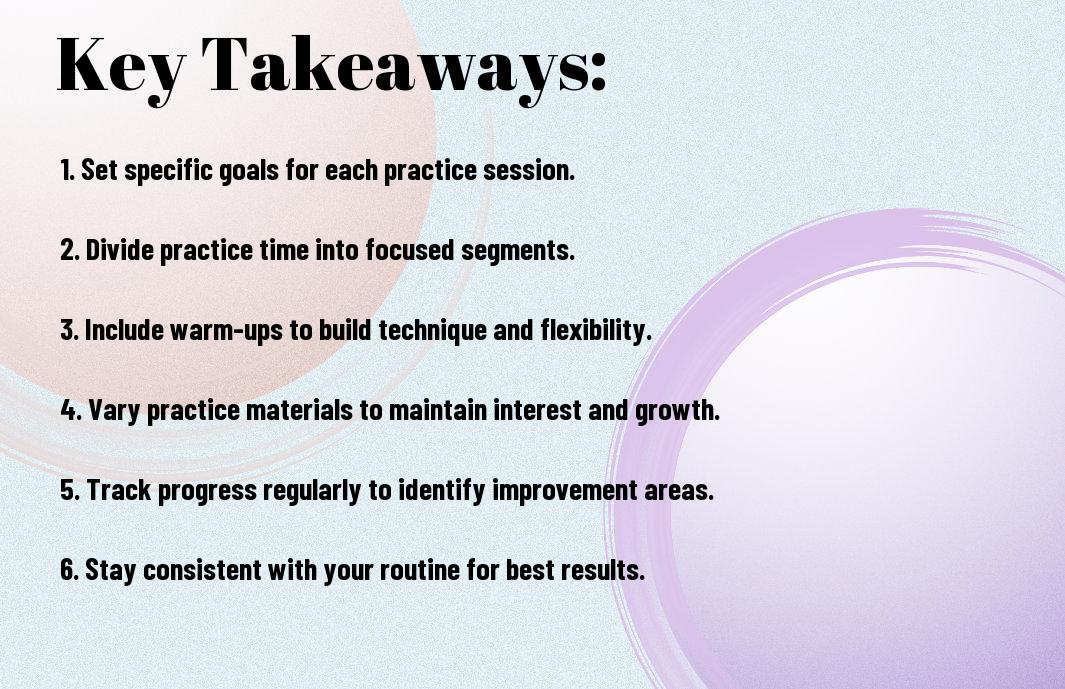
Presently, when I think about developing a practice routine for guitar, I focus on setting clear goals, scheduling regular practice times, and incorporating a mix of techniques and songs that I enjoy. It’s vital to start with a warm-up, followed by targeted practice on skills I want to improve. I also make sure to track my progress, allowing me to adjust my routine as needed. By maintaining consistency and staying flexible, I find that my guitar skills steadily evolve, making the journey enjoyable and rewarding.