
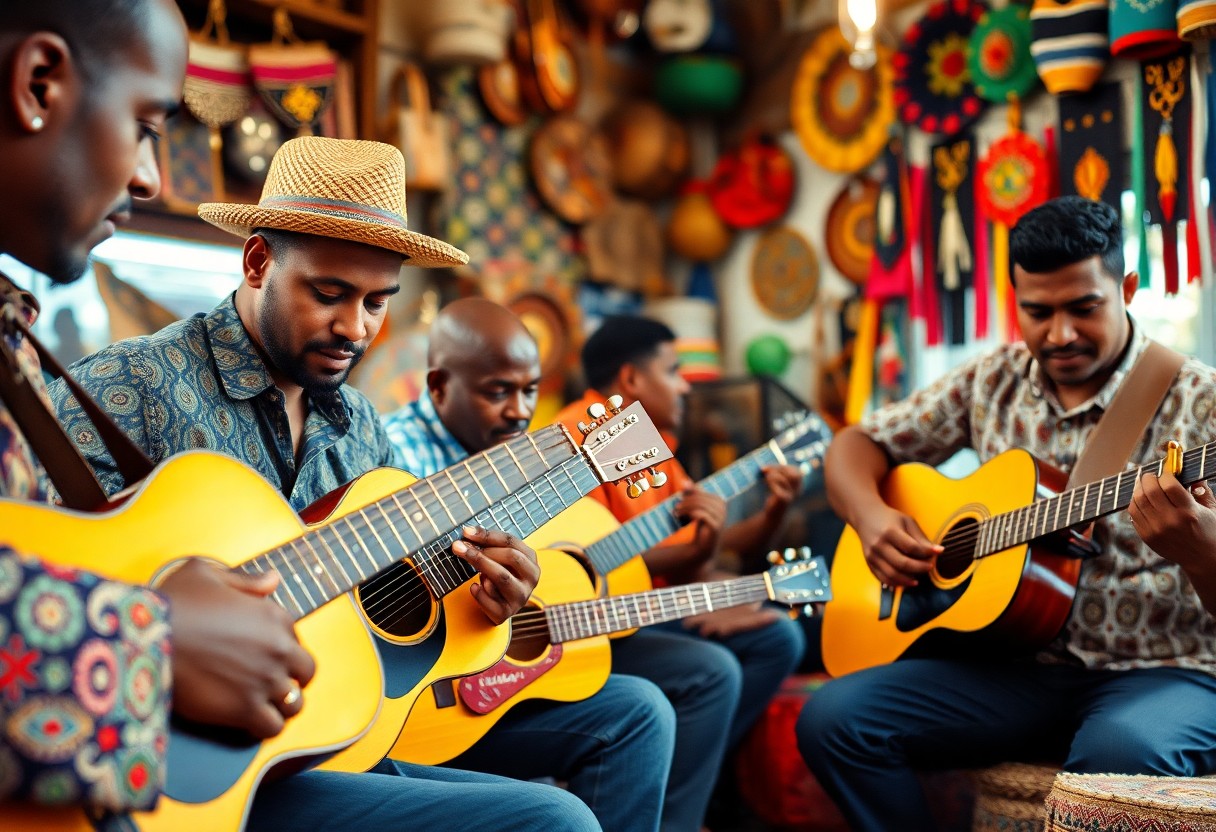

World music has significantly shaped guitar playing across various cultures, enriching your musical palette with diverse rhythms, techniques, and styles. By exploring global genres, from Flamenco to Afrobeat, you can enhance your creativity and technical skills on the guitar. Understanding these influences allows you to incorporate unique elements into your playing, broadening your artistic expression and connecting with a wider audience. Embracing world music not only diversifies your repertoire but also deepens your appreciation for the universal language of music.

The Rhythmic Pulse: How World Music Shapes Guitar Techniques
Your guitar playing is profoundly influenced by the rhythmic traditions of various cultures. Techniques drawn from world music introduce you to unique time signatures, off-beat accents, and syncopation, all of which challenge conventional strumming patterns. Embracing these elements enriches your playing, enabling you to incorporate diverse grooves that enhance musical expression and creativity.
Exploring Diverse Strumming Patterns
The Impact of Polyrhythms on Contemporary Styles
Integrating polyrhythms into your guitar technique can elevate your sound to new heights. Genres like jazz and progressive rock often utilize complex rhythmic structures where multiple contrasting rhythms occur simultaneously. This technique not only challenges your rhythmic sense but also expands your musical vocabulary, allowing you to blend diverse influences and create innovative compositions.
For instance, incorporating a 3 against 4 polyrhythm can enrich a simple chord progression, adding depth and intrigue to your playing. As you experiment with these rhythmic combinations, you discover new ways to express yourself, drawing from the rhythmic complexities found in African drumming or Indian classical music. Embracing polyrhythms broadens your musical landscape, ultimately reflecting a fusion of styles that resonates with contemporary audiences.

Cultural Crossroads: The Fusion of Genres
The blending of various musical traditions has led to innovative fusions that redefine genres. Your guitar playing can draw on an array of styles, from flamenco’s intricate fingerpicking to the intricate rhythms of West African music. This cross-pollination creates new sounds, enabling you to explore the vast landscape of world music while embedding those diverse influences into your playing. Embracing these hybrid styles opens exciting avenues for creativity and expression, enriching your musical vocabulary beyond cultural borders.
The Birth of World Music on the Electric Guitar
The electric guitar became a powerful vehicle for world music’s integration into mainstream culture during the late 20th century. Artists began incorporating traditional scales and techniques from various global music genres, merging them with rock, jazz, and blues. This evolution spawned a unique sonic palette, inviting players like you to experiment with diverse tones and textures, breaking traditional boundaries and creating a whole new genre that resonates across cultures.
Influential Artists Bridging Cultural Gaps
Keys artists like Carlos Santana and Ry Cooder have expertly integrated diverse musical elements, creating a bridge between different cultures. Their work demonstrates how the electric guitar can transcend geographical boundaries. You can draw inspiration from their unique styles, which weave together Latin rhythms, blues, and world percussion. Studying their techniques not only enhances your playing but also deepens your understanding of cultural influences in music, enriching your artistic expression.
Carlos Santana’s fusion of Latin rock with bluesy guitar riffs exemplifies cultural blending, inspiring countless musicians. Ry Cooder’s work in incorporating Afro-Cuban music into traditional American genres showcases how you can leverage varied influences to create something fresh and dynamic. Artists such as these have played pivotal roles in popularizing world music, leading to collaborations that further bridge cultural divides. As you explore their styles, consider how their techniques and approaches resonate with your own guitar journey, allowing you to contribute to this vibrant musical dialogue.
The Role of Scales: Expanding Tonal Palettes
Exploring diverse scales from around the world broadens your tonal palette, enabling unique expressions in your guitar playing. While traditional Western music often revolves around major and minor scales, world music introduces you to myriad alternatives, enriching your soundscape. By delving into scales like the Arabic Hijaz or the Indian Raga, you can enhance emotive storytelling in your compositions, ultimately transforming your musical identity.
Incorporating Global Scales into Guitar Playing
Integrating global scales into your guitar repertoire allows you to tap into a wealth of cultural textures. As you familiarize yourself with modes from different traditions, consider how the unique intervals shape melodies. Playing an exotic scale might inspire a new riff or lyrical idea, inviting you to break free from conventional patterns and elevate your songwriting to new heights.
Diminished and Microtonal Scales in Modern Composition
Diminished and microtonal scales have gained traction in contemporary music, giving you innovative avenues for composition. By utilizing these scales, you can craft unsettling harmonies or unexpected resolutions, pushing the boundaries of your musical language. Their intricate structures often evoke a sense of tension and release, resonating with the fluid nature of modern genres.
Diminished scales are built on alternating whole and half steps, creating a symmetrical pattern often used in jazz and classical music. By incorporating diminished chords, you introduce a rich, suspenseful quality that can enhance your solos. Microtonal scales, used predominantly in Eastern and avant-garde compositions, allow for pitch variations that go beyond standard tuning. This flexibility challenges your ear and expands your expressive capabilities, inviting you to experiment with unconventional sounds. Artists like Jacob Collier and the bands from the avant-garde scene exemplify how such scales can redefine 21st-century music, inspiring you to integrate them into your own compositions for a distinctive edge.

Learning from Global Traditions: Approaches to Mastery
Delving into the various global traditions of guitar playing enhances your mastery by introducing you to a variety of techniques and musical concepts. Employing these diverse approaches, from Indian classical ragas to African fingerstyle, not only inspires creativity but also deepens your understanding of music as a universal language. Each tradition offers unique instructional philosophies and methods, allowing you to draw from a rich tapestry of cultural heritage in your practice.
Traditional Methods vs. Modern Pedagogy
Traditional methods often emphasize oral transmission and communal learning, enabling you to engage deeply with the cultural context of the music. In contrast, modern pedagogy tends to focus on structured lessons and technical proficiency, utilizing technology and standardized curricula. Balancing these approaches allows you to cultivate both a solid technical foundation and a nuanced appreciation for the cultural significance behind various guitar techniques.
Benefits of Cross-Cultural Learning in Technique Development
Cross-cultural learning enriches your technique development by exposing you to diverse playing styles and methodologies. Incorporating elements from various genres enables you to adopt innovative practices that enhance your musical versatility. This experience nurtures adaptability, allowing you to navigate different musical contexts with confidence and creativity.
Engaging with cross-cultural techniques can significantly expand your skill set. For example, integrating aspects of flamenco techniques can enhance your finger dexterity, while adopting African polyrhythms can improve your timing and rhythmic complexity. Such approaches break down the boundaries of your usual practice routine, pushing you to experiment and innovate. Observing how different cultures utilize the guitar fosters a deeper appreciation for both the instrument and music itself, transforming you into a more adaptable and inspired musician.
The Emotional Resonance: Storytelling Through Guitar
Your guitar serves as a vessel for storytelling, deeply rooted in cultural experiences and emotional expression. Each strum and pluck can evoke memories, feelings, and narratives, turning melodies into compelling tales. Influenced by global styles, the emotional range of your guitar playing captures the essence of human experience, resonating with listeners on a personal level. By drawing from various cultural influences, you can enrich your storytelling through music, allowing your guitar to speak the language of emotion.
Conveying Cultural Narratives via Music
The Power of Emotion in Global Styles
Conclusion
Now, as you explore the diverse sounds of world music, you’ll find that it significantly enriches your guitar playing. Each cultural style offers unique techniques, rhythms, and scales that can expand your musical vocabulary and inspire creativity. By integrating these elements into your practice, you enhance your skills and deepen your appreciation for the global musical landscape. This journey not only makes you a more versatile guitarist but also connects you to the richness of human expression through music.
FAQ
Q: How has world music impacted guitar techniques?
A: World music has introduced diverse playing techniques to guitarists, such as fingerpicking styles from African and Asian traditions. These techniques often involve percussive elements and alternate tunings that enhance the expressiveness and versatility of guitar playing.
Q: What genres have been most influenced by world music on the guitar?
A: Genres like Flamenco, Bossa Nova, and Reggae have heavily incorporated elements of world music into their guitar styles. Each genre uses specific rhythms, scales, and techniques, broadening the emotional and technical range of guitar music.
Q: How can guitarists incorporate world music influences into their playing?
A: Guitarists can incorporate world music influences by exploring different scales and rhythms unique to various cultures. They can experiment with learning traditional songs, adapting them to their style, and embracing techniques like tapping or harmonics from specific world music traditions.