
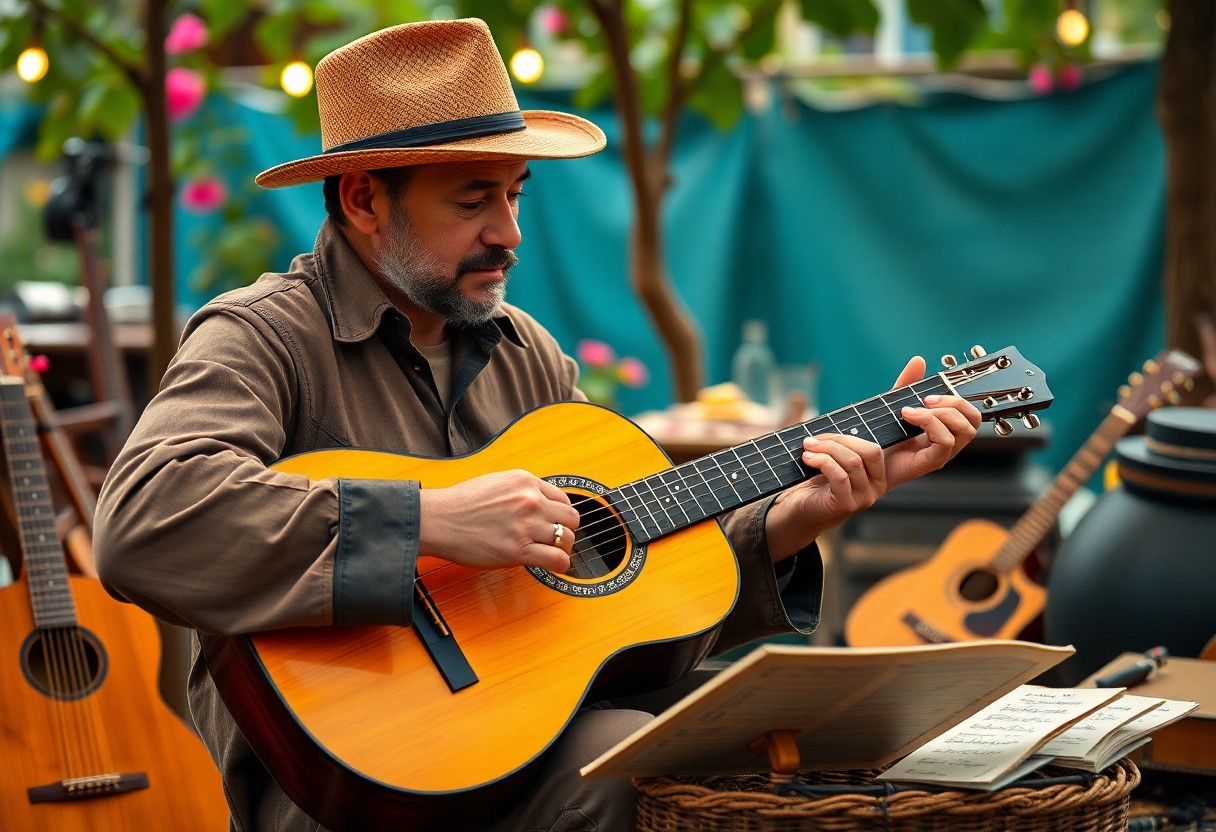

Most aspiring guitarists may not realize how deeply folk music has shaped guitar techniques and styles. By exploring traditional melodies and storytelling lyrics, you can enhance your playing and understand the cultural significance behind each chord. This genre often emphasizes expressive strumming patterns and fingerpicking styles that not only improve your skill but also connect you to a rich musical heritage. Uncovering the influence of folk music can bring a fresh perspective to your guitar journey, making it an enriching experience for both you and your audience.
Key Takeaways:
- Folk music often emphasizes storytelling and melodic simplicity, which influences guitar playing techniques like fingerpicking and strumming patterns that complement lyrical content.
- Many folk guitarists adopt open tunings and capos, allowing for easier access to particular chords and facilitating the unique sound characteristic of folk music.
- The communal aspect of folk music encourages collaborative playing styles, leading to the development of varied interpretations and improvisations among guitarists.
The Cultural Roots of Folk Music and Its Guitar Techniques
The Historical Evolution of Folk Music
The lineage of folk music traces back centuries, weaving through various cultures and societies. Emerging from oral traditions, it was often passed down through generations, evolving with every performance. In the United States, influences from African rhythms, European ballads, and indigenous sounds came together, shaping a diverse musical landscape. As folk music evolved, so did the techniques you find on the guitar, reflecting the stories and experiences of the people who played them, whether in rural villages or bustling urban settings.
Regional Variances in Folk Guitar Styles
Your exploration of folk guitar techniques reveals a fascinating tapestry of styles influenced by geography, culture, and history. Each region has developed its own unique sound and playing method. For instance, Appalachian folk features a fingerpicking style that emphasizes melody and harmony, while the folk traditions of the American Southwest might highlight rhythmic strumming patterns often paired with lyrics that tell vivid stories. The differences in techniques illustrate how deeply rooted cultural backgrounds shape the music you hear.
In the Southern United States, for example, you might encounter the distinctive “bottleneck” slide guitar technique used in Delta blues, while Celtic influences in the Northeast spawn a lively use of flatpicking and alternate tunings. Folk musicians in regions like Mexico and Central America incorporate traditional rhythms and scales, resulting in a rich blend of acoustic sound. These variances create a diverse sonic palette, allowing you to appreciate the intricate connection between place, culture, and the art of guitar playing in folk music.
Iconic Folk Guitarists Who Shaped the Genre
Legendary Influences: From Woody Guthrie to Joan Baez
Woody Guthrie and Joan Baez are monumental figures in folk music history, each leaving an indelible mark on guitar playing and songwriting. Guthrie‘s storytelling prowess and social activism resonated through songs like “This Land is Your Land,” which combined a simple yet effective fingerpicking style that remains influential today. Baez, with her powerful voice and emotive performances, brought traditional folk music to wider audiences in the 1960s. Their legacies of engaging with sociopolitical themes through accessible guitar work continue to inspire generations of musicians.
Contemporary Voices: The New Folk Movement
Emerging in the early 21st century, artists like Sufjan Stevens and The Tallest Man on Earth have breathed new life into folk music, representing a blend of tradition and innovation. Their use of intricate guitar techniques and unique vocal styles emphasizes storytelling while incorporating modern influences. This new generation of folk musicians embraces a DIY ethos, fostering a sense of community and connection with fans through intimate performances and thought-provoking lyrics that capture contemporary experiences.
In the landscape of the new folk movement, the blending of sounds and techniques from various genres has become commonplace. For example, Sufjan Stevens’ symphonic arrangements paired with acoustic instrumentation showcase a bold divergence from traditional folk roots. Similarly, artists like Gregory Alan Isakov seamlessly weave elements of indie music into their folk narratives, expanding the genre’s reach and resonance. As these contemporary voices cultivate their distinct identities, they build upon the foundational work of their predecessors, ensuring that the essence of folk music evolves while maintaining a connection to its rich heritage.
The Harmonies and Progressions that Define Folk Music
Common Chord Structures in Folk Songs
Many folk songs rely on simple and repetitive chord structures, typically built around the I, IV, and V chords of a key. For instance, you might find a classic progression like G-C-D or A-D-E. These basic patterns create a sense of familiarity and warmth, allowing for emotional storytelling—a hallmark of folk music. You can hear these structures echo through the works of artists such as Bob Dylan and Peter, Paul and Mary, making them accessible for amateur musicians and powerful for seasoned players alike.
The Role of Modal Tunings in Folk Guitar Playing
Modal tunings play a significant role in shaping the sound of folk guitar, providing a distinct character to your playing. Altering standard tuning can create rich, open harmonies and facilitate unique chord voicings. For instance, using DADGAD tuning opens up a world of possibilities, allowing for fluid fingerpicking patterns and sonorous drone notes, transporting listeners to the heart of traditional folk. It’s through these modal tunings that you experience the tradition’s lore, where every strum echoes the past while inviting new interpretations.
Exploring modal tunings like DADGAD or open G can revolutionize your folk guitar technique. These tunings allow you to shape familiar chords into something fresh and evocative. With DADGAD, you can produce haunting melodies and resonant bass lines simultaneously, mimicking the sounds of traditional folk instruments. Think about how artists such as Nic Jones and Bert Jansch have employed these tunings to weave intricate stories through their music. Adopting modal tunings invites a more profound connection with your audience, enriching the storytelling experience central to folk music.
The Interplay of Lyrics and Melody in Folk Guitar
Storytelling Through Music: The Connection Between Words and Strings
Folk guitar serves as a canvas for profound storytelling, where the lyrics intertwine with melody to relay rich narratives. Each chord progression you play amplifies the emotional weight of the words, often making the listener feel each line deeply. As you strum, the music gives voice to personal stories grounded in truth, tradition, and culture, echoing universal experiences that resonate with audiences across generations.
How Folk Melodies Enhance Lyric Delivery
The melodies in folk music aren’t just a backdrop; they are vital vehicles for your lyrics, enhancing their overall impact. Utilitarian yet expressive, folk melodies often adopt simple, repetitive patterns that allow the words to shine through. This combination makes it easier for listeners to engage with the story you’re telling, often inviting them to join in the experience. Furthermore, consider how songs like Bob Dylan’s “Blowin’ in the Wind” utilize melody to make complex themes accessible and memorable.
The interaction between the melody and lyrics in folk music elevates your storytelling efforts. A carefully chosen melody amplifies emotional themes, creating resonance that lingers in the minds of your listeners. For instance, the gentle strumming patterns found in traditional folk songs allow for evocative imagery to take center stage. This results in a deep personal connection—your audience can visualize the scenes and emotions as they engage with the song, enhancing not only their understanding but also their enjoyment of your performance. Folk melodies allow your lyrics to breathe, creating a shared moment that’s both intimate and reflective.
Regional Techniques and Their Impact on Guitar Playing
The Fingerpicking Styles of Different Cultures
Regional variations of fingerpicking have enriched guitar techniques worldwide. You’ll find that American folk music often employs a style referred to as “Travis picking,” which features alternating bass lines combined with melody plucking. In contrast, you might explore the intricate fingerpicking patterns of Spanish flamenco, where rapid thumbwork and percussive taps dominate. Each technique not only reflects its culture but also offers unique melodic possibilities, revealing just how many ways creativity can express itself through strings.
The Rhythm and Strumming Patterns Unique to Folk Traditions
Folk music teems with distinct rhythm and strumming patterns that shape its sound. Engaging with these patterns allows you to tap into the heart of different cultures. For instance, the “one-drop” rhythm often found in Caribbean folk forms creates a relaxed, syncopated feel, while Celtic music typically showcases a driving, lively strum that propels the melody forward. By learning these various approaches, you’re not just playing music; you’re embodying the spirit and history of the people who created it.
The rhythm and strumming patterns across folk traditions are as diverse as the cultures they stem from. You might find that traditional African folk music utilizes a polyrhythmic approach, layering different beats to create a rich tapestry of sound, inviting your audience to move with the tempo. In contrast, Native American music often features steady, repetitive strums that evoke a sense of spiritual connection. By understanding and incorporating these rhythms into your guitar playing, you can transform simple chords into profound expressions, allowing you to connect more deeply with the roots of folk music.
Learning from Tradition: How Folk Music Informs Modern Guitar Techniques
Bridging Generations: Passing Down Knowledge through Song
Folk music thrives on the tradition of oral history, with songs often passed down through generations, each time evolving with the voices that carry them. When you engage with these songs, whether through campfire gatherings or family reunions, you connect not only with the music but with the stories and techniques that define your cultural heritage. The melodies and rhythms that once echoed in rural communities now resonate in your playing, allowing you to contribute to an ever-evolving tale.
Integrating Folk Techniques into Contemporary Playing Styles
Modern guitarists are increasingly incorporating folk techniques into their repertoire, breathing fresh life into both traditional and contemporary songs. Techniques such as clawhammer picking and flatpicking have found their way into genres ranging from indie rock to pop, enriching your playing with new textures and dynamics. The rhythmic strumming patterns and melodic embellishments unique to folk styles can enhance your musical expression, offering you a broader palette from which to draw.
Exploring folk techniques opens up your playing to unique rhythmic patterns and textural nuances. For instance, the use of alternating bass lines common in folk fingerstyle can transform a simple chord progression into a rich and engaging arrangement, instantly capturing the listener’s attention. By incorporating hammer-ons and pull-offs, often found in traditional folk, you can create a more fluid sound that connects the song’s melodic story while maintaining the energy of modern styles. As you dive deeper into these techniques, your guitar becomes not just an instrument, but a bridge that connects the past with the present, inviting your audience to join in the shared experience of music.
The Resurgence of Folk Music in Today’s Musical Landscape
The Fusion of Folk with Modern Genres
The blending of folk music with modern genres creates a vibrant tapestry that appeals to diverse audiences. Artists like Mumford & Sons and The Lumineers showcase how traditional folk elements intertwine with indie rock and pop, creating catchy melodies enriched with storytelling. This fusion can lead to innovative guitar techniques that merge fingerpicking with electric sounds, enriching your playing style while keeping the essence of folk alive.
Folk Music’s Role in Social and Political Movements
Folk music has historically been a vehicle for social change and political expression. Artists like
During significant political moments, folk music has evoked a sense of unity and resistance. For example, the
To wrap up
Presently, understanding the influence of folk music on your guitar playing can enhance your musical journey. By incorporating traditional folk techniques and styles, you enrich your repertoire while connecting with the cultural stories behind the music. Embracing different fingerpicking patterns, rhythms, and narratives not only refines your skills but also allows you to develop a unique voice as a guitarist. As you explore these elements, you’ll find that folk music not only inspires your playing but also deepens your appreciation for the diverse world of music.
FAQ
Q: How does folk music influence guitar techniques?
A: Folk music introduces guitar players to various techniques that are integral to the genre. Techniques like fingerpicking, flatpicking, and alternating bass lines are commonly used in folk music. These techniques encourage guitarists to develop a more intricate and melodic style of playing, often focusing on storytelling through their music. Additionally, folk music often emphasizes the use of open tunings, allowing for a broader range of tones and richer harmonics.
Q: What are some common folk music genres that impact guitar playing?
A: Various folk music genres have had a significant impact on guitar playing. For example, American folk, bluegrass, Celtic, and Delta blues all provide unique stylistic elements that can enhance a guitarist’s repertoire. American folk often features narrative lyrics paired with simple chord progressions, while bluegrass emphasizes fast picking and improvisation. Celtic music introduces intricate melodic lines and unique tuning variations, whereas Delta blues focuses on expressive slide guitar techniques and deep emotional expression.
Q: Can traditional folk songs be adapted for modern guitar styles?
A: Yes, traditional folk songs can be adapted for modern guitar styles quite effectively. Many contemporary artists rework classic folk tunes using modern genres such as rock, pop, and country. This adaptation often includes altering the original melodies or harmonies, adding rhythmic variations, and incorporating electric guitar, which allows for a fresh interpretation of timeless pieces. This fusion not only keeps the songs alive but also introduces them to new audiences.
Q: What is the role of improvisation in folk music guitar playing?
A: Improvisation plays a significant role in folk music guitar playing, allowing musicians to express their individuality and creativity. Folk guitarists often take liberties with song structures, melodies, and solos, creating unique interpretations of traditional pieces. This spontaneity encourages players to develop their musical voice, resulting in performances that reflect personal experiences and emotions. Whether through embellishments, chord substitutions, or extended solos, improvisation adds depth and excitement to folk music guitaristry.
Q: How can learning folk music benefit guitarists of all skill levels?
A: Learning folk music can be highly beneficial for guitarists of all skill levels as it promotes a strong foundation in vital skills. Beginners can master basic chords and strumming patterns through simple folk songs, while intermediate and advanced players can investigate into more complex fingerpicking patterns and improvisational techniques. Additionally, folk music encourages collaboration and community, allowing guitarists to play with others, learn from one another, and participate in jam sessions, fostering growth and creating lasting musical connections.