
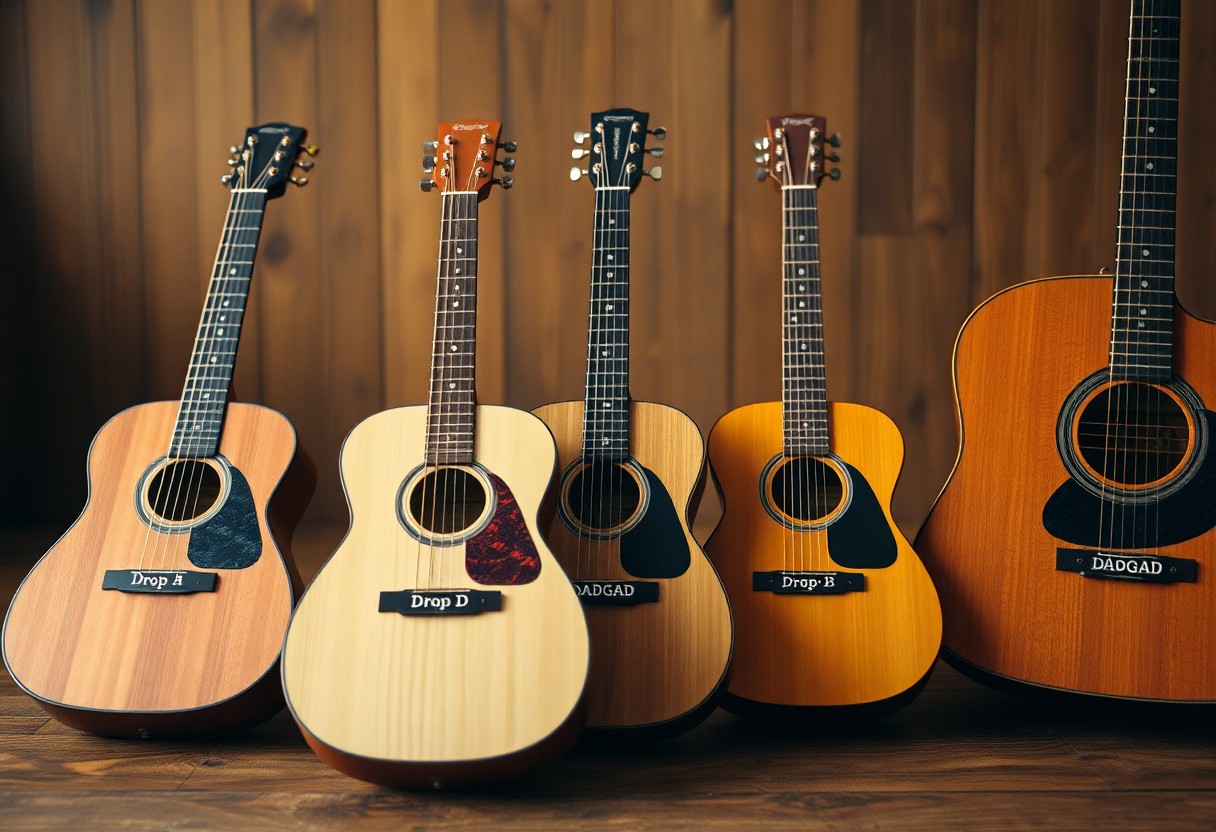

Play an array of captivating sounds by exploring various guitar tunings! In this guide, you’ll learn how to adjust your strings to achieve unique tonal qualities and expand your musical creativity. Whether you’re looking to channel your inner folk artist or examine the realms of rock or jazz, different tunings can enhance your playing style and open up new chords and melodies. Let’s examine the world of guitar tunings and discover how you can transform your guitar experience.
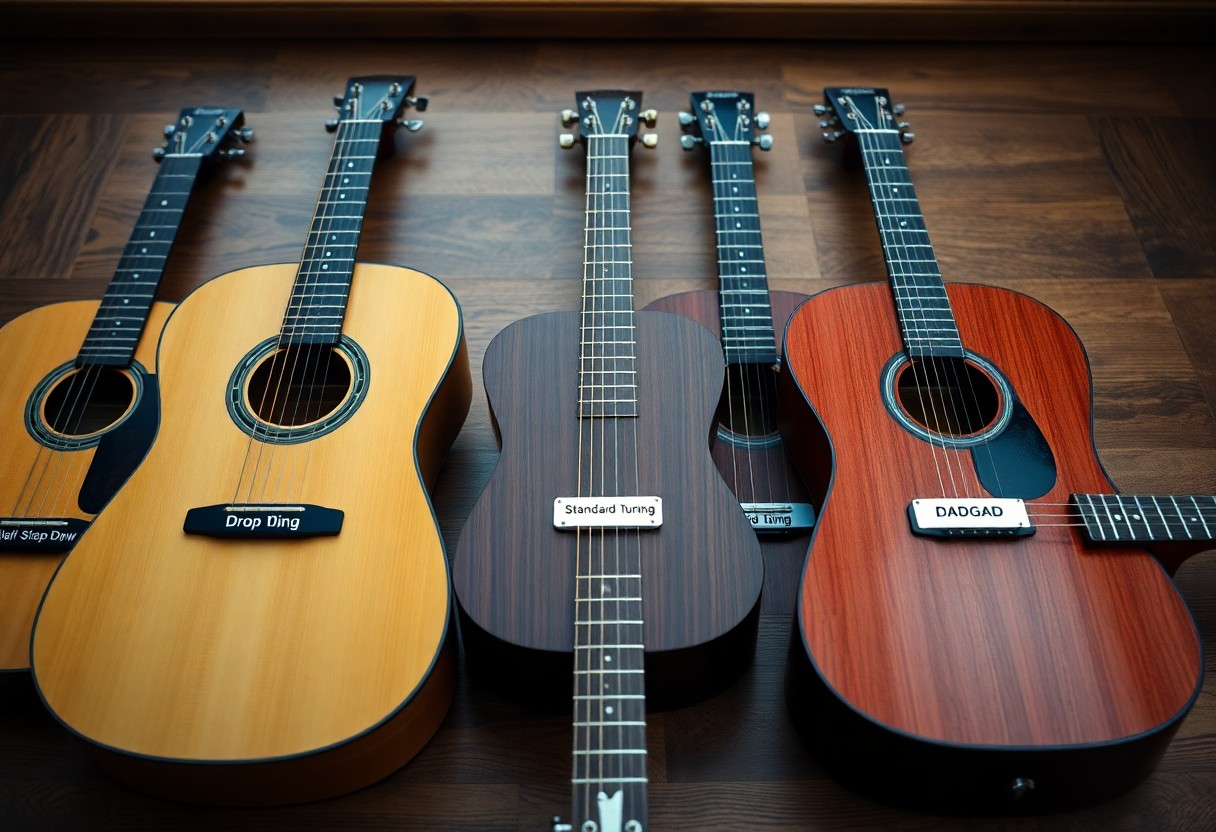
Understanding Guitar Tunings
The world of guitar tunings can greatly influence your playing style and the sound you create. Each tuning offers a unique character, enabling you to explore various musical genres and techniques. By understanding these tunings, you can expand your creativity and expressiveness on the guitar.
Standard Tuning
On the guitar, standard tuning is the most common setup, where the strings are tuned to E-A-D-G-B-e from the lowest to the highest string. This familiar configuration allows you to play a wide range of songs and facilitates learning basic chords and scales. Most instructional materials and songs will use standard tuning, making it a solid foundation for your guitar journey.
Alternative Tunings Overview
Across the music spectrum, alternative tunings offer fresh harmonic possibilities and unique sonic textures. These tunings change the pitch of one or more strings, allowing you to explore different chord voicings and melodies that standard tuning might not easily provide. By delving into alternative tunings, you can discover new sounds and enrich your playing experience.
Due to the diversity of alternative tunings, such as Drop D, Open G, and DADGAD, you can engage with various musical styles, from folk to rock to experimental music. Each tuning can change how the guitar feels in your hands, encouraging new fingerings and strumming patterns. By experimenting with these tunings, you’ll unlock a deeper understanding of the instrument and cultivate a distinctive sound in your playing.
Common Alternative Tunings
Even experienced guitarists often explore alternative tunings to unlock new sounds and approaches to playing. These tunings can inspire creativity, broaden your musical palate, and make familiar chords and melodies feel fresh. Here, you’ll learn about some of the most popular alternative tunings that can enhance your guitar-playing experience.
Drop D Tuning
Tuning your guitar to Drop D involves lowering the sixth string, or low E string, one whole step down to D. This technique allows you to play power chords more easily, as you can utilize just one finger to fret multiple strings simultaneously. With Drop D tuning, you can investigate various genres, from rock to folk, enhancing your versatility on the guitar.
Open G Tuning
Tuning your guitar to Open G means tuning your strings to the notes DGDGBD. This tuning creates a rich, resonant sound ideal for slide guitar work and is commonly used in blues, rock, and folk music. Open G allows you to play complex chords with simple finger placements, giving you creative freedom to explore different tones.
In addition, Open G tuning provides you with the unique ability to play traditional fingerstyle patterns and blues riffs effortlessly. You can explore new chord voicings and melodies that may not be as easily accessible in standard tuning. This tuning also opens the door for experimentation with slide guitar, allowing you to embrace a sound rich in emotion and expression.
How to Change Your Tuning
Some guitarists find changing tunings to be an effortless part of their playing. Begin by loosening your strings to avoid any undue tension, which can lead to string breakage. Next, you can either use an electronic tuner or tune your guitar by ear. After getting accustomed to different tunings, you will discover just how transformative they can be for your sound and creativity.
Using a Tuner
Around your guitar playing journey, utilizing a tuner can be your best ally. Clip-on or pedal tuners provide accurate feedback, ensuring your strings are tuned to the desired pitch. Simply follow the instructions and pluck each string, adjusting until the tuner indicates you are in tune. This method can save time and allow you to focus on playing.
Tuning by Ear
Below is an approach that hones your musical listening skills: tuning by ear. This method allows you to develop a strong sense of pitch, which can improve your overall musicianship.
A reliable way to tune by ear is to start with a reference note, often the low E string from another instrument or even a tuning fork. Once you have your reference, you can tune the remaining strings to match specific intervals, such as perfect fourths or fifths. As you practice tuning by ear, you will start to recognize pitches more easily and improve your ability to play in various tunings, enhancing both your skills and confidence as a guitarist.

Playing Techniques for Different Tunings
Many guitarists find that exploring alternate tunings opens up new sonic possibilities and enhances their playing techniques. Each tuning can offer distinct ways to approach chords, melodies, and fingerpicking styles. By adapting your techniques to suit different tunings, you can create unique sounds and textures in your music. Understanding how to modify your playing can significantly enhance your skills and broaden your musical palette.
Chord Progressions
Playing in different tunings can transform familiar chord progressions into something fresh and exciting. By adjusting your finger positioning according to the specific tuning, you can uncover new voicings and combinations that may inspire your songwriting. Experimenting with various tunings allows you to create progressions that convey different emotional nuances and add depth to your compositions.
Fingerpicking Styles
Between standard tuning and alternate tunings, fingerpicking styles can change dramatically. Each tuning invites you to explore unique patterns and techniques, allowing for a fresh approach to your playing. You’ll discover that the strings resonate differently depending on the tuning, impacting your fingerpicking dynamics and rhythm.
Also, as you try different fingerpicking patterns across various tunings, you’ll notice how certain styles can highlight the character of each specific tuning. For instance, in open tunings, you might find it easier to incorporate harmonics and percussive elements, while drop D tuning allows for driving bass lines that complement intricate melodies. Embracing these variations in your fingerpicking will expand your overall guitar technique and inspire creative exploration.

Songs That Feature Alternative Tunings
Keep exploring the rich world of music by discovering songs that utilize alternative tunings. Many iconic tracks take advantage of unique tunings to create distinct sounds and atmospheres. By playing these songs, you can improve your skills while experiencing the diverse possibilities that different tunings offer. With a little practice, you’ll soon find yourself enjoying a new layer of depth in your guitar playing.
Examples and Analysis
Songs like “Blackbird” by The Beatles and “Dear Prudence” by the same band make effective use of alternative tunings, showcasing the creative potential of the guitar. By analyzing these tracks, you can see how different tunings can influence melody and harmony. As you play along, pay attention to the way the tunings affect the overall feel and technical aspects of the song, allowing you to absorb a wealth of musical knowledge.
Learning Resources
An abundance of learning resources is available for those interested in mastering alternative tunings. Online tutorials, sheet music, and interactive platforms can help you understand the intricacies of each tuning. Whether you’re a beginner or an experienced player, you’ll find materials tailored to various skill levels, enabling you to enhance your playing consistently.
With countless video lessons, articles, and guitar communities at your disposal, you can easily immerse yourself in the world of alternative tunings. Websites like YouTube host an array of instructional content, making it easier for you to visualize techniques and applications. Joining forums and social media groups dedicated to guitar can also provide tips and support while you experiment with new tunings, paving the way for your growth as a musician.
Tips for Practicing in Different Tunings
Despite the challenges that different tunings present, you can enhance your practice routine with a few strategies:
- Choose one tuning at a time to focus on for consistency.
- Utilize a tuner app to quickly adjust your guitar.
- Incorporate familiar songs to relate to the new tuning.
- Record your practice to track progress and identify areas for improvement.
Recognizing how each tuning influences finger positioning and chords will help you adapt more swiftly.
Frequency of Practice
On a regular basis, dedicate specific practice sessions solely to each tuning you are exploring. This focused approach ensures that you can build muscle memory and become familiar with the distinct sound and techniques associated with that particular tuning. Consider incorporating short, frequent sessions to maximize retention and understanding.
Experimentation and Improvisation
Tunings provide a unique canvas for experimentation and improvisation. By shifting to different tunings, you unlock new sonic possibilities and creative pathways in your playing.
This is an excellent opportunity to break free from traditional chord shapes and explore your musical instincts. Allow yourself to play freely, creating riffs or melodies that resonate with the nuances of the new tuning. Jamming with other musicians or recording your sessions can encourage spontaneity, leading to fresh ideas and deeper exploration of your musical style. Embrace this journey to unlock the full potential of your guitar playing.
Summing up
Ultimately, exploring different guitar tunings can expand your musical creativity and help you discover new sounds. By experimenting with various tunings and understanding how to adjust your playing style, you can enhance your skills and adapt to the songs you love. If you need guidance on how to tune a guitar for a particular song (different than the standard tuning), check out this helpful resource How to tune a guitar for a particular song (different than the …. Embrace the adventure of tuning and let your creativity flow!
FAQ
Q: What are some common alternate tunings for the guitar?
A: There are several popular alternate tunings that guitarists utilize to achieve different sounds and facilitate playing different styles of music. Some common tunings include:
- Drop D (D A D G B e): This tuning lowers the lowest string to D, allowing for easy power chords and a heavier sound.
- Open G (D G D G B D): This tuning creates a beautiful open chord sound, often used in folk and blues music.
- Open D (D A D F# A D): Similar to open G, this tuning provides a rich harmonic structure that’s excellent for slide guitar.
- CGDAE (C Tuning): This tuning is popular among fingerstyle guitarists, providing a different tonal palette.
Q: How do I change to a different tuning without disrupting my playing?
A: Transitioning to a different tuning can be seamless with a few steps:
- Learn the new tuning: Familiarize yourself with the notes of each string in the alternate tuning before you start playing. This will help you quickly identify finger positions.
- Start simple: Begin with basic chords and scales to feel comfortable. Use familiar songs in the new tuning to ease into the transition.
- Tune your guitar properly: Make sure your guitar is accurately tuned to the new setting. Utilize a tuner for precision to avoid frustration while playing.
Q: Can I use my existing chord shapes in alternate tunings?
A: Yes, you can often apply existing chord shapes in alternate tunings, but they may sound different from their standard tuning counterparts. Here’s how to adapt:
- Reinterpreting chords: Some familiar shapes may yield different chord voicings due to the altered pitch of the strings. Experiment to discover new sounds.
- Learning new shapes: While you can use existing shapes, it can also be beneficial to learn new chord positions specific to the alternate tuning to expand your palette.
- Exploring dissonance and resonance: Different tunings allow for an exploration of unique soundscapes. Embrace the unexpected results from traditional shapes and enjoy the creative process.