


Over the years, using a capo has become an vital technique for guitar players looking to expand their musical versatility. This simple tool allows you to change the pitch of your guitar without altering your finger positioning, making it easier to play along with different songs or to match the vocal range of a singer. In this guide, you will learn how to effectively use a capo, explore various placements, and understand how it can transform your guitar-playing experience.
Understanding the Capo
Your exploration of playing guitar with a capo begins with understanding this versatile tool. A capo allows you to change the key of your guitar without retuning it, enabling you to play songs in different keys effortlessly. By clamping down on the strings, the capo effectively shortens the vibrating length, making it easier to play songs that might be challenging in their original key. With a capo, you can enhance your singing and make your practice sessions more enjoyable.
What is a Capo?
On a fundamental level, a capo is a device you attach to the neck of your guitar that raises the pitch of the strings. By clamping down on specific frets, it allows you to play chords and notes in different keys. This tool is particularly useful for guitarists who want to play along with singers or other instruments without changing their usual chord shapes.
Types of Capos
Against the backdrop of various playing styles, you will find several types of capos designed for different needs. Here’s a breakdown of some common types:
| Type of Capo | Description |
|---|---|
| Spring-Loaded Capo | Easy to use, it clips on with spring tension. |
| Trigger Capo | A lever design allows for quick and precise placement. |
| Screw Capo | It provides adjustable tension for a secure grip. |
| Shubb Capo | Specially designed to avoid tuning issues. |
| Partial Capo | Only covers specific strings for unique tunings. |
- Each capo type caters to specific playing techniques and preferences.
- The variety allows you to choose the best fit for your style.
But knowing the types of capos is just the beginning; understanding their unique features can greatly influence your playing experience. Each design offers distinct advantages that can affect how you play and sound.
| Feature | Benefits |
|---|---|
| Ease of Use | Some capos are quicker to attach and detach, saving you time. |
| String Pressure | Different designs offer variable pressure, which can impact tone. |
| Cost | Prices can vary significantly, allowing you to find one within budget. |
| Material | Capos are made from various materials, affecting durability and weight. |
| Portability | Some models are more compact, making them easy to carry. |
- Choosing the right capo for you will enhance your overall playing experience.
- The options are vast, so explore different styles to find what suits you best.

Benefits of Using a Capo
Even experienced guitar players can benefit from using a capo. It allows you to seamlessly shift the key of your songs without altering the finger placements for chords, enabling you to explore creative interpretations and access a wider range of vocal pitches. This accessory can make your playing more versatile and enjoyable, as it opens doors to new sounds and styles that may have seemed out of reach.
Enhancing Playability
Behind every great rendition is an understanding of playability, and a capo simplifies the complexity of chord transitions. By placing the capo on different frets, you can play familiar open chords in new keys, minimizing finger stretches and making it easier to focus on rhythm and technique.
Expanding Musical Range
Any time you use a capo, you’re broadening your musical possibilities. By shifting the key, you enable your guitar to resonate in ways that can make familiar songs feel fresh and new. This technique not only allows for greater vocal flexibility, but also encourages you to experiment with different styles and arrangements.
At its core, expanding your musical range with a capo means you can explore various genres and tonal qualities without the need for advanced theory. Whether you’re looking to play in a lower or higher key that matches your vocal preference or experimenting with different voicings and sounds, the capo becomes a powerful tool in your arsenal. It’s a simple piece of equipment that can make a significant difference in how you express yourself creatively.
How to Place a Capo Correctly
If you want to ensure that your capo enhances your playing, it’s important to place it properly on the fretboard. The right placement will help you achieve a clean sound and maintain the intonation of your guitar. Position the capo firmly against the fret wire, as close to it as possible without touching, and make sure it’s level across all strings for optimal performance.
Positioning on the Fretboard
At each fret of the guitar, you have the opportunity to raise the pitch of your strings. The closer the capo is to the fret wire, the better your guitar will resonate, providing a clear tone. Avoid placing it too far back towards the nut, as this can lead to muted or buzzing notes.
Common Mistakes to Avoid
Beside improper placement, there are a few other common mistakes that can hinder your performance with a capo. Make sure to use the correct capo for your guitar type and maintain pressure to avoid slippage.
Common errors include placing the capo too far from the fret wire, which can result in unwanted buzzing or muted notes. Additionally, ensure the capo is not pressing too hard, as this can cause intonation issues. Lastly, don’t forget to check the tuning after placing the capo, since it might slightly alter the pitch. Keeping these tips in mind will elevate your playing experience and improve your sound quality.

Chord Transposition with a Capo
Now that you have a basic understanding of how to use a capo, you can easily transpose chords to match your vocal range or the key of your choice. A capo allows you to play in various keys while using the same chord shapes, simplifying the process of playing songs you love. By placing the capo on different frets, you can raise the pitch of your chords without altering your finger positioning, making it accessible for beginners and experienced players alike.
Basic Chord Shapes
Chord shapes are the foundational elements of guitar playing, and when using a capo, you can maintain familiar shapes while changing the song’s key. For instance, using open chord shapes like G, C, D, and Em will remain unchanged, allowing you to express your musicality while adjusting the pitch. This adaptability is especially beneficial for beginners, as it makes navigating different songs smoother.
Transposing Popular Songs
Across many genres, you’ll find popular songs that can be easily transposed using a capo, giving you more flexibility in your performance. By placing the capo on the appropriate fret, you can raise the key without needing to learn new chord shapes, making it a breeze to adapt songs for your vocal range or style.
In fact, many hit songs, such as “Wonderwall” by Oasis or “I Will Follow You Into the Dark” by Death Cab for Cutie, utilize simple chord shapes that become accessible through the use of a capo. By familiarizing yourself with common fingerings and experimenting with capo placements, you can quickly discover new keys and enhance your playing repertoire. This method not only makes it easier to perform but also helps you explore different tonal colors in the music you create.
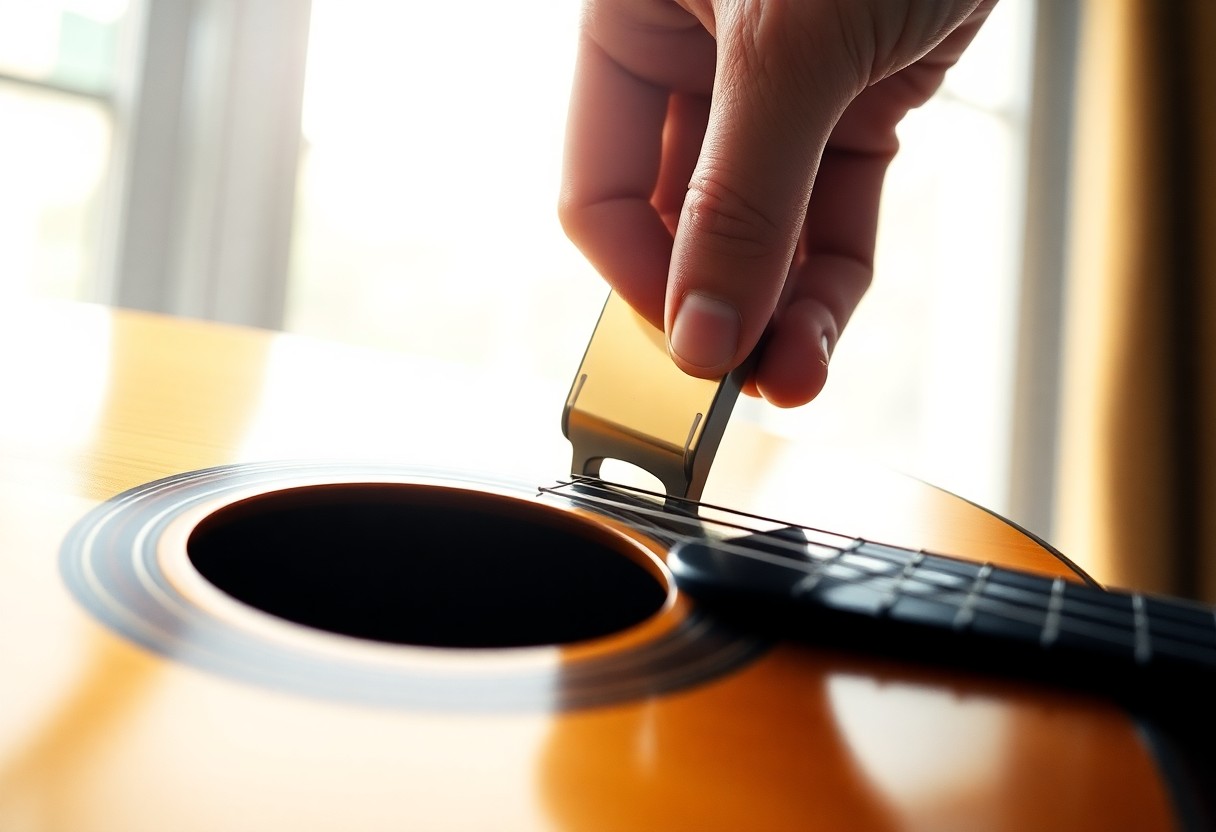
Techniques for Playing with a Capo
Many guitarists find that using a capo can enhance their playing technique and open up new sound possibilities. By shifting the pitch of your guitar’s strings, a capo allows you to explore different chord voicings and adapt songs to your vocal range. Experimenting with finger positioning and strumming styles can help you fully utilize the dynamic capabilities of your instrument while playing with a capo.
Strumming Patterns
Below are a few creative strumming patterns you can try when using a capo. Start with a simple down-up strumming pattern that matches the tempo of the song. As you gain confidence, incorporate syncopation and percussive elements to add texture. Don’t hesitate to vary your intensity and speed, as this will help emphasize different parts of the song. The capo makes it easier to transition between keys, so feel free to experiment with how it influences your strumming patterns.
Fingerpicking Approaches
Playing with a capo opens up new possibilities for fingerpicking arrangements that can enhance the melodic quality of a song. By changing the key, you can create unique textures that fit the mood you want to convey.
Considering various fingerpicking techniques, utilize your capo to clearly define melodies and harmonies. Try combining thumb and finger patterns, focusing on the bass notes with your thumb while your fingers pluck the higher strings. This method can bring out the nuances in your music. Adjust the capo’s position to explore different keys and fingerpicking patterns, allowing your creativity to flow and helping you develop a personal playing style that resonates with you.
Frequently Asked Questions
Keep your queries in check as you examine into how to play guitar with a capo! This chapter addresses your most pressing questions and concerns, helping you understand not just the mechanics of using a capo but also the nuances that come with it. Whether you need clarity on fret placement, chord changes, or song adaptations, you’ll find the answers here.
Common Concerns
Above all, many players worry about how a capo affects their sound and chord shapes. It’s vital to understand that using a capo can actually enhance your music by allowing you to play in different keys while keeping familiar chord shapes. Don’t let concerns deter you from experimenting!
Tips from Experienced Players
By incorporating insights from seasoned guitarists, you can maximize your experience with a capo. Here are some tips to help you navigate your playing:
- Experiment with different capo placements to discover unique sounds.
- Practice transitioning between chords with the capo to build fluidity.
- Listen to your favorite songs that utilize a capo to inspire your playing.
Recognizing these expert suggestions can elevate your guitar skills and infuse creativity into your music.
Also, tapping into the experiences of veteran players can provide you with valuable techniques to improve your playing style further. Consider these additional insights:
- Use a high-quality capo to avoid tuning issues.
- Try playing along with recordings to adjust to different key challenges.
- Join a community of fellow guitarists for support and inspiration.
Recognizing these practices can lead to a richer and more enjoyable musical journey with your guitar.
To wrap up
Summing up, using a capo can significantly enhance your guitar playing by allowing you to explore different keys while maintaining open chord shapes. It’s a versatile tool that can enrich your sound and make playing more enjoyable. To get started, simply place the capo on the desired fret, play your favorite chords, and enjoy the new tonal possibilities. For a clear understanding of how to effectively use a capo, check out this How To Use a Capo – A Step-by-Step Guide. Dive in and experiment—you’ll be amazed at the variety it brings to your music!
FAQ
Q: What is a capo and why would I use one when playing guitar?
A: A capo is a device that clamps down on the strings of a guitar at a particular fret, allowing you to change the key of the music without having to transpose chords. This can be particularly useful for singers who may want to sing in a higher or lower key without changing the chord shapes they’re comfortable using. It enables players to maintain the original voicing of the chords while adjusting the pitch, making it easier to match their vocal range.
Q: How do I properly place a capo on the guitar?
A: To place a capo correctly, position it just behind the fret (the metal part on the neck of the guitar) rather than directly on the fret. Make sure it’s applied evenly across all strings to avoid muting any notes. Gently press down on the capo and adjust it if necessary to ensure that all strings ring clearly without buzzing. Testing each string after applying the capo ensures it is positioned correctly before you start playing.
Q: Can I still use fingerpicking or strumming techniques with a capo on?
A: Absolutely! A capo does not hinder your ability to use fingerpicking or strumming techniques. In fact, it can enhance them by allowing you to experiment with different voicings and resonances. You can still use the same picking patterns or strumming styles that you would without a capo, all while changing the key of the song. Many styles work well with a capo, so feel free to explore and find what sounds best for your playing!