


Techniques for improving your right-hand picking can elevate your guitar playing to new heights. In this post, I’ll share some effective strategies that have personally transformed my picking skills and helped me achieve greater precision and speed. Whether you are a beginner or looking to refine your existing abilities, these tips will guide you in developing a more fluid and controlled picking style. Let’s investigate how you can enhance your right-hand technique and make your playing more dynamic.
Understanding Right-Hand Picking
For any musician, mastering right-hand picking is important for achieving fluidity and expression in your playing. This technique encompasses various styles, from classical fingerpicking to aggressive flat-picking in rock and bluegrass. By focusing on developing your right-hand skills, you will not only enhance your overall performance but also gain greater control over your sound and dynamics.
Importance of Technique
With a solid right-hand picking technique, you can play more efficiently, allowing your left hand to focus on fretting and chord changes. A well-developed picking style will also improve your musicality and articulation, enabling you to convey emotions through your music. Investing time in refining your technique pays off by enhancing your overall abilities and expanding your repertoire.
Common Mistakes
By neglecting proper technique, you may develop habits that hinder your progress and complicate your playing. Many players struggle with tension in their hands or inconsistent picking patterns, leading to a lack of fluidity and precision. Identifying and addressing these mistakes can help you achieve a more natural and effective picking technique.
Indeed, it’s easy to fall into bad habits when developing your right-hand technique. Many musicians tend to grip the pick too tightly, which can create unnecessary tension and fatigue. Additionally, inconsistent pick angles or erratic picking patterns can disrupt your rhythm and timing. It’s important to regularly assess your technique and practice mindful exercises to eliminate these common pitfalls. Taking the time to refine these aspects will greatly enhance your ability to play with clarity and ease.
Fundamental Techniques
If you want to improve your right-hand picking technique, mastering basic techniques is necessary. Start by practicing consistent picking strokes and focusing on hand synchronization. This means ensuring your picking hand is efficiently coordinating with your fretting hand, allowing for smoother transitions between notes. Consistently applying these foundational techniques will help you build a solid picking foundation over time.
Pick Hold Variations
Along your journey to developing a better picking technique, exploring pick hold variations can significantly impact your approach. By experimenting with different grip styles, such as using more of the pick’s edge or adjusting the tightness of your grip, you may find a position that feels more comfortable and allows for greater versatility in your playing.
Angle and Positioning
Between the different facets of your picking technique, the angle and positioning of your pick play a significant role in tone and efficiency. Ensuring your pick is angled correctly against the strings can influence your attack, volume, and clarity of notes. Aim for a relaxed position where your hand is slightly elevated, allowing the pick to glide smoothly over the strings while reducing unwanted noise.
Further exploration of the angle and positioning can lead to noticeable improvements in your playing. Try adjusting the tilt of your pick relative to the strings; a sharper angle can produce a brighter sound, while a flatter angle might yield a softer tone. Pay attention to how these variations affect your playing dynamics and comfort level, and make adjustments as necessary to find what works best for you.

Exercises for Improvement
All musicians know that consistent practice is key to mastering right-hand picking techniques. To enhance your proficiency, I recommend dedicating time to specific exercises that target both accuracy and speed. By incorporating a variety of drills into your daily practice routine, you can reinforce muscle memory and improve overall picking technique.
Basic Patterns
With basic patterns, I advise starting with simple exercises that focus on alternate picking. These patterns can include sequences of open strings or scales. Practice these at a slow tempo, gradually increasing your speed while maintaining clarity. This exercise will strengthen your hand coordination and provide a solid foundation for more complex patterns.
Speed and Accuracy Drills
At this stage, incorporating speed and accuracy drills can significantly refine your picking technique. Use a metronome to establish a steady rhythm. Begin at a comfortable speed and focus on precision. As you grow more comfortable, increase the tempo gradually. This approach ensures that you remain in control while developing your speed.
Even as you push your limits with speed drills, it’s vital to prioritize precision. I suggest exercising with simple riffs or scales while consciously aiming for accurate note articulation. Consider using backing tracks or play-along tools to simulate real performances. This not only enhances timing but also provides a musical context for your drills. By focusing on both speed and accuracy, I assure you that your right-hand picking technique will show remarkable improvement.

Incorporating Dynamics
Unlike merely executing notes, incorporating dynamics into your right-hand picking technique can elevate your playing to new artistic heights. By varying the volume and intensity of your notes, you convey emotion and enhance the overall expression of your music. This will help you create a more engaging performance, making it important to assess how your picking technique can support dynamic variations.
Volume Control
Control your picking intensity by adjusting the pressure and speed of your strokes. Experiment with lighter or firmer picks to see how these choices affect the volume of your notes. Understanding volume control not only influences the sound but also allows you to craft a more captivating musical narrative.
Articulation Techniques
On the other hand, articulation techniques help define the clarity and character of each note you play. By utilizing techniques like palm muting, staccato, and legato, you can add depth to your phrasing and make your picking more expressive.
And as you incorporate articulation techniques, focus on the way you connect or separate your notes. Using staccato can create a sharp, punchy effect, while legato gives a smoother, more fluid sound. These techniques are important for adding texture to your playing and help you communicate your musical ideas more effectively.
Building Consistency
Your right-hand picking technique will flourish through consistent practice. Establishing a routine helps you develop muscle memory and increases your overall control. Aim for daily sessions, even if they’re short, to reinforce what you’ve learned. Focus on maintaining the same posture and grip every time you pick up your instrument. Over time, this consistency will lead to improvement and a more fluid playing style.
Practice Regimens
With a structured practice regimen, you can target specific aspects of your picking technique. I recommend breaking your practice into focused segments, dedicating time to warm-ups, exercises, and songs that challenge your picking abilities. Include metronome practice to enhance your timing and rhythm while ensuring you gradually increase speed as your technique solidifies.
Self-Monitoring Methods
For effective improvement, I find it beneficial to incorporate self-monitoring methods into my practice. This can involve recording yourself and identifying areas needing attention, or using a mirror to visually check your hand position and motion as you play.
Understanding your playing through self-monitoring is important for growth. By analyzing recordings, I can pinpoint inconsistencies in my picking technique or notice patterns that might hinder my progress. Utilizing tools like video analysis or even mobile apps can provide insights that are often difficult to notice in real-time. This awareness not only fosters improvement but also builds confidence in my playing.

Advanced Picking Techniques
After mastering basic picking, you can explore advanced techniques to further enhance your playing. Consider implementing the following approaches:
- Hybrid Picking
- Economy Picking
- Alternate Picking
For a deeper understanding, check out The proper right-hand picking technique for playing ….
Techniques Overview
| Technique | Description |
| Hybrid Picking | Combining pick and fingers for a unique sound. |
| Economy Picking | Efficient picking for smoother transitions. |
| Alternate Picking | Up and down strokes for speed and clarity. |
Hybrid Picking
Below, I discuss hybrid picking, where you utilize both a pick and your fingers. This technique allows you to achieve a distinctive sound and dynamic range by mixing plucking with strumming. Practice integrating hybrid picking to enhance your rhythmic and melodic playing.
Economy Picking
Behind the scenes of efficient guitar playing lies economy picking. This technique maximizes your picking motion by minimizing hand movement, allowing for quicker, smoother transitions between notes and strings. It saves energy and provides a fluid sound.
It’s beneficial to practice economy picking especially when transitioning between strings. By focusing on whether to pick in the same direction as your finger movement, you’ll reduce the overall motion needed. This method is especially effective in fast passages and allows for a more relaxed approach while playing intricate sequences.
Final Words
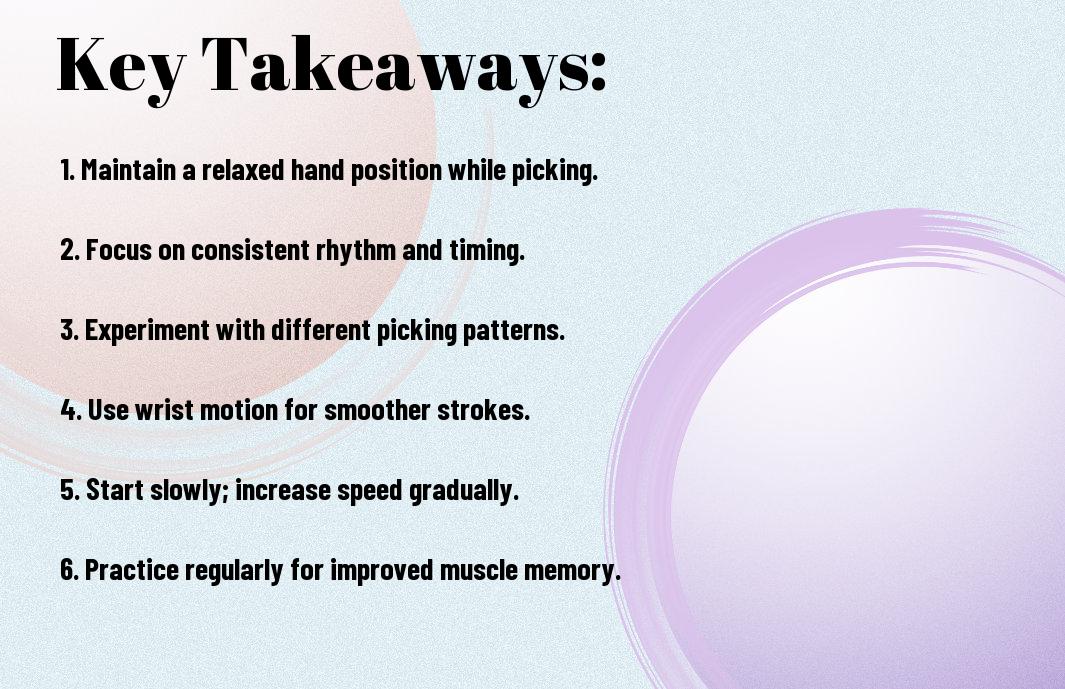
Considering all points I’ve shared, developing a better right-hand picking technique requires consistent practice and mindful application of the tips mentioned. Focus on maintaining proper posture, starting slowly with your exercises, and gradually increasing your speed as you gain confidence. I encourage you to experiment with different picking patterns and dynamics to find what feels most natural and effective for your style. With dedication and patience, you will notice significant improvements in your playing, enhancing your overall musical expression.