


Over time, mastering different time signatures can elevate your guitar playing and enhance your musical versatility. In this blog post, you will discover how to navigate various time signatures, from the familiar 4/4 to the complex 7/8. You’ll learn practical techniques, tips for rhythm and phrasing, and examples to help you incorporate these rhythms into your playing. Whether you’re aiming to play in a band or simply explore new sounds, understanding these time signatures will expand your skill set and enrich your musical expression.

Understanding Time Signatures
The time signature is a vital component in music that dictates how rhythms are organized within a piece. It not only indicates the number of beats in a measure but also specifies which note value receives a beat. By understanding time signatures, you can enhance your playing and interpretation of different genres, allowing you to adapt your guitar skills to various musical contexts. Knowing how to identify and play in different time signatures will elevate your musicianship and expand your creative possibilities.
Definition and Importance
Against a backdrop of musical complexity, time signatures serve as the framework that guides your rhythmic playing. Without grasping their definitions and roles, you might find yourself struggling to stay in sync with a group or effectively express the feel of a song. Being aware of time signatures helps you understand the pulse and flow of music, allowing you to build a strong foundation for your guitar playing.
Common Time Signatures and Their Characteristics
Signatures vary widely, but some of the most common ones you’ll encounter are 4/4, 3/4, and 6/8. Each has its unique characteristics: 4/4 offers a steady and balanced feel, ideal for pop and rock genres; 3/4, often associated with waltzes, gives a lighter, more flowing rhythm; while 6/8 provides a triplet feel that can evoke a lively or swinging motion. Recognizing these structures not only aids in your timing but also enriches your understanding of various musical styles.
Consequently, understanding these common time signatures allows you to adapt your guitar playing to fit different musical styles effectively. For instance, when you encounter a song in 4/4, you might employ power chords and consistent strumming patterns, while in a 3/4 setting, you could explore arpeggiated picking to capture the waltz-like feel. By mastering the intricacies of these time signatures, you can enhance your versatility as a guitarist and expand your repertoire in various genres.
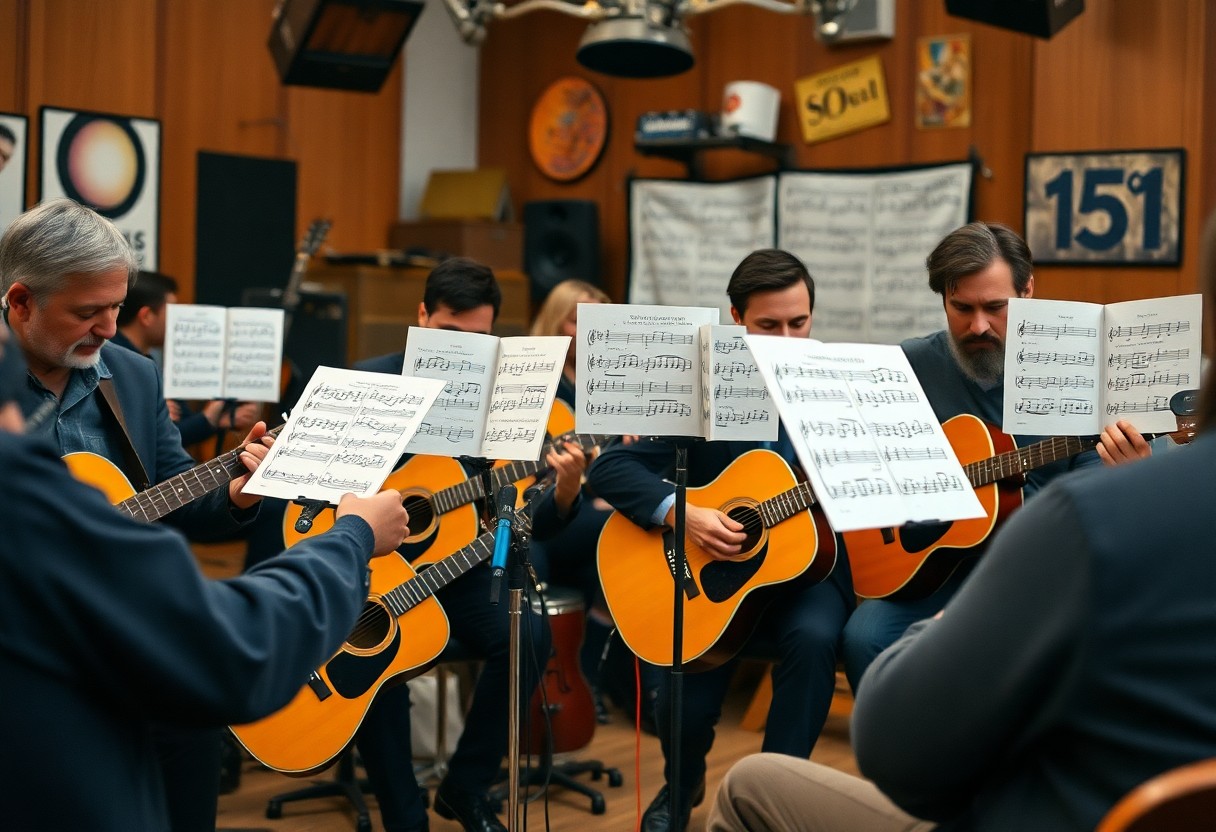
Simple Time Signatures
There’s a world of rhythmic possibilities within simple time signatures, like 2/4, 3/4, and 4/4. These time signatures create a feeling of stability and predictability in music, making them ideal for beginners. Understanding how to play in these time signatures will enhance your versatility as a guitarist and allow you to tackle a variety of musical styles.
Playing in 4/4
After mastering basic chords, you can begin strumming in 4/4 time, which is the most common time signature in popular music. You’ll feel a steady pulse where each measure contains four beats, making it easy to lock in with drums or other instruments. Practice strumming patterns and emphasize different beats to create interest while developing your sense of timing.
Techniques for 3/4 and 2/4
One effective way to approach playing in 3/4 and 2/4 is by shifting your focus on the accents. In 3/4, you’ll often emphasize the first beat, creating a waltz-like feel, while in 2/4, you can highlight the first beat of each measure for a more upbeat swing. Experiment with varying strumming patterns, fingerpicking, or hybrid techniques to keep your playing dynamic and engage listeners.
It’s helpful to count beats out loud while practicing these time signatures. For 3/4, count “1-2-3” as you strum, and for 2/4, count “1-2.” This will not only improve your rhythm but also help you internalize the feel of each time signature. Incorporating triplet notes or accents can add flair to your playing. As you practice, aim to find songs in 3/4 or 2/4, which will provide real-world examples to enhance your learning process.
Compound Time Signatures
Some guitarists may find compound time signatures like 6/8, 9/8, and 12/8 to be a bit challenging at first, but mastering these rhythms can enhance your playing and give your music a unique flavor. Unlike simple time signatures, compound signatures break the beat into smaller, grouped sections, allowing for more complex and flowing rhythms. Embracing these can open up a whole new range of possibilities for your guitar compositions and performances.
Exploring 6/8 and 9/8
Between 6/8 and 9/8, you’ll discover a world of rhythmic diversity. The 6/8 time signature is often felt as a triplet feel, with two main beats that each subdivide into three eighth notes, giving it a lilting, dance-like quality. Conversely, 9/8 is typically counted in three groups of three eighth notes, creating a more complex and swirling rhythm. As you explore these signatures, focus on how they affect your strumming patterns and overall groove to bring vibrancy to your guitar playing.
Rhythmic Techniques for 12/8
Across 12/8 time, you can develop an engaging, flowing style that amplifies the emotional pull of your music. This signature consists of four beats, each divided into three, resulting in a rhythmic feel that’s both lively and syncopated. Incorporating strumming patterns that emphasize the strong beats while playing around with accents will help you capture the essence of 12/8. Timing and rhythmic variations will allow your guitar techniques to shine within this signature.
And within 12/8, exploring fingerpicking or hybrid picking techniques can add depth to your sound. Try incorporating variations by accentuating certain beats or creating polyrhythms that dance within the 12/8 framework. Experimenting with dynamics, syncopation, and off-beat strumming patterns will further develop your mastery of this time signature. By embracing these rhythmic techniques, you can bring an expansive and powerful dimension to your compositions.
Irregular Time Signatures
Once again, exploring the world of guitar playing introduces you to irregular time signatures, which can add an exciting layer of complexity to your music. Unlike common time signatures, irregular ones break traditional patterns, creating unique rhythmic statements that can mesmerize your audience. For guitarists, mastering these time signatures not only enhances your versatility but also allows you to stand out in a musical landscape dominated by more conventional rhythms.
What are Irregular Time Signatures?
Below, irregular time signatures refer to those that do not conform to the standard measures found in common time, often featuring a combination of differing beats within a single measure. Typically, these include signatures such as 5/4, 7/8, and 11/8. Such time signatures challenge the conventional rhythmic flow and call for creativity in your playing style, making them a fascinating area to explore.
Tips for Playing in 5/4 and 7/8
Beside exploring the rhythmic pulse of irregular time signatures, consider the following tips when playing in 5/4 and 7/8:
- Count the beats carefully, feeling the groupings of 3 and 2 in 5/4, or 3 and 2 in 7/8.
- Practice subdividing the measures into smaller sections to help establish a solid groove.
- Incorporate percussive elements in your playing to emphasize the rhythm.
The challenge of playing in these time signatures will enhance your musical intuition and creativity.
Playing in 5/4 and 7/8 can be highly rewarding, as it opens an array of rhythmic opportunities. Here are some additional tips to help you navigate each signature:
- Experiment with different strumming patterns to find what works best for the feel of the piece.
- Play along with backing tracks that utilize 5/4 or 7/8 to get used to staying in time.
- Listen to songs that incorporate these time signatures to understand how they create tension and release.
The more you practice, the more comfortable you will become with these unique rhythms, allowing you to incorporate them into your own compositions seamlessly.
Practicing in Different Time Signatures
Now that you understand the basics of time signatures, it’s time to enhance your skills by practicing in different time signatures. Explore unique rhythms and develop your musicality by studying resources like Reading the Meter – How to Play Odd Time Signatures on Guitar. By dedicating time to this practice, you will gain a deeper understanding of various meters, allowing you to play confidently and creatively across different genres.
Exercises for Rhythm Training
Among the best ways to improve your timing is through dedicated rhythmic exercises. Start with simple beats and count them out loud to internalize the rhythm. Gradually increase the complexity by introducing syncopated patterns and varying tempo. You can also record yourself to evaluate your progress and ensure you’re staying in time. This approach will solidify your ability to feel and play in diverse time signatures.
Incorporating Time Changes in Songs
Changes in time signatures can add excitement and depth to your playing. To incorporate them effectively in your music, choose songs that already feature time changes or create your own compositions with shifts in meter. Pay attention to how these transitions affect the mood and flow of the piece, allowing you to experiment with dynamic rhythms and create a unique musical experience.
Songs that transition between different time signatures can teach you a lot about rhythm nuances. Start with familiar tracks or compositions that utilize odd meters to understand how time changes influence the overall structure. As you practice, experiment with crafting your own riffs or progressions that utilize these shifts. This will help you internalize the rhythms while enhancing your songwriting and performance skills, blending time signatures seamlessly into your playing style.

Applying Time Signatures to Guitar Styles
Your approach to different time signatures will greatly enhance your guitar playing across various musical styles. By understanding how to adapt your strumming and picking patterns, you can create unique rhythms that fit seamlessly into folk, rock, or metal genres, allowing you to stand out as a guitarist.
Folk, Rock, and Metal Variations
Any guitarist can explore diverse time signatures to add interest and complexity to their playing. In folk, you might favor 6/8 to evoke a flowing feel, while rock often thrives in 4/4, allowing for powerful energy. Metal, on the other hand, frequently experiments with 5/4 or 7/8, challenging your technical skills and creativity.
Jazz and Blues Rhythmic Elements
Along with traditional time signatures, jazz and blues heavily lean on syncopation and swing, creating unique rhythmic elements. These genres encourage improvisation, enabling you to play around the beat and develop your own style.
Consequently, incorporating elements like swing in jazz or shuffle rhythms in blues can transform your guitar playing. By shifting your focus from strict tempos to a more fluid approach, you enhance your versatility, making it easier to blend styles or stand out in jam sessions. This rhythmic diversity keeps your playing dynamic and engaging, whether you’re strumming a simple chord progression or venturing into complex solos.
To wrap up
Upon reflecting on how to play guitar in different time signatures, you can enhance your musical versatility by practicing various rhythms and styles. By familiarizing yourself with different signatures such as 4/4, 3/4, and 5/4, you broaden your creative palette and improve your timing. Utilize exercises, listen to diverse music genres, and experiment with strumming and picking patterns. This approach not only sharpens your playing skills but also deepens your understanding of how rhythm shapes your music. Engaging with multiple time signatures will greatly enrich your guitar experience.
FAQ
Q: What are time signatures, and why do they matter in playing guitar?
A: Time signatures define the rhythmic structure of a piece of music, indicating how many beats are in a measure and which note value gets the beat. For guitarists, understanding time signatures helps in maintaining proper rhythm and enhances the ability to play along with other instruments or in a band setting.
Q: How do I identify different time signatures while playing guitar?
A: To identify time signatures, listen for the strong and weak beats in the music. A time signature such as 4/4 has four beats per measure, with the first beat being the strongest. You may also look for written sheet music, where the time signature appears at the beginning of a piece, usually notated as a fraction.
Q: Can you explain how to play guitar in 3/4 time signature?
A: In a 3/4 time signature, there are three beats per measure, which creates a waltz-like feel. While strumming or fingerpicking, focus on emphasizing the first beat, followed by two lighter beats. A common strumming pattern could be down-up-down, where the first down strum is more pronounced, giving it a distinctive rhythm.
Q: What are some tips for practicing guitar in 6/8 time signature?
A: When practicing in 6/8, try to group the beats in twos or threes for a rolling feel. Focus on strumming patterns that highlight this grouping, such as down-down-up, down-down-up, which mimics the flow of the time signature. Gradually increase the tempo and alternate between slower and faster practice sessions to develop comfort.
Q: How can I apply different time signatures to my songwriting on guitar?
A: To apply different time signatures to your songwriting, experiment by composing in various time signatures like 5/4 or 7/8. Use a metronome to stay on track and to get a sense of how the rhythm flows. Incorporate distinctive strumming patterns and melodic phrasing that align with each time signature, allowing your songs to explore different grooves and moods.