
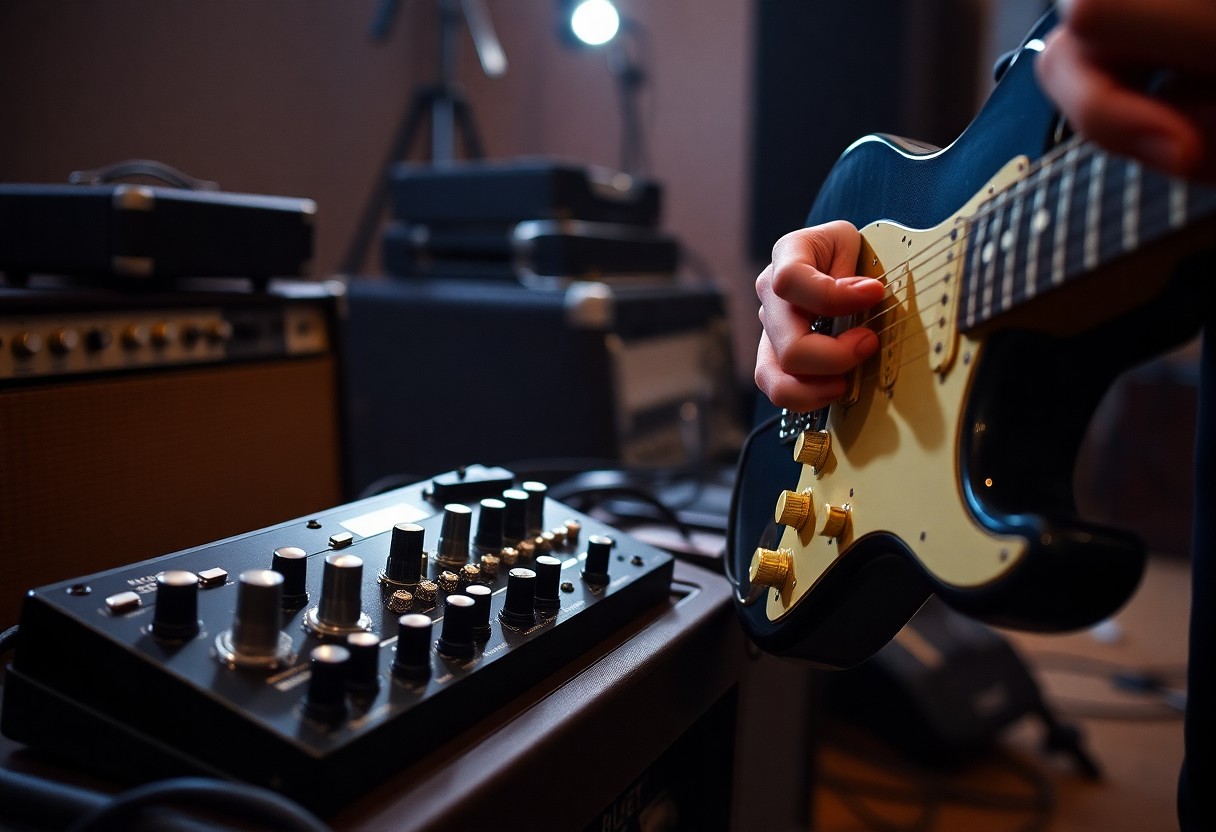

With the right techniques and understanding, incorporating a boost pedal into your guitar setup can elevate your sound and playing experience. This guide will walk you through the fundamentals of using a boost pedal effectively, helping you enhance your tone, achieve seamless transitions, and explore new sonic possibilities. Whether you’re jamming at home or performing on stage, you’ll discover how to make this versatile tool an important part of your musical journey. Let’s investigate the world of boost pedals and amplify your guitar skills!
The Mechanics of a Boost Pedal
The boost pedal operates by increasing the amplitude of your guitar signal without altering its tonal characteristics. This allows you to achieve a louder output or enhance the dynamics of your playing. Typically, boost pedals utilize a simple circuit design, featuring amplifiers that cleanly amplify the signal. Some models also offer adjustable frequency ranges, enabling you to tailor the boost effect to suit your specific guitar and amp combination.
How Boost Pedals Modify Your Sound
Boost pedals primarily enhance the overall volume of your signal, making your guitar stand out in a mix. They can push your amplifier closer to its sweet spot, resulting in natural distortion or saturation. Additionally, they can add clarity and brightness to your tone, especially when used with certain pickups or in conjunction with other effects.
Key Features to Look for in a Boost Pedal
- Volume control to set the desired output level.
- Tone control for adjusting high and low frequencies.
- Bypass switch to maintain your original signal path.
- Power options including battery or adapter compatibility.
- Durable construction suited for live performance.
Key features in a boost pedal can significantly impact its effectiveness in your rig. Pay attention to volume control, as this is necessary for tailoring the boost level to your preference. Tone control allows you to adjust the tonal characteristic, enhancing the highs or smoothing out the lows based on your needs. A reliable bypass switch is a must to preserve your sound when the pedal isn’t in use. Additionally, consider how the pedal is powered and its construction quality to ensure it withstands regular use. Recognizing these components will help you select a boost pedal that complements your playing style.
Setting Up for Success: Gear and Configuration
Creating the right setup for using your boost pedal is crucial for achieving the best sound possible. Start with the appropriate guitar, either electric or acoustic, and select an amplifier that complements your tone. A clean or slightly overdriven amp works best to amplify the boost pedal’s character without introducing unwanted noise. Make sure to have quality instrument cables and additional effect pedals within reach to customize your sound further.
Essential Equipment for Optimal Use
Your setup benefits from a range of crucial equipment, including a high-quality boost pedal, a reliable guitar, and a suitable amplifier. Consider products from reputable brands like Xotic, Boss, or MXR for your pedal. Pair your setup with a guitar that has humbuckers or single-coil pickups to experiment with different tonalities. Don’t neglect your amp—it should ideally have a clean channel capable of handling pedal effects well.
Signal Chain Placement: Boost Pedal Positioning
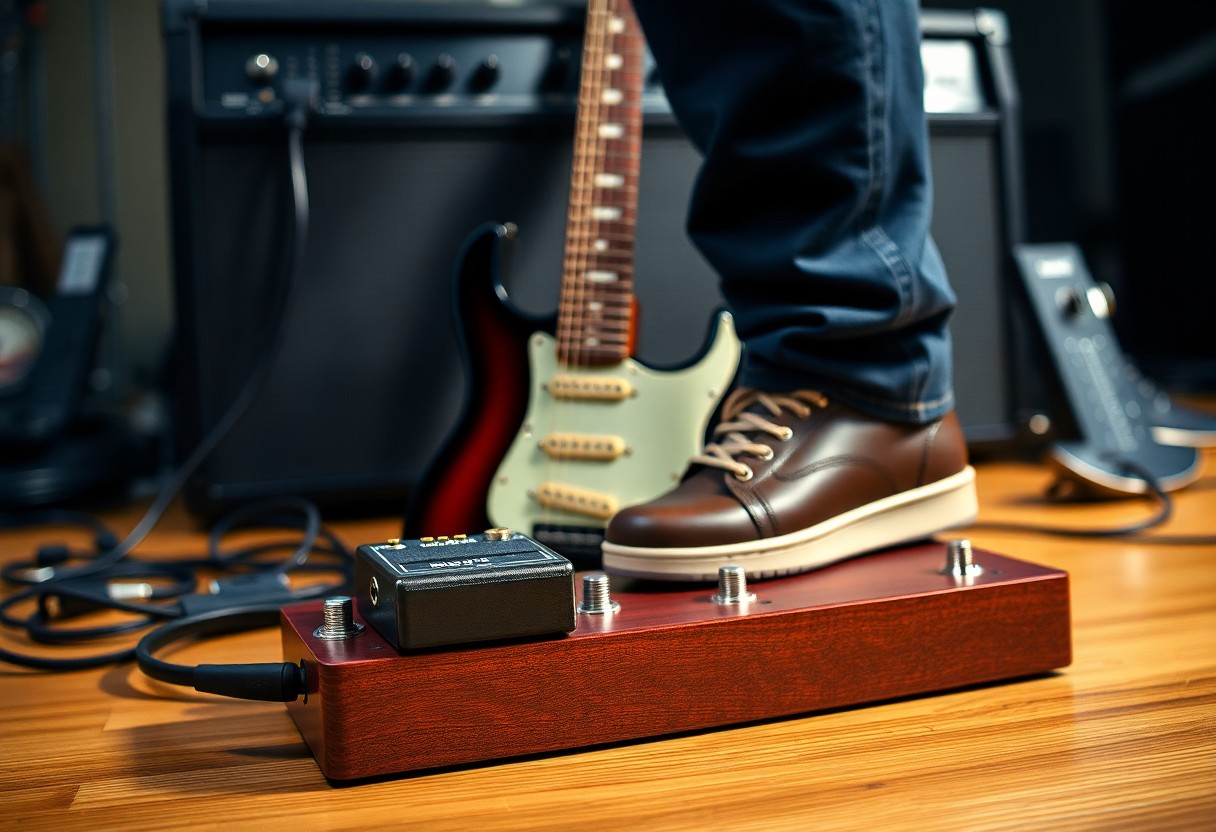
Positioning your boost pedal within the signal chain can significantly influence your tone and dynamic response. Typically, placing the boost pedal at the start of the effects chain allows it to punch up your clean signal before any modulation or delay effects shape it. Alternatively, placing it at the end lets you add volume for leads while maintaining the quality of preceding effects. Experimenting with these placements can result in a variety of tonal nuances.
In practice, if you have distortion or overdrive pedals in your setup, placing the boost pedal before them can create a more saturated sound, enhancing sustain and compression. Conversely, for a clearer and louder output, position the boost pedal after those effects. Testing both configurations in your unique signal chain allows you to discover which setup best suits your playing style and preferred sound. Take the time to find that sweet spot and unlock the full potential of your boost pedal.
Crafting Your Signature Tone
Developing your unique sound requires exploration of various elements within your tone. With a boost pedal at your side, you’re equipped to refine and enhance the nuances that set you apart as a musician. Start by defining what you want your tone to achieve—whether it’s a soulful lead sound or a gritty rhythm. Experimenting with different levels of gain and EQ settings can yield interesting results, allowing you to unlock new sonic possibilities and create a tone that’s distinctly yours.
Experimenting with EQ and Gain
Adjusting EQ settings and gain levels can dramatically shape your tone. A slight boost in the midrange frequencies can enhance your guitar’s presence in a mix, making solos cut through while preserving the rhythm’s fullness. Play around with boosting the gain to see how much warmth and saturation you can introduce without losing clarity; this delicate balance is key to achieving a polished sound.
Layering Effects: Combining with Other Pedals
Combining a boost pedal with other effects can expand your sonic palette dramatically. Pairing it with an overdrive pedal, for example, can give your leads a more dynamic range, while running it alongside a delay can create lush soundscapes and rhythmic depth. Approach your pedalboard as an interconnected system where each element enhances the other, allowing you to create rich textures and captivating atmospheres.
For instance, placing your boost pedal before modulation effects such as chorus or phaser can accentuate the effects’ character while maintaining clarity. Similarly, layering it with a reverb pedal can add spatial depth, making your sound feel larger than life. Experimenting with placement in your signal chain—whether before or after distortion—can yield different tonal qualities, so don’t hesitate to explore variations for unique sound combinations. Each interaction offers new layers to your music, guiding you towards a tone that resonates with your artistic vision.
Mastering Playing Techniques with a Boost
Integrating a boost pedal into your guitar playing offers a world of possibilities for refining your techniques. With the added volume and richness, you can explore dynamic contrasts that elevate your performance. Focus on your touch sensitivity and how slight adjustments in picking or finger placement can create a more expressive sound, allowing you to convey emotion more effectively through your playing.
Utilizing Dynamics and Touch Sensitivity
Harnessing the power of your boost pedal means delving into the subtleties of dynamics and touch sensitivity. When you press down lightly, the boost enhances your softer notes, giving them a lush quality. In contrast, digging in harder brings out the full force of your tone, making every strum or pluck more pronounced. By mastering this balance, you can create a more captivating performance that keeps your audience engaged.
Creating Distinctive Solos and Riffs
A boost pedal can help differentiate your solos and riffs from others by enhancing your unique playing style. By applying the boost strategically, you can accentuate specific notes or phrases, making them stand out in a mix. Layering your solos with different techniques, such as hammer-ons, pull-offs, or bends, combined with the added gain from the pedal, results in a signature sound that is distinctly yours.
Distinctive solos and riffs are achieved through experimentation with the boost pedal’s settings and the interplay with your playing style. Try adjusting the gain to find your sweet spot—higher gain can provide sustain for longer notes, while cleaner settings can allow for clarity in intricate passages. Consider using the boost to kick in just for key solo sections, contrasting these moments with quieter verses to create dynamic tension. The result will be a compelling composition that showcases your creativity and musicality.
Common Pitfalls and Solutions
Misusing a boost pedal can lead to frustrating sound issues that detract from your playing experience. Recognizing common pitfalls can help you optimize your sound. For example, improper placement in your signal chain might muddy your tone or result in unexpected volume spikes. Getting familiar with these potential issues enables you to troubleshoot effectively, ensuring that your sound remains clear and dynamic.
Avoiding Overdriven Mud
One common issue when using a boost pedal is creating an overdriven, muddy sound. This often happens if you set the pedal’s gain too high in conjunction with your amp’s settings, causing unwanted distortion rather than enhancing your tone. Adjust the gain levels slowly and perform practical tests while playing to find that sweet spot, where your tone remains clear and articulate, avoiding the muddiness that can mask your playing nuances.
Troubleshooting Signal and Volume Issues
Signal and volume issues can arise from incompatibilities in your setup or incorrect pedal placement. If you notice a drop in signal when activating your boost pedal, consider checking your cable connections and ensuring that your pedal is correctly powered. A simple chain adjustment, such as placing the boost pedal before other effects like distortion, can drastically improve signal quality, allowing your boost to shine through without compromising your overall tone.
When troubleshooting signal and volume problems, take the time to analyze your entire signal chain. Issues may stem not just from the boost pedal itself but also how it interacts with other pedals and your amp. Using high-quality, shielded cables can make a significant difference in maintaining a strong signal. If the volume drops significantly when the pedal is engaged, experiment with pedal settings and repositioning within the chain. Engaging your boost pedal in front of gain-heavy pedals like distortion or fuzz can often help you maintain more consistent volume levels and transparency in your tone, ensuring that your musicality isn’t overshadowed by unnecessary noise. Always test with varying settings during practice to discover what setup works best for your playing style and gear.
Summing up
Upon reflecting, integrating a boost pedal into your guitar setup can significantly enhance your sound and versatility. By adjusting the gain and using it strategically in your signal chain, you can achieve a powerful lead tone or add depth to your rhythm playing. Experimenting with different settings will help you find the perfect boost effect that complements your style. With practice and exploration, the boost pedal can become an important tool in your musical toolkit, allowing you to express your creativity and improve your overall performance.
FAQ
Q: What is a boost pedal and how does it affect my guitar sound?
A: A boost pedal is a type of effects pedal that increases the amplitude of your guitar signal without altering the tone. By enhancing the output level, it allows you to achieve a louder sound for solos or push your amplifier into overdrive. This can result in a more pronounced mid-range presence, sustain, and overall volume, making it an vital tool for live performances and studio recordings.
Q: How do I set up my boost pedal for optimal performance?
A: To set up your boost pedal, first connect your guitar to the input of the pedal and then connect the output to your amplifier. Ensure all other pedals are connected accordingly in your effects chain, typically placing the boost pedal towards the end or after overdrive pedals for the best effect. Adjust the gain level on the boost pedal and the volume knob on your guitar to find your desired sound. It’s often beneficial to try varying settings while playing to discover what works best for your style.
Q: Can I use a boost pedal with an already distorted tone?
A: Yes, using a boost pedal with an already distorted tone can enhance your sound further. It can help to push an already overdriven amp or pedal for additional saturation and dynamics. This is particularly useful during solos or parts of a song where you want to stand out. Just be cautious with the gain settings to avoid overly harsh tones or feedback, and experiment with the combination to find what suits your playing style.