


It’s imperative to understand how to utilize a compressor pedal to enhance your guitar playing. This versatile tool can help you achieve a more balanced tone, sustain your notes, and control dynamics, making your sound richer and more professional. In this guide, you’ll discover the various settings and techniques that will allow you to effectively integrate a compressor pedal into your setup, giving you the edge needed to take your guitar skills to the next level.

Unpacking the Sound: How Compression Transforms Your Tone
Compression significantly impacts your guitar tone, allowing you to achieve a more polished and professional sound. By reducing the volume of your loudest notes while boosting the quieter ones, your playing becomes more consistent. This not only helps to eliminate unwanted dynamics but also brings out the sustain and clarity in your sound, making it easier to achieve that singing quality in your leads and a fuller tone in your rhythms.
The Role of Dynamics in Guitar Playing
Dynamics in guitar playing refers to the variations in volume and intensity. They serve a pivotal role in conveying emotion and creating interest in your music. When you employ a compressor pedal, the instrument’s inherent dynamics are controlled and tailored, allowing you to maintain expressiveness while achieving a cohesive sound across different playing styles, from soft fingerpicking to aggressive strumming.
The Mechanics of a Compressor Pedal
A compressor pedal operates by monitoring the input signal and adjusting the output based on predetermined thresholds. When your playing exceeds this threshold, the pedal reduces the signal volume to maintain a balanced output. Key parameters include ratio, attack, release, and threshold settings which dictate how the pedal reacts to your playing dynamics, ensuring that the desired tone is achieved consistently, regardless of your performance style.
The beauty of a compressor pedal lies in its adjustable parameters. For instance, the attack setting controls how quickly the compressor responds to your playing; a fast attack will clamp down on transients, making notes sound more uniform, while a slower attack can let initial punches through, preserving some dynamics. The release setting determines how long the compressor takes to stop affecting the signal after the dynamics have decreased, which impacts the overall sustain of your notes. By experimenting with these settings, you can truly customize the effect to complement your unique guitar sound and playing style.
Finding the Right Settings: Tailoring Your Sound
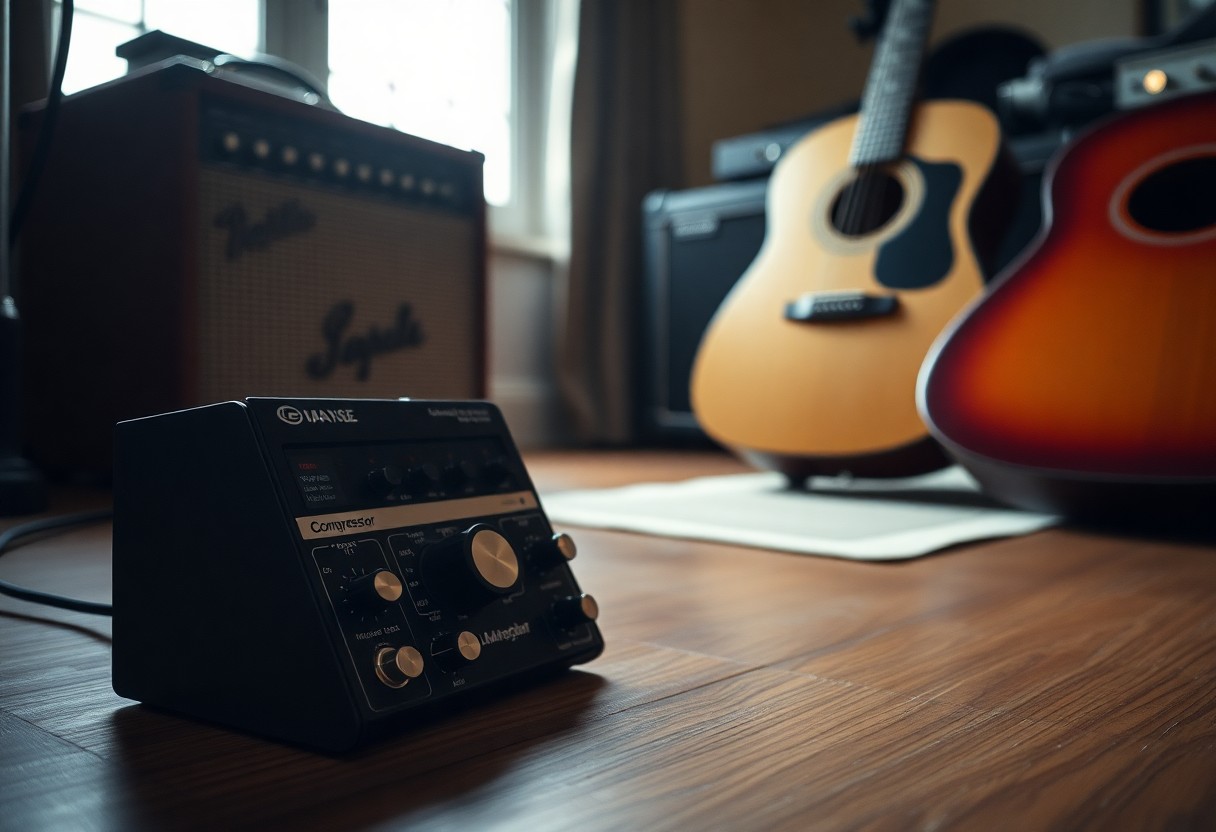
Establishing your compressor pedal settings can significantly enhance your tone and overall playing experience. Start by adjusting the threshold to determine when compression kicks in; lower settings will apply compression to softer notes, while higher settings will focus on louder playing. Next, modify the ratio to control how much compression occurs. A higher ratio gives a more pronounced effect. Finally, fine-tune the attack and release settings to shape the dynamics of your sound, allowing tighter control over how quickly the compression responds to your playing. Finding that sweet spot is key to fully appreciating the pedal’s impact.
Key Parameters and Their Impact
Understanding key parameters helps you shape your unique sound. The threshold defines the volume level at which compression engages. Setting it too high may miss softer notes, whereas too low can squash the entire signal. The ratio dictates how much compression is applied once the threshold is crossed. Attack determines how quickly the compression kicks in, influencing note articulation, while release controls how quickly the compressed signal returns to normal. Adjusting these parameters will allow you to achieve everything from subtle enhancements to more pronounced effects.
Experimentation: The Art of Fine-Tuning
Every guitarist has a unique style, and finding your ideal settings takes patience and experimentation. Start by setting all controls to neutral positions and gradually tweak them one by one, listening closely to how the changes affect your tone. Don’t hesitate to explore extreme settings to understand their impact, as this can help you uncover unexpected nuances. Jamming with friends or recording yourself can provide fresh perspectives on your sound, allowing you to isolate adjustments that elevate your playing. With dedicated practice, the compressor becomes a dynamic tool tailored to your artistic expression.
Embrace the journey of experimentation and make adjustments while actively playing your favorite songs or improvising. Sometimes, minor tweaks can yield significant improvements, so don’t rush the process. Incorporate varying playing styles, from fingerpicking to heavy strumming, and listen to how the compressor interacts with each. Use different guitar pickups and effects alongside the compressor to identify unique textures that complement your sound. Over time, this exploration will deepen your understanding and help craft a signature tone that reflects your personality as a guitarist.
Techniques for Effective Use: Elevating Your Guitar Skills
Mastering a compressor pedal involves more than just dialing in the right settings; it’s about integrating it into your overall playing technique. Use your compressor to maintain a consistent tone across different dynamics, which helps you articulate your notes more cleanly, especially during fast runs or intricate picking patterns. Incorporate your pedal into your warm-up routine by alternating between soft and hard strumming to better understand how compression changes your sound and feel.
Combining Compression with Different Playing Styles
Diverse playing styles benefit uniquely from compression. For fingerstyle players, the pedal allows for even volume across notes, ensuring clarity in complex passages. Meanwhile, if you’re into rock or blues, the sustain added by compression creates a more impactful sound during solos. Experimenting with different settings lets you find the sweet spot that enhances your particular style effectively.
Layering Effects: Building Your Sonic Palette
Layering compression with other effects can significantly expand your sonic palette. After you’ve dialed in your compressor, try adding overdrive or reverb to the chain. The compressor can smooth out your signal before it reaches an overdrive pedal, which not only helps maintain clarity but also adds depth to your sound. Pairing effects like modulation or delay after the compressor can create rich textures without muddiness, allowing each note to shine.
Adding various effects post-compression can bring new dimensions to your sound. For example, combining a delay pedal with your compressor creates a richer, more defined echo that accentuates your playing. Adjusting the decay and feedback settings on your delay while your compressor is active can lead to vibrant, textured landscapes that enhance both atmospheric and rhythmic elements in your playing. Undertaking this exploration helps you unlock new, creative avenues for your guitar sound, making every performance unique and exciting.
Real-World Application: The Artists Who Utilize Compression
Numerous renowned guitarists have harnessed the power of compression to shape their iconic tones. Artists across genres have integrated compressor pedals into their setups, enabling them to achieve a balanced sound, sustain notes longer, and cut through the mix with clarity. From rock to jazz, compression uniquely colors their music, allowing you to explore its impact on your own playing and tone development.
Iconic Guitarists and Their Signature Sounds
Artists like David Gilmour and John Mayer are perfect examples of using compression to enhance their sound. Gilmour’s soaring leads in Pink Floyd standout partly due to his use of compression, which provides sustain and a smooth, rich tone. Mayer’s blues-infused tunes benefit from a crisp, tight sound, allowing his intricate fingerstyle and expressive solos to shine through in any mix.
Analyzing Songs: Where Compression Shines
Many timeless tracks utilize compression to enhance their sonic quality, making it an invaluable tool for songwriting and performance. For instance, the shimmering guitar lines in “Sweet Child O’ Mine” by Guns N’ Roses demonstrate how compression locks notes together, creating an ethereal effect that resonates with listeners. Similarly, “Gravity” by John Mayer showcases how well-placed compression maintains clarity and dynamics, allowing the subtle nuances of each note to be felt vividly throughout the song.
In “Sweet Child O’ Mine,” the intro riff exemplifies the use of compression to create a fluid sound that transitions smoothly through dynamics. The equalization, paired with the compression, ensures that every pluck of the string is heard distinctly without losing the overall harmonic structure. In “Gravity,” the subtle touch of compression allows Mayer’s guitar solos to soar while retaining a powerful presence without sounding overwhelming, showcasing the importance of managing dynamics in live situations and recordings alike. By understanding how compression functions in these songs, you can explore similar techniques in your own playing, crafting a signature sound that resonates with emotional depth and clarity.
Common Pitfalls: Avoiding Missteps on Your Journey
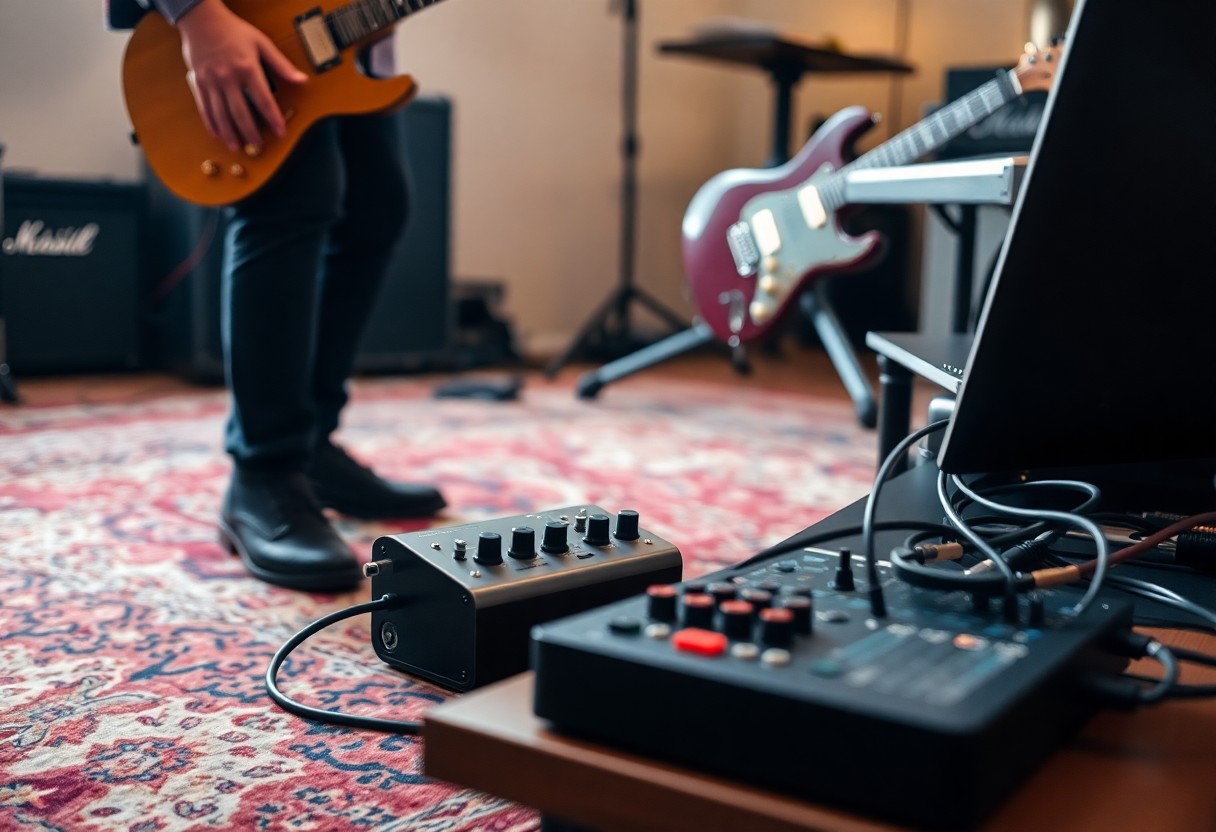
While exploring the world of compression, it’s easy to stumble into a few common traps that can derail your progress. Awareness of these pitfalls allows you to maximize your compressor pedal’s potential. Over-reliance on your compressor can lead to an unnatural sound, diminishing dynamic range, and an overly processed tone. A critical aspect of your journey involves recognizing when you’ve hit the sweet spot with your settings, ensuring that compression works in harmony with your playing rather than overwhelming it.
Overusing Compression: Recognizing the Dangers
Overusing compression can suffocate your sound and strip away the expressiveness you aim for. You might find that your notes blend into a single, uniform tone, making it challenging to convey dynamics or emotion in your playing. The key is to find a balance; a good rule of thumb is to gently add compression without compromising your natural tone. If your guitar begins to feel lifeless, dialing back the compression can restore vitality and clarity to your sound.
Balancing Tone and Sustain: A Practical Approach
Finding the right balance between tone and sustain is necessary when using compression. Begin with moderate settings and gradually adjust the level, sustain, and attack controls until you achieve a sound that feels both rich and vibrant. Pay attention to how your guitar reacts during different playing dynamics. Experiment with your compressor in the context of various musical styles and settings, as what works for one genre or piece may not suit another. Ultimately, the goal is to enhance your natural tone and sustain without overshadowing the subtleties of your playing.
Striking the right balance between tone and sustain involves meticulous experimentation. Start by setting your compressor with a low ratio and slow attack time, and assess how it affects the nuances of your playing. As you refine these settings, focus on various chord progressions and lead parts that showcase your range. Note how different genres demand differing approaches to compression; for instance, lighter compression may be ideal for fingerstyle blues, while a more pronounced sustain may shine in rock solos. Ultimately, the journey lies in continuous adjustment until you achieve that harmonious blend of sustain and clarity necessary for your guitar sound.
Conclusion
Considering all points, using a compressor pedal can greatly enhance your guitar playing by smoothing out dynamics and adding sustain. As you incorporate the pedal into your rig, experiment with various settings to find the sound that best suits your style. Pay attention to how the compressor interacts with your other effects and your playing technique. With practice and careful adjustment, you can achieve a professional sound that elevates your musical expressiveness. Embrace the learnings, and let the compressor pedal take your guitar playing to new heights.
FAQ
Q: What is a compressor pedal, and how does it work for guitar playing?
A: A compressor pedal is an effects unit that helps to even out the dynamic range of your guitar sound. It works by automatically reducing the volume of the signal when it exceeds a certain threshold, which allows for softer notes to be boosted while louder notes are toned down. This results in a more balanced and consistent sound, enabling sustained notes and enhancing overall tone. By using a compressor pedal, guitarists can achieve a smoother playability and maintain clarity even during complex fingerings.
Q: How do I set up my compressor pedal with my guitar?
A: Setting up your compressor pedal is quite straightforward. First, connect your guitar to the input jack of the compressor pedal. Then, use a patch cable to connect the output of the compressor to your amplifier or effects chain. After that, power on the pedal. Start with the compression knob set to a low level, adjusting to taste. Experiment with attack and release settings to find the perfect response for your playing style. A slower attack may enhance sustain, while a quicker attack can help with percussive sounds.
Q: What are some tips for using a compressor pedal effectively in my guitar tone?
A: To use a compressor pedal effectively, start by determining the style of music you want to play and adjust settings accordingly. For clean tones, a higher compression ratio with a moderate sustain level can help add clarity and definition. If you’re looking for a punchier sound, try lowering the compression and enhancing the attack setting. Always keep in mind the overall context of your mix; too much compression can lead to a lifeless tone. It’s helpful to make subtle adjustments while playing, ensuring you find the right balance for your specific sound palette.