
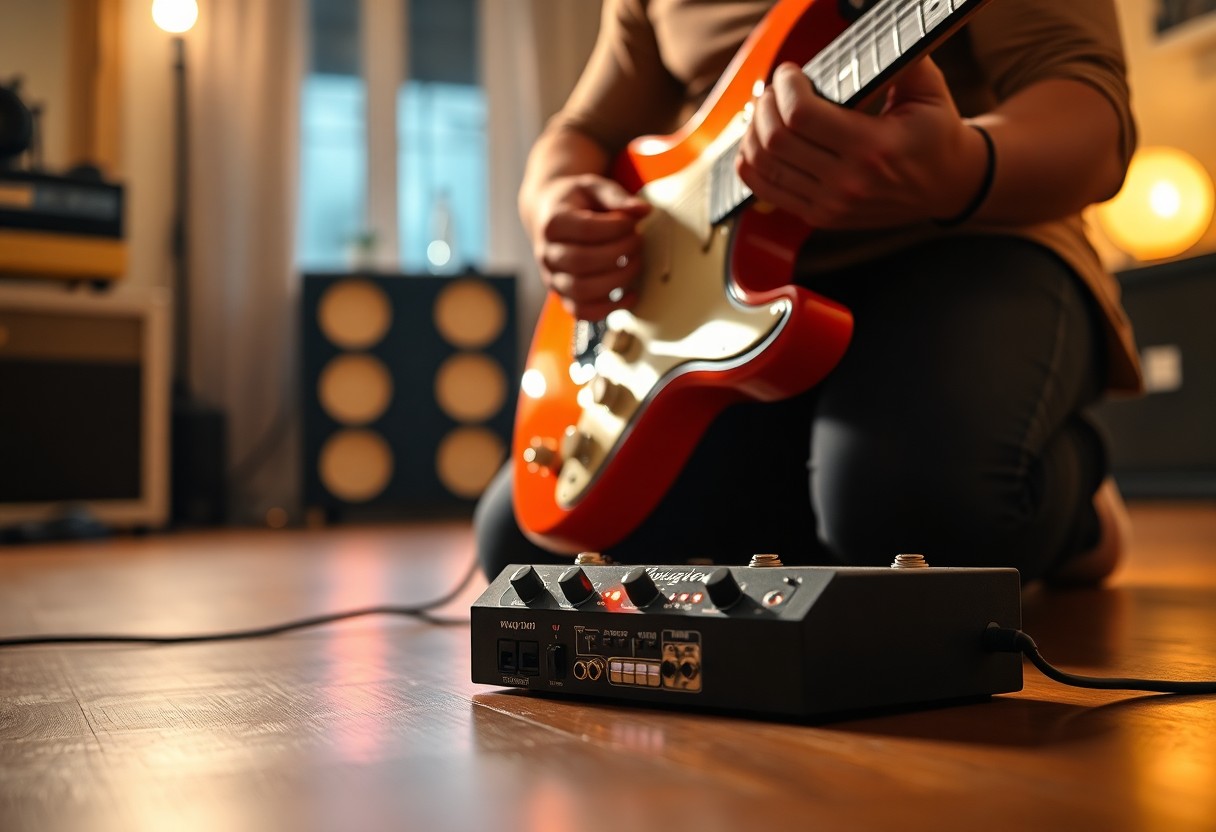

You can transform your guitar sound remarkably by using a flanger pedal. This effects pedal adds a sweeping, jet-like quality to your tone, making your playing more dynamic and interesting. If you’re new to using flanger effects, this guide will help you get started with playing guitar using a flanger pedal.
First, let’s discuss how to set up your flanger pedal. Connect your guitar to the input jack of the pedal and then connect the output jack to your amplifier. Ensure all cables are secure to avoid any signal interruptions. Once connected, make sure the pedal is powered, either by a battery or a power supply.
Next, it’s time to familiarize yourself with the controls on the flanger pedal. Most flangers will have at least three main knobs: Rate, Depth, and Feedback. The Rate controls how fast the effect sweeps through your sound, while the Depth determines the intensity of the flanging sensation. Feedback adjusts how much of the flanged sound is fed back into the effect, creating a more pronounced sound. Play around with these settings to find a sound that you enjoy.
Once you have your flanger pedal set up, begin by strumming open chords. This is a great way to hear the flanging effect in a broad and clean context. You will notice how the pedal enhances the resonance, producing a rich, full sound. Experiment with various chord progressions to see how the flanger affects both your rhythm playing and your lead guitar lines.
Another effective way to utilize your flanger pedal is to integrate it into your solos. When playing single notes or melodies, try adjusting the Rate and Depth to create varying effects. A faster rate, for instance, can add a sense of urgency to your playing, whereas a slower rate can yield a more ethereal quality. Practice playing melodies with different settings to understand how the flanger can give your solos new dimensions.
In addition to solos and chords, layering your sound can be highly effective. You can create a lush, atmospheric sound by playing multiple layers of guitar over one another with the flanger pedal engaged. This technique works particularly well when combined with arpeggios or fingerpicking styles. Take the time to explore how the flanger can blend with other effects you may be using, like delay or reverb, to enhance your sound further.
Finally, consider the context in which you’re playing. The flanger pedal can be used in various genres, from rock to ambient music. Experiment with different styles and settings to discover how the flanger fits into your overall sound. Take the time to practice regularly, and don’t hesitate to try something new, as this will lead you to unique sounds and discoveries. Enjoy your journey in exploring the rich world of sound available through your flanger pedal!