


With the right fuzz pedal in your setup, you can unlock a world of gritty tones and dynamic sounds that can elevate your guitar playing. Fuzz pedals are known for their distinctive distortion and can add depth and character to your music. In this post, you’ll discover how to effectively incorporate a fuzz pedal into your guitar rig, understand various settings, and explore popular techniques to achieve that signature sound you desire. Get ready to enhance your playing experience and unleash your creativity with this powerful effect!
Unlocking the Sonic Potential of Fuzz
With a fuzz pedal in your arsenal, the possibilities for sonic exploration are endless. This unique effect adds a rich, harmonic distortion to your signal, transforming even the simplest riffs into captivating soundscapes. By understanding the nuances of fuzz, you can elevate your playing style, creating textures that resonate with emotion and attitude. From psychedelic rock to stoner metal, the fuzz pedal has become synonymous with genres that thrive on raw, gritty tones.
The Origins and Evolution of Fuzz Pedals
Fuzz pedals trace their roots back to the late 1960s, when guitarists sought ways to replicate the rich sustain and saturation of overdriven tube amplifiers. One of the first commercially available units, the Maestro Fuzz-Tone, gained fame when it became a staple for the Rolling Stones. Over the decades, the design of fuzz pedals has evolved, leading to a myriad of variations and innovations that cater to the diverse palette of modern guitarists.
How Fuzz Pedals Alter Your Guitar’s Tone
Fuzz pedals fundamentally reshape your guitar’s tone, introducing a pronounced level of distortion that can be both thick and creamy. Unlike overdrive and distortion, which retain some of the original signal’s clarity, fuzz takes your sound and saturates it with an almost chaotic intensity. This effectively blurs the lines between the notes, producing a more harmonically complex sound that can range from smooth and velvety to jagged and biting, depending on the settings you choose. Crafting your ideal fuzz tone involves a blend of your guitar, amp settings, and the characteristics of the pedal itself, allowing you to tailor your sound to fit any musical context seamlessly.
Sculpting Your Sound: Fuzz Control Settings
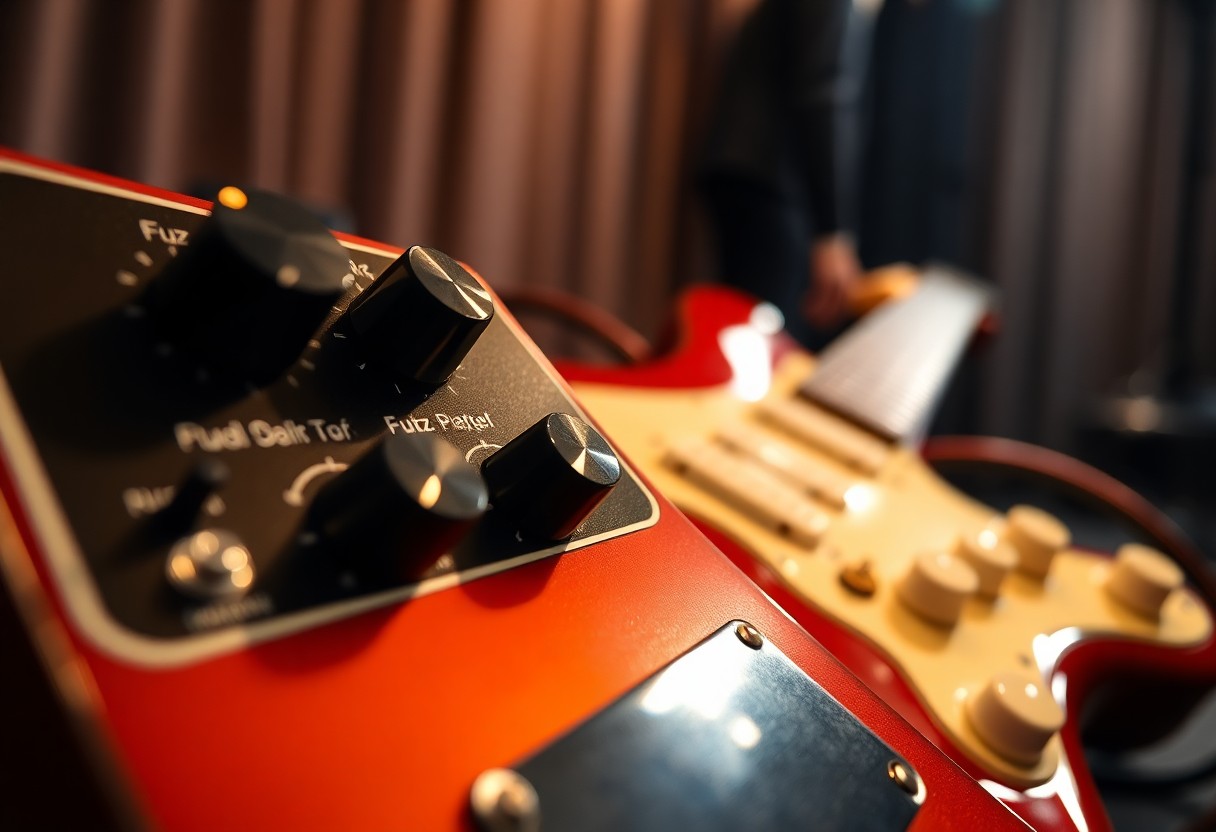
Creating your signature sound with a fuzz pedal begins with understanding its control settings. Each knob influences your tone differently. Adjusting parameters like tone, volume, and gain lets you tailor the fuzz effect to fit your playing style, from subtle warmth to full-on saturation. Experiment with these controls to discover a blend that enhances your overall sound while keeping your playing dynamic and expressive, building the foundation for your unique sonic identity.
Essential Controls: Tone, Volume, and Gain
Your fuzz pedal will generally feature three fundamental controls: tone, volume, and gain. Tone shapes the EQ, allowing you to brighten or darken your sound; volume adjusts the output level of your signal; gain determines the amount of distortion added to your signal. Balancing these controls effectively is vital to achieving the desired fuzz character, whether you seek a classic vintage warmth or a modern, aggressive bite.
Finding Your Sweet Spot: Experimentation Techniques
Finding your sweet spot with fuzz settings involves careful experimentation. Try making small adjustments to one control at a time while playing a consistent riff or chord progression. This method helps you pinpoint how each knob interacts with your guitar and amp, allowing you to understand the nuances of your sound. Document settings that resonate with you, creating a reference for future sessions or performances.
Diving deeper into experimentation, utilize various playing dynamics and techniques, such as fingerpicking or palm muting, while adjusting the fuzz controls. Change your guitar’s volume knob or toggle between pickup selections to test how these factors influence your tone with the fuzz pedal engaged. Jamming along with different musical styles can also reveal hidden sounds that you might want to incorporate into your playing. Creating a dedicated “fuzz day” where you solely focus on exploring these tones can yield surprising results, enhancing both your sound and skills as a musician.

Mastering Fuzz Techniques for Style
To truly harness the power of fuzz, you need to explore various techniques that align with your musical style. Experimenting with fuzz settings, combining different pedals, and using your guitar’s volume and tone knobs can produce a spectrum of tones that enhance your playing. Embrace dynamics and articulation to maintain clarity, even amid the fuzz. Mastering these techniques allows you to inject your unique flavor into every riff and solo, elevating your sound to new heights while keeping your musical identity intact.
Classic Rock Riffs: Incorporating Fuzz for Authenticity
Classic rock is ground zero for fuzz’s influence, with iconic riffs from legends such as Jimi Hendrix and the Rolling Stones defining the genre. By dialing in a warm, saturated sound, you can instantly capture that vintage vibe. Experiment with power chords and open string riffs while cranking up your fuzz pedal to achieve that thick, sustaining tone. This authentic sound resonates with listeners, grounding your music in a rich historical context.
Exploring Genre Variations: Fuzz in Indie, Metal, and Beyond
Diving beyond classic rock, fuzz finds a home in various genres such as indie and metal, each utilizing the effect in unique ways. Indie bands often pair fuzz with reverb for lush, atmospheric soundscapes, while metal guitarists employ it to create a raw, intense musical palette. The key lies in experimentation; for example, use a higher gain setting for metal breakdowns or a more subtle approach in indie to preserve clarity without sacrificing heat.
In indie music, bands like My Bloody Valentine have embraced fuzz to create ethereal textures, layering sounds that transport listeners to sonic dreamscapes. On the other hand, metal acts like Electric Wizard integrate fuzz to achieve a sludgy, distorted heaviness that defines their sound. By adjusting your fuzz settings and incorporating them into your playing style, you can experiment with a vast sonic landscape across genres, all while making the effect your own. Whether you’re crafting atmospheric sounds or crushing riffs, fuzz can add depth and character to your music like no other effect.

Troubleshooting Common Fuzz Issues
Even the best fuzz pedals can occasionally present challenges. If you notice that your sound is muddy or undefined, check your settings and ensure that your tone and level knobs are optimized. If your fuzz pedal lacks sustain or is overly sensitive, you might need to adjust the input gain, as the pedal’s response can vary significantly based on your guitar’s output. Lastly, keep an eye out for any inconsistencies in volume, which could indicate power supply issues or a need for new cables.
Addressing Noise and Feedback Challenges
Excess noise and unwanted feedback can disrupt your performance, but they can often be mitigated with a few adjustments. Start by isolating your equipment; ensure all connections are solid and that you’re using quality patch cables. If the noise persists, try repositioning the fuzz pedal within your signal chain or adjusting the gain settings to find a sweet spot that minimizes feedback while retaining your desired tone.
Compatibility with Other Gear: Pedal Order and Interaction
The interaction of your fuzz pedal with other effects can greatly influence your sound. Typically, fuzz pedals work best when placed early in the signal chain, right after your guitar and before modulation or time-based effects, to preserve their characteristic sound. However, experimenting with placement can yield unique results—if you place it after a delay pedal, for example, it may create a chaotic yet interesting texture. Understanding each pedal’s role within the chain helps you craft a fulfilling and sonically rich experience.
Elevating Your Performance with Fuzz
Fuzz can transform your live performances, adding depth and intensity to your sound. When implemented correctly, it creates a sonic landscape that captivates your audience, whether you’re playing solo or with a full band. The character of fuzz enhances power chords, igniting your riffs with a raw energy that draws listeners in. Taking time to master this aspect not only solidifies your identity as a guitarist but also elevates the overall quality of your gigs.
Live Sound Considerations: Amplification and Effects Loop
To get the most out of your fuzz pedal during live performances, consider how it interacts with your amplification setup. Using an effects loop can help maintain clarity and definition, especially when combining fuzz with other effects like delay or reverb. Positioning your fuzz pedal before modulation effects in the signal chain typically yields a richer, more dynamic sound. Experimenting with different amp settings and speaker configurations will further enhance your live tone, ensuring it slices through the mix.
Creative Use of Fuzz in Composition and Improvisation
Integrating fuzz into your songwriting process opens up a realm of creative possibilities. Use the tonal variations it offers to inspire new riffs or melodies that may have otherwise remained dormant. Feel free to explore different gain levels, interacting with your guitar’s volume knob for tonal shifts that can evoke distinct emotional responses. Embrace fuzz during improvisation to freely explore textural contrasts, inspiring spontaneity and innovative ideas that push your musicianship forward.
For example, start with a light fuzz for a smooth, warm lead tone, then crank it up for aggressive, gritty solos. Layer your writing by toggling between your fuzz settings to set different moods throughout a piece. Incorporating harmonics or feedback with fuzz added can evoke unique textures that mesmerize listeners. If you’re jamming with a band, let your fuzz-toned riffs dictate the song’s direction, encouraging a dynamic feel that evolves organically, vibrant and alive in the moment.
Conclusion
Following this guide, you now have the knowledge to effectively play guitar with a fuzz pedal. By exploring different settings, integrating techniques, and being mindful of your tone, you can create a wide range of unique sounds that enhance your playing. Experiment with various combinations to find your ideal fuzz sound, and don’t hesitate to embrace your creativity. With practice and patience, you’ll be able to make the most of your fuzz pedal and elevate your guitar skills to new heights.
Q: What is a fuzz pedal and how does it affect my guitar sound?
A: A fuzz pedal is an effects device that alters the guitar signal to create a distinctive distorted sound characterized by a “fuzzy” tone. This effect is achieved by clipping the signal in a specific way, which results in a warm saturation and a thicker, more textured sound. When engaged, a fuzz pedal can enhance your guitar’s sustain and emphasize harmonic overtones, allowing for a dramatic change from clean tones to a more aggressive sound that’s perfect for rock, grunge, and many other genres.
Q: How do I properly set up my fuzz pedal for optimal sound?
A: To set up your fuzz pedal, begin by placing it in your effects chain. It’s often best positioned before any modulation effects (like chorus or delay) but after distortion pedals. Start with your tone and level controls at the 12 o’clock position and tweak them based on your preference. Lowering the tone can create a darker sound, while raising it will give you a brighter, sharper tone. Adjust the fuzz control to find the right amount of distortion for your playing style. Experiment with your amp settings as well; sometimes, dialing back the gain on your amp can complement the fuzz effect nicely.
Q: What styles of music work well with a fuzz pedal, and how can I use it effectively in my playing?
A: Fuzz pedals are versatile and can be used effectively across various musical genres, particularly rock, stoner rock, grunge, and psychedelic music. To use it effectively, consider the dynamics of your playing; you can achieve a cleaner sound by playing gently and gradually increasing intensity for more pronounced fuzz as the song progresses. Additionally, try using it in contrast with your clean tone—switching back and forth can create engaging textures in your music. Utilizing a fuzz pedal with different pickups can also yield varied sounds, so don’t hesitate to experiment with neck and bridge settings to find what suits your style best.