
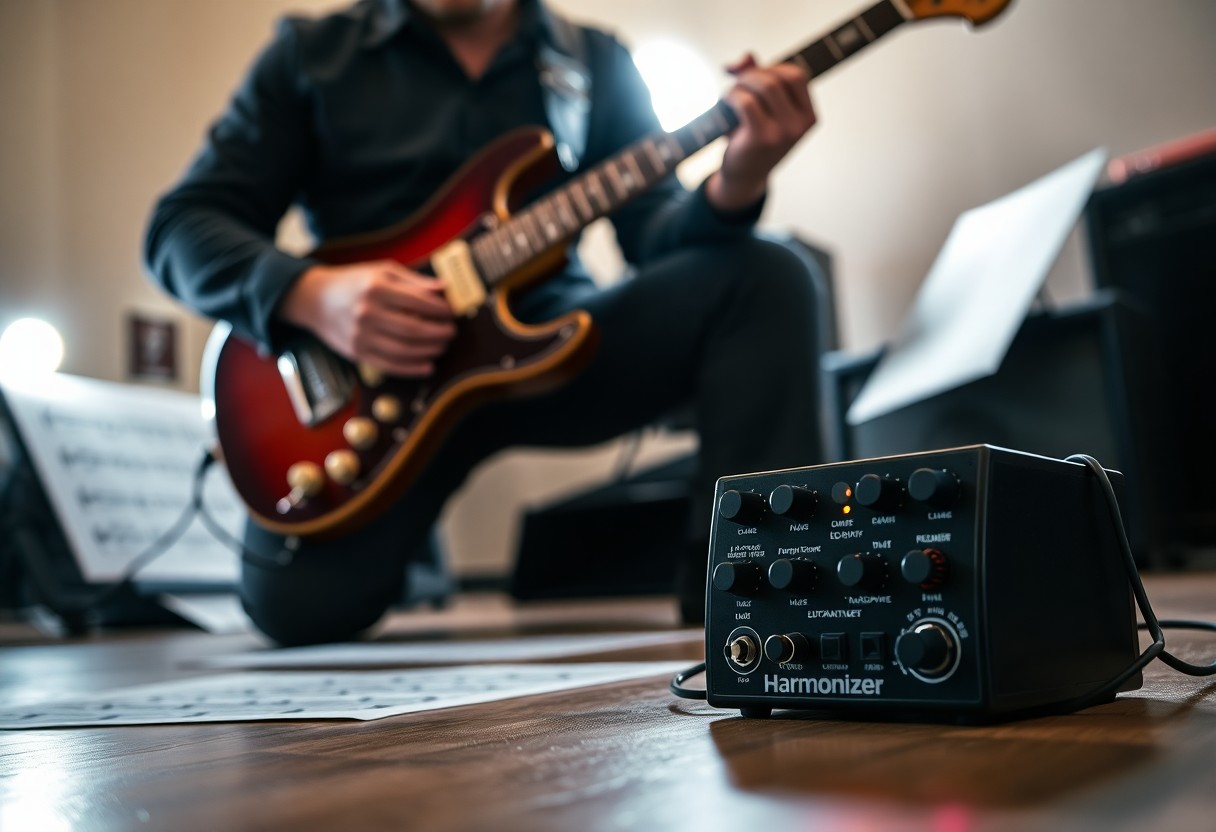

Just imagining the unique layers of sound you can create with a harmonizer pedal can ignite your creativity as a guitarist. By blending your guitar notes with harmonies, you can develop rich textures and harmony lines that elevate your music to new heights. This guide will walk you through the importants of integrating a harmonizer pedal into your guitar setup. Whether you’re a beginner or an experienced player, you’ll discover key techniques to make the most of this powerful tool in your playing arsenal.
Unlocking the Harmonizer’s Potential
Mastering your harmonizer pedal opens up a world of possibilities for your guitar playing. With the right approach, you can create rich, intricate compositions that elevate your music beyond basic chords. Experiment with different settings and modes to discover what resonates most with your style. As you dive deeper, don’t hesitate to combine harmonies with other effects like delay and reverb, enhancing your sound even further.
Exploring the Basics of Harmony Creation
To begin creating harmony, you’ll need to adjust the intervals and settings on your harmonizer pedal. You can choose to add a third, fifth, or octave above or below your played notes, which introduces new chords and textures. Try playing a simple melody, and use your pedal to overlay harmonies that complement your playing. This foundational understanding allows you to create dynamic musical phrases effortlessly.
Understanding the Different Types of Harmonizer Pedals
Not all harmonizer pedals are created equal, each offering unique functionalities that cater to various musical styles. Some pedals allow for fixed harmonies, while others enable real-time pitch shifting, creating a more expressive playing experience. You’ll encounter multi-voice options, allowing you to layer multiple harmonies on top of each other. Here’s a breakdown of the common types:
| Type of Pedal | Description |
|---|---|
| Fixed Harmonizers | Pre-set harmonies that trigger with specific notes. |
| Real-Time Pitch Shifters | Adjusts pitch based on your playing instantly. |
| Multi-Voice Harmonizers | Lays down multiple harmonies simultaneously. |
| Modular Harmonizers | Combines with other modules for custom sound creation. |
| Mobile Apps | Software harmonizers that can simulate pedal effects. |
- As you explore these types, consider your musical goals and playing style.
Understanding the different types of harmonizer pedals allows you to tailor your effects to create a unique sound. For instance, if you’re looking for versatility, a multi-voice harmonizer could be a great fit, allowing for simultaneous harmonies. Alternatively, a fixed harmonizer simplifies the process for straightforward melody enhancement. The market also includes modular pedals that give you the flexibility to mix and match various effects. Pay attention to how these options align with your musical preferences.
| Feature | Benefit |
|---|---|
| Interval Selection | Customize your harmonies. |
| Real-Time Adjustments | Dynamic performance enhancement. |
| Multiple Outputs | Flexibility in sound reinforcement. |
| Compact Size | Easy to integrate into your rig. |
| Patch Presets | Quick access to your favorite settings. |
- Assume that by matching the pedal’s features to your creativity, you will greatly enhance your playing experience.

Mastering Harmonization Techniques
Your ability to create rich and diverse soundscapes with your guitar vastly improves when you master harmonization techniques. Start by layering simple melodies with harmonies to develop an ear for how different notes interact. Experiment with intervals, exploring thirds, fifths, and even tenths, to enrich your musical phrases. By carefully selecting harmonies that complement your main melody, you’ll unlock an array of textures and emotional depth in your playing.
Crafting Melodic Lines with Dual Harmonies
Think of dual harmonies as the musical equivalent of a full-bodied wine; they add complexity and richness to your melodic lines. By manipulating your harmonizer pedal to generate two harmonies above or below your root note, you can craft intricate layers that breathe life into otherwise simple riffs. This technique doesn’t just enhance your sound; it also allows you to create dynamic contrasts and maintain listener interest throughout your performance.
Incorporating Modal Harmonies for Unique Soundscapes
Utilizing modal harmonies opens up a treasure trove of unique sound possibilities. Each mode, from Dorian to Phrygian, provides distinct tonal qualities that can transform your improvisation and composition. By experimenting with modal harmonies, you can add unexpected shifts in mood, infusing a particular exotic or ethereal quality to your music, thus engaging your audience more deeply.
Delving into modal harmonies starts with understanding their scales and how they relate to the key you’re working in. For example, using the Dorian mode over a minor chord progression introduces a subtle brightness that can elevate your typical sound. Pairing your guitar with a harmonizer pedal while exploring these modal relationships allows you to create striking, otherworldly textures. You might find that layering a Dorian pattern over a minor chord progression introduces a dynamic, uplifting feel that’s refreshingly different from conventional harmonizations. Embrace the full spectrum of modes to deepen your musical expression.
Blending Rhythm and Harmony
Incorporating a harmonizer pedal into your guitar playing not only enhances melody but also enriches your rhythm. By creating harmonious layers beneath your chord progressions, you can develop a more complex sound that feels fuller and more engaging. Experimenting with different intervals can help you discover new textures, and adjusting the mix level allows you to achieve that perfect balance where your rhythm complements the harmonic backdrop without overwhelming it. This is where the magic happens, as rhythm and harmony intertwine to form an intricate aural tapestry.
Syncopation Strategies with Harmonizer Effects
Utilizing syncopation with a harmonizer adds depth and excitement to your playing. Shift your rhythms off the beat to create unexpected accents while the pedal chimes in with harmonies that elevate these syncopated patterns. For instance, play a straightforward strumming pattern and intersperse it with occasional staccato notes that contrast against regular strums. This contrast not only highlights the harmonizer’s effect but places your rhythmic creativity front and center, engaging your listeners in fresh ways beyond the typical strumming approach.
Creating Layers: Rhythm Guitar Meets Harmonization
Layering is a powerful technique when combining rhythm guitar with harmonization through your pedal. Begin by establishing a strong rhythmic foundation—perhaps a simple chord progression played cleanly. Once you feel confident, introduce the harmonizer, selecting a voicing that complements your chords without clashing. You can experiment with slight detunes or delays, creating an ethereal quality that adds dimension. By layering different harmonies above the rhythmic base, you’ll discover unique sounding parts that not only enhance but also transform your riffs into something much more captivating, engaging the audience in a multi-faceted sonic experience.

Troubleshooting Common Challenges
As with any effect pedal, using a harmonizer can come with its set of challenges. You may find that achieving the desired pitch and tone is trickier than expected, or you might encounter feedback issues that disrupt your sound. Identifying the root of these problems is the key to overcoming them. Through a few adjustments and techniques, you can enhance your playing experience and make the most of your harmonizer pedal.
Avoiding Discomfort with Pitch and Tone
Pitch issues often arise when your guitar isn’t properly tuned. Make sure to check your tuning regularly, as even slight discrepancies can lead to discomfort when harmonized notes clash. Additionally, experimenting with the harmonizer settings can yield better tonal results. Spend time finding the right direction and interval for your harmonies to ensure a balanced and pleasant sound.
Addressing Feedback Issues and Frequency Problems
Feedback can plague your performance when using a harmonizer pedal, particularly if you’re in close proximity to your amplifier. To tackle this, consider adjusting your position or angling your guitar away from the amp. Also, playing with the harmonizer’s tone and mix settings can help maintain control over your sound. If feedback persists, using a noise gate can significantly reduce unwanted interference while allowing your harmonizer’s intended effect to shine.
Addressing Feedback Issues and Frequency Problems
Sometimes, feedback occurs due to improperly set gain levels or too much reverb. Balancing your harmonizer’s output with your amp’s gain controls can create a smoother interaction, minimizing distortion that causes feedback. Utilize the equalizer settings on your amplifier to cut certain harsh frequencies that conflict with your harmonizer’s tones. If using multiple pedals, ensure a logical signal chain order, as this can help avoid unwanted noise during harmonization. Additionally, experimenting with different guitar pickups can yield unique results that reduce feedback and enhance clarity.

Expanding Your Creative Horizons
Exploring a harmonizer pedal opens up endless possibilities for your musical expression. By layering harmonies and experimenting with pitch shifts, you can create lush soundscapes that take your compositions to new heights. Push your boundaries by trying different scales and modes, allowing the pedal to provide a fresh sonic palette. This experimentation can lead you to unexpected musical directions that deepen your artistry, whether through songwriting or improvisation.
Integrating Harmonizers with Other Effects
Combining your harmonizer with other effects can yield innovative sounds that redefine your guitar playing. Consider pairing it with delay and reverb to create a spacious atmosphere, or mix it with distortion for a heavier, more textured sound. Each combination can produce unique layers, helping you discover new rhythms and melodies that you might not have explored with just the harmonizer alone. This multi-effect approach encourages experimentation, ultimately enriching your musical journey.
Inviting Collaborations: Harmonizers in a Band Setting
In a band context, harmonizers can significantly enhance the overall sound, providing depth and richness to arrangements. Imagine your guitar harmonies intertwining with vocal lines or instrumental solos, creating a more dynamic and engaging performance. The harmonies from your pedal can serve as a backdrop for other musicians, enhancing their performance while adding a new dimension to the collective sound. By communicating and experimenting with your bandmates, you can find the best ways to integrate harmonizers into your shared music, forging a unique musical identity together.
Summing up
Drawing together the techniques for using a harmonizer pedal, you can enhance your guitar playing by exploring various chord voicings and intervals. It’s imperative to experiment with different settings to find the sound that best suits your style. Practicing regularly while adjusting the pedal’s parameters will help you discover the unique possibilities that a harmonizer offers in your music. With persistence and creativity, you can significantly elevate your guitar performance and enrich your musical expression.
FAQ
Q: What is a harmonizer pedal and how does it enhance guitar playing?
A: A harmonizer pedal is an effects device that adds harmonies to the notes you play on your guitar, creating richer sounds. It works by capturing the pitch of your input signal and generating additional pitches based on intervals you choose. By adjusting settings like the harmony range (e.g., thirds, fifths) and mixing levels, you can create a backdrop of harmonized sounds that complement your playing. This can make solos more dynamic or enhance the overall texture of your music, making it more engaging for listeners.
Q: How can I set up my guitar with a harmonizer pedal for the best results?
A: To set up your guitar with a harmonizer pedal effectively, start by connecting your guitar to the input of the pedal. From there, connect the output of the pedal to your amplifier or effects chain. It’s important to toggle through different harmony types and intervals before you begin playing; start with simple settings, and gradually experiment with more complex harmonies. Additionally, adjusting the mix level and the dry/wet blend can help you find the right balance, ensuring the harmonies complement rather than overpower your original sound.
Q: What techniques can I use to make the most out of a harmonizer pedal while playing guitar?
A: To get the most from a harmonizer pedal, focus on incorporating specific playing techniques such as single-note lines, arpeggios, and power chords. Experiment with different musical styles – for example, using harmonies on lead lines in rock or melodic phrases in jazz. You can also try fingerpicking or hybrid picking to add texture. Additionally, consider using the pedal in conjunction with different effects like reverb or delay to further enrich your sound. Practice layering harmonies by playing melodies over chords; this will enhance your overall playing experience and creativity.