

Over the years, the tremolo pedal has emerged as an imperative tool for guitarists seeking to add depth and texture to their sound. In this guide, you will learn how to effectively use a tremolo pedal to enhance your playing, explore various settings, and incorporate rhythmic modulation into your music. Whether you’re a beginner or an experienced player, mastering this pedal will give you the ability to create unique tones that elevate your guitar performances. Let’s probe the techniques and tips that will help you unlock the full potential of your tremolo pedal.
Unpacking the Tremolo Effect
Understanding the tremolo effect enhances your guitar experience significantly. This modulation effect creates a dynamic, pulsating sound by varying the amplitude of the signal. It adds a vibrant texture to your playing, transforming simple chords into captivating soundscapes. From subtle waves to pronounced swells, tremolo can evoke a range of emotions in your music and easily breathe life into your performances.
How Tremolo Differs from Other Effects
Tremolo stands apart from other effects like reverb or delay due to its manipulation of volume rather than time or pitch. Reverb adds depth and space, while delay repeats notes at specified intervals. Tremolo, however, creates a rhythmic fluctuation in volume, providing a unique pulse that enhances the musicality of the performance while retaining the original tone of your guitar.
The Science Behind the Sound
The tremolo effect relies on the modulation of amplitude, which alters the volume of the audio signal in a cyclic manner. This modulation is typically governed by an LFO (low-frequency oscillator), which dictates the rate and depth of the effect. This creates distinct waveforms—including sine, square, or triangle waves—each imparting different tonal characteristics. For instance, a sine wave produces a smooth modulation, while a square wave generates a more abrupt volume change, resulting in a choppy sound.
When exploring the science behind tremolo, consider how waveforms interact with your guitar signal. Sine waves create a gentle rise and fall, allowing notes to blend seamlessly into one another, while square waves offer a stark contrast with rapid volume cuts. Additionally, the rate at which the LFO operates—measured in Hz—determines the speed of modulation. Slower tremolo settings can evoke a dreamy atmosphere, while faster speeds add an energetic drive frequently used in rock and surf music. Understanding these parameters lets you play with texture and mood, enriching your musical expression.
Essential Gear for the Perfect Tremolo Sound
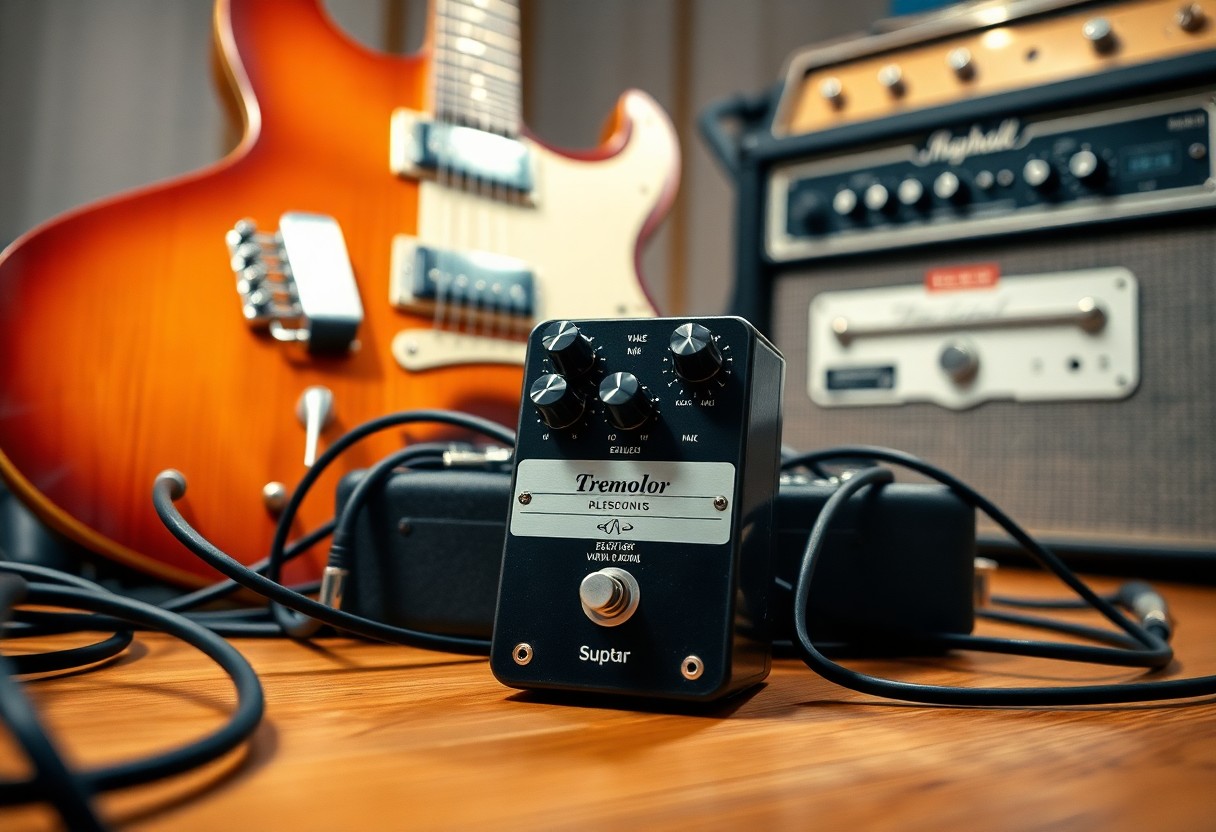
To achieve a top-notch tremolo sound, you’ll need a few key pieces of gear that work harmoniously. Besides your guitar, a high-quality amplifier can significantly enhance the tonal quality of your tremolo effect. Additionally, consider using a decent overdrive or boost pedal if you want to push your sound further. Lastly, ensure you have quality cables and power supplies; poor connections can impede your signal, leading to unwanted noise or signal loss.
Choosing the Right Tremolo Pedal
The right tremolo pedal can make or break your sound. Different pedals offer various waveforms and modulation options, such as sine, square, or triangle waves, which can dramatically alter your tone. You’ll want to test a few to see which responds best to your playing style. Models from brands like Boss, Strymon, or MXR have a variety of features for all music genres, so explore your options before making a purchase.
Integrating Tremolo into Your Guitar Setup
Integrating a tremolo pedal into your setup is straightforward and can enhance your overall tone. Place the pedal in your effects chain typically after distortion or overdrive pedals for a more pronounced effect. This positioning allows the tremolo to modulate the already colored sound, giving you greater texture and depth. Experimenting with different pedal placements will help you discover the best sound that suits your music style.
When integrating tremolo, consider your entire signal chain; for instance, if you have multiple modulation effects, you can achieve unique sounds by placing the tremolo pedal in different slots. Adjust the speed and depth settings while jamming to explore the effects’ dynamics. You may find that using lower depth settings produces a subtle, pulsating ambiance, while higher settings create a pronounced and sweeping effect, perfect for solos or atmospheric sections in your playing style.
Mastering Playing Techniques with Tremolo
Mastering playing techniques with a tremolo pedal can dramatically enhance your musical expression. By experimenting with various picking styles, such as fingerpicking or hybrid picking, you can create intricate melodic lines that truly showcase the pedal’s depth. Additionally, manipulating the depth and speed settings allows for unique dynamics, turning simple chord progressions into lush soundscapes. Focusing on your timing and syncopation broadens the creative possibilities, giving your performances an engaging, rhythmic flair.
Techniques for Dynamic Rhythmic Playing
Dynamic rhythmic playing with a tremolo pedal involves combining varied strumming patterns with the modulation effect. Try incorporating palm muting or accented strumming for a layered rhythmic texture. Adjusting the tremolo speed in sync with your strumming can lead to pulsing, energetic patterns. As you develop your skills, aim to connect the tremolo’s rhythm with the natural flow of your playing, enhancing the overall groove and energy of your performance.
How to Combine Tremolo with Other Effects
Combining tremolo with other effects opens a world of sonic possibilities. You can pair it with reverb for a spacious sound or stack it with distortion to create a textured wall of sound. For example, applying tremolo alongside a delay can produce rhythmic echoes that add depth to your playing. Experimenting with the order of pedals in your signal chain will further influence the overall tone—placing the tremolo before overdrive can yield different results compared to after.
The interplay between tremolo and other effects can enhance your guitar tone significantly. Using a delay pedal in conjunction with tremolo allows for rhythmic patterns that can create a wave-like motion in your music. A subtle delay with a short feedback time can complement the tremolo’s modulation, resulting in lush soundscapes perfect for ambient settings. Alternatively, layering tremolo over a chorus effect can add a shimmering quality, making your leads and chords stand out more clearly in a mix. Being intentional with your effects will help you uncover unique textures and styles that define your sound.
Creative Applications of Tremolo in Music
The tremolo effect offers a vast sonic palette that can beautify melodies and enhance the emotional depth of your playing. By adjusting the speed and depth of the modulation, you can create everything from gentle swells to intense, pulsating rhythms. For instance, utilizing a slower rate can turn a simple chord progression into an atmospheric soundscape, perfect for ballads and ambient tracks. Conversely, a faster setting can inject an adrenaline rush into rock solos or funk riffs, making your sound distinctive and memorable.
Genre-Specific Ways to Use Tremolo
Your approach to tremolo can vary significantly depending on the genre of music you’re playing. In surf rock, for example, a strong, fast tremolo can mimic the crashing waves, while in country music, a subtle modulation complements the storytelling aspect of the lyrics. For psychedelic rock, swirling tremolo can create an ethereal sound. Understanding the nuances of each genre will allow you to apply tremolo effectively and elevate your performances.
Influential Artists and Their Use of Tremolo
A variety of influential artists have utilized tremolo to carve out iconic sounds. Jimi Hendrix is one of the most notable, using a strong tremolo effect in tracks like “Little Wing,” where it adds a dreamy quality. Other artists such as Jeff Beck and Stevie Ray Vaughan have also embraced tremolo as a core component of their signature styles, each incorporating it in unique ways across various tracks and albums.
Jimi Hendrix’s use of the tremolo effect in “Little Wing” showcases how such modulation can blend seamlessly with blues and rock elements, creating a rich, shimmering texture. Jeff Beck often paired tremolo with bending techniques, adding depth to his melodic lines. Stevie Ray Vaughan used tremolo to accentuate his passionate riffs, providing a rhythmic pulsation that kept the listener engaged. Each artist has mastered the way tremolo enhances their musical narrative, influencing countless musicians who aspire to harness the same emotive power. Their innovative applications of this effect continue to inspire musicians across genres today.
Troubleshooting Common Issues with Tremolo Pedals
Tremolo pedals can enhance your sound, but they may present specific challenges. Understanding how to troubleshoot common issues ensures that your pedal consistently performs at its best. Whether you’re grappling with uneven modulation or peculiar volume changes, discovering solutions helps maintain a smooth playing experience and keeps your creativity flowing.
Fixing Signal and Volume Problems
If you’re experiencing inconsistencies in your signal or unexpected volume drops, first check your pedal connections and cables. Loose connections can cause signal loss. Additionally, if the tremolo effect feels weak, adjust the depth and speed settings on your pedal. Sometimes, a simple power cycle by turning the pedal off and back on can reset internal settings that may be interfering.
Maintaining Your Equipment for Optimal Performance
Regular maintenance of your tremolo pedal and related equipment plays a vital role in sustaining an optimal performance. Dust and debris can accumulate over time, potentially causing unintended noise or failures in signal quality. Keep your gear clean by wiping it down with a soft, dry cloth and ensuring that connections are free from corrosion.
To further extend the life of your tremolo pedal, consider implementing a regular inspection schedule. Look for any signs of wear or damage, especially on cables and connectors. Additionally, investing in quality surge protectors can help prevent damage from electrical spikes. Periodic updates or firmware checks for digital pedals can also optimize performance, ensuring you capitalize on any enhancements offered by your pedal manufacturer.
Summing up
As a reminder, mastering the use of a tremolo pedal can significantly enhance your guitar playing. By adjusting the depth and rate settings, you can create a range of textural effects that elevate your sound. Experiment with different styles and settings to find the perfect tone for your music. Incorporate the tremolo effect into your playing by syncing it with your strumming or picking patterns. With practice and creativity, you’ll discover unique ways to enrich your guitar performances and engage your audience.
FAQ
Q: What is a tremolo pedal and how does it affect my guitar sound?
A: A tremolo pedal modulates the amplitude of your guitar signal, creating a wave-like effect that can make your sound feel dynamic and lively. By adjusting the speed and depth settings on the pedal, you can create gentle swells or more pronounced fluctuations in volume, adding texture to your playing. This effect is different from vibrato, which modulates pitch rather than volume.
Q: How do I set up my tremolo pedal for optimal use during a performance?
A: To set up your tremolo pedal, first connect it to your guitar and amplifier following the signal chain. Typically, place the pedal towards the end of your effects loop, just before the amp. Adjust the settings such as depth to control how pronounced the effect is, and speed to dictate how quickly the volume oscillates. Start with moderate settings and tweak them based on your preferences and the song’s vibe. Make sure to check how the pedal interacts with other effects in your chain for the best overall sound.
Q: Are there specific techniques or tips for incorporating a tremolo pedal into my playing style?
A: To effectively incorporate a tremolo pedal into your playing, practice using it in conjunction with different strumming patterns and techniques. For instance, try using the tremolo effect on sustained chords for a swell effect or experiment with picking patterns while the pedal is engaged to create rhythmic nuances. Consider the tempo of your songs; a slower tremolo can complement ballads while a faster setting can energize up-tempo tracks. Additionally, explore the use of the pedal during solos or transitions to enhance the emotional impact of your performance.