
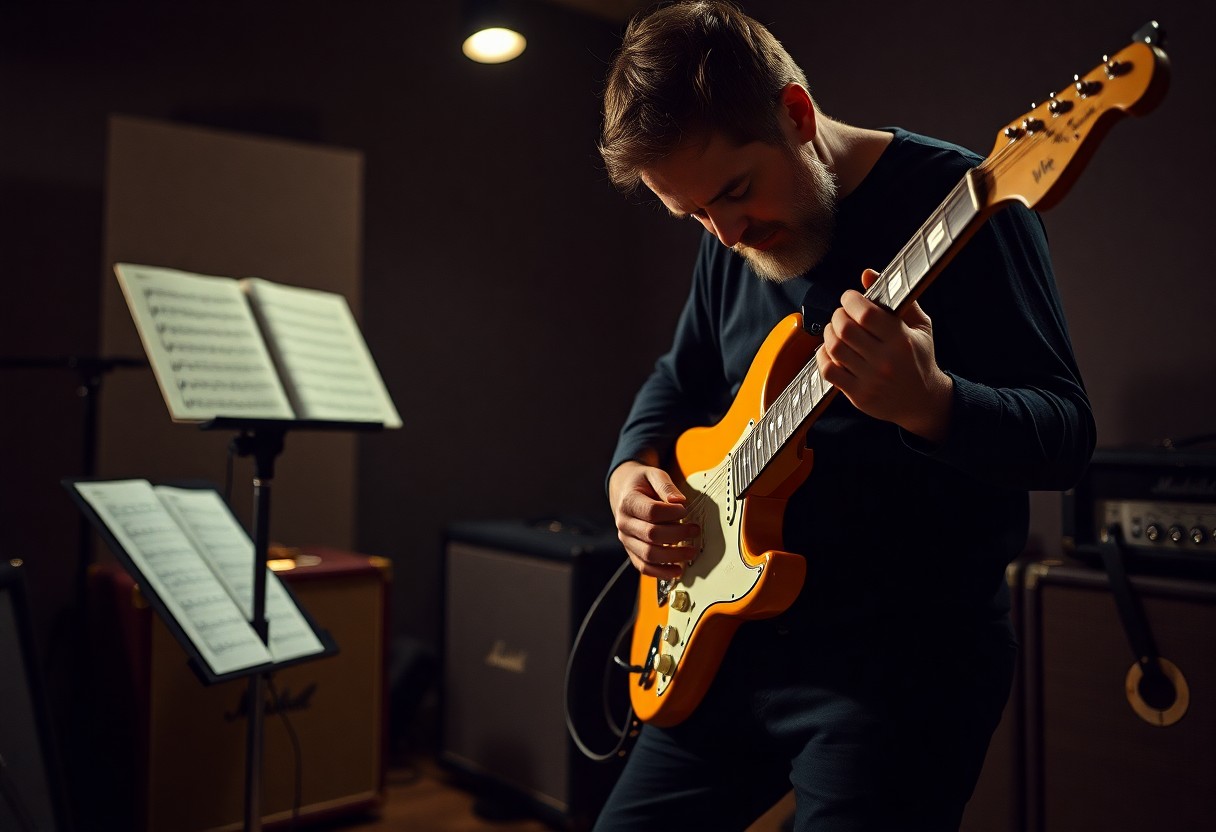

Most guitarists seek to enhance their sound and versatility, and incorporating a volume pedal can be a game-changer for your playing style. This powerful tool allows you to control your instrument’s dynamics with precision, enabling you to create smooth fades, add swells, and manage your overall volume effortlessly. In this guide, you’ll learn how to effectively integrate a volume pedal into your setup, make the most of its benefits, and avoid common pitfalls that could impact your sound. With these tips, you’ll be well on your way to mastering the expressive possibilities a volume pedal offers.
Key Takeaways:
- Position the volume pedal in your signal chain to effectively control the dynamics of your guitar sound; placing it earlier in the chain can influence tone and effect interactions.
- Develop a consistent foot technique to smoothly engage and disengage the volume pedal, allowing for expressive volume swells and creating a more nuanced performance.
- Experiment with different playing styles and settings to discover how the volume pedal interacts with various effects, enhancing your overall sound and musical expression.
The Volume Pedal: An Instrument in Its Own Right
The Mechanism Behind the Volume Pedal
A volume pedal operates via a simple yet effective mechanism that adjusts the signal from your guitar based on the position of your foot. Inside, a potentiometer or an optical sensor converts the movement into changes in audio signal level. This allows you to smoothly fade in and out your sound, creating expressive dynamics that react to your playing style and performance mood.
Essential Functions and Features
Volume pedals are not just volume controls; they offer imperative functions that elevate your guitar playing. Many models feature adjustable taper settings, enabling you to customize how quickly the volume increases or decreases. Some pedals even include additional features like built-in buffers, which maintain signal integrity and prevent tone loss over long cable runs, allowing for a cleaner sound without compromising any quality.
Choosing a volume pedal with imperative features can significantly enhance your performance flexibility. For instance, a pedal with built-in tuning functionality allows you to mute your output while tuning, which is helpful for quick adjustments on stage. Additionally, pedals with expression capabilities enable you to control other effects, giving you further creative freedom in crafting your sound. Investing in a versatile volume pedal can truly transform your playing experience, making it a staple in your guitar setup.
Crafting Your Sound: Getting Started With the Volume Pedal
Choosing the Right Volume Pedal for Your Needs
Selecting the right volume pedal depends on your playing style and setup. Battery-powered pedals offer portability, while their AC-powered counterparts tend to have more robust features. Look for pedals with a smooth taper and solid construction to withstand regular use. Brands like Dunlop and Ernie Ball provide reliable options, and it’s worth trying them out to discover which feels best under your foot.
Setting Up Your Pedalboard for Optimal Performance
A well-organized pedalboard makes all the difference in ensuring your volume pedal performs at its best. Position the volume pedal at the forefront of your signal chain after any distortion effects but before modulation and delay pedals. This arrangement helps you maintain a clean tone, allowing the nuances of your sound to shine through while giving you full control over volume dynamics.
Pay attention to your cable management as well. Using high-quality patch cables reduces noise and signal loss, enhancing overall performance. Consider adding a power supply with isolated outputs to minimize hum and interference across your entire rig. Experiment with the placement and ensure you have enough space to adjust the pedal comfortably while performing. This attention to detail will not only enhance your sound but also contribute to your overall playing experience.
Play Styles Reimagined: Integrating the Volume Pedal
Techniques for Dynamic Swells
Utilizing the volume pedal for dynamic swells opens up a world of expressive guitar playing. By gently pushing down on the pedal, you can create a gradual crescendo that mimics the swell of a violin or other sustaining instruments. Experiment with varying speeds of pedal movement to manipulate the emotional impact of your notes. Pair this technique with rich chords or single notes to enhance your sonic palette, allowing you to control both the intensity and the attack of your sound.
Creating Contrasting Textures with Volume Automation
Incorporating volume automation adds depth to your playing, enabling you to craft contrasting textures within your guitar parts. For example, by using the pedal to alternate between soft, clean tones and full, distorted sounds, you can achieve intricate dynamics that keep the listener engaged throughout your performance. This approach allows your music to ebb and flow organically, highlighting different sections or motifs effortlessly.
Instead of relying solely on preset effects or backing tracks, integrating volume automation with your playing can heighten the emotional quality of your music. You can create verses with delicate, whisper-like sounds and seamlessly transition to powerful, commanding choruses by adjusting the pedal’s position in real-time. This technique not only showcases your ability to manipulate sound but also transforms the overall texture of your performance, inviting your audience into an immersive listening experience. It’s a powerful tool that encourages you to explore the many dimensions of your artistry.
The Art of Expression: Mastering Pedal Footwork
Coordinating Foot Movements with Guitar Playing
Synchronizing your footwork with your guitar playing is vital for achieving fluid dynamics in your performance. Engaging the volume pedal while executing chords or solos allows you to manipulate the sound’s intensity, enhancing emotional expression. Start by practicing simple progressions where you gradually increase or decrease the volume in tandem with your strumming or picking patterns, ensuring that your pedal movements are as natural as your finger placements.
Tips for Developing Precision and Control
Gaining precision and control over your footwork comes from consistent practice and mindful exercises. Experiment with different techniques, such as using a metronome to regulate your timing, allowing you to maintain an even tempo while working on your pedal technique. Incorporate exercises where you focus solely on smooth transitions between volume levels without disrupting your playing. Mastering this aspect will ultimately elevate your performance, making the pedal an extension of your musical voice. Knowing that controlled movements lead to impactful expression will make your guitar playing more immersive.
- Practice</strong regularly with a metronome.
- Focus on smooth transitions in volume.
- Incorporate specific exercises targeting your footwork.
- Calibrate your movements with your guitar dynamics.
Precision in your pedal movements fosters a deeper connection between your technique and expression. You can create a seamless experience by breaking down complex passages into smaller segments and practicing them slowly. By dedicating time to formulate a solid foundation with these techniques, you can ensure that each performance feels polished and expresses your musical intent perfectly. Knowing this method will not only enrich your sound but also instill confidence in your playing.
- Break down complex sections for focused practice.
- Dedicate time to refining the relationship between pedal use and your sound.
- Embed controlled foot movements into your playing routine.
- Encourage experimentation to find your unique style.
Genre-Specific Applications: Volume Pedal in Action
Rock and Blues: Amplifying Emotion
In rock and blues, the volume pedal serves as an emotional amplifier. By smoothly adjusting the gain, you can shape your solos, enhancing their expressiveness. A gradual swell can turn a simple note into a powerful cry, injecting your performance with raw feeling. For instance, using your pedal during a sustained bend or a climactic solo passage can elevate the experience, creating an enthralling atmosphere for your audience. The dynamic range that opens up with a volume pedal can make a world of difference in delivering your musical message.
Ambient and Post-Rock: Crafting Ethereal Soundscapes
Ambient and post-rock genres thrive on textures and feelings, making the volume pedal an important tool for creating immersive soundscapes. You can manipulate the pedal to produce lush swells and gradual fades that transport listeners to otherworldly realms. Layering different guitar parts while attenuating the mix with your pedal can give depth and dimension to your compositions, inviting your audience to get lost in the music.
Through the use of a volume pedal, you can blend and manipulate sounds seamlessly, creating a sonic atmosphere that feels both expansive and intimate. Techniques such as controlled swells can mimic the smooth transitions often found in synthesized sounds, allowing you to merge organic guitar tones with ethereal textures. By employing effects like reverb and delay alongside the volume pedal, you can achieve long, reverberating notes that drift away into silence, setting a captivating mood that captivates your listeners. Employing these techniques can transform any performance into an unforgettable auditory experience.
Troubleshooting Common Challenges
Volume Pedal Issues: Dropouts and Signal Loss
Experiencing dropouts or signal loss with your volume pedal can be frustrating. Check your connections first; ensure the cables are securely plugged in and free from damage. If problems persist, consider trying different cables, as faulty ones can lead to signal degradation. Additionally, some pedals can have internal issues, so it may be beneficial to test the pedal with another guitar or amp setup to isolate the problem.
Overcoming Learning Hurdles with the Volume Pedal
Mastering the volume pedal’s functionality takes practice and patience, especially when integrating it into your playing style. Expect to encounter initial challenges, like timing your foot movements or achieving the desired level of dynamics with your notes. Keep in mind that gradual adjustments can lead to smoother transitions and more expressive playing. Focus on simple exercises at first, and over time, experiment with more complex techniques as you gain confidence.
To develop a natural feel with the volume pedal, practice incorporating it into your song repertoire. Start with simple phrases, allowing your foot to control the dynamics while you focus on other aspects of your guitar playing. Gradually introduce the volume pedal into your solos or sections where you want to create a specific atmosphere. You might consider using a metronome to help develop your timing, ensuring that your foot movements sync flawlessly with your playing. Document your progress, keeping track of moments where the pedal enhanced your expressiveness, and recognize how far you’ve come!
Beyond Volume: Exploring Other Effects and Accessories
Combining the Volume Pedal with Other Pedals
Integrating your volume pedal with other effects pedals can open a world of sonic possibilities. Pairing it with modulation effects like chorus or delay, for example, allows you to create sweeping textures that evolve dynamically as you adjust the volume. Using a distortion pedal in conjunction with your volume pedal lets you achieve a range from subtle crunch to full-blown saturation, enabling you to seamlessly transition between clean and overdriven tones while maintaining expressiveness.
Creative Uses: Beyond Just Volume Control
A volume pedal can act as a powerful tool for creating unique soundscapes beyond merely controlling loudness. You can use it to manipulate the envelope of effects like reverb and delay, turning ambient backgrounds into dramatic moments. For instance, swells created by gradually increasing the volume can make sustained notes feel ethereal, enhancing your overall performance. Similarly, the pedal can facilitate dynamic contrasts, allowing you to highlight specific notes or phrases within a solo effortlessly.
Exploring the use of a volume pedal to automate effects opens new creative avenues as you craft your sound. By employing techniques like reverse swells or ducking effects, you can mold the music’s dynamics and texture. Consider using it to modulate a long delay effect; as you swell into notes, the echoes fade as you lower the volume, creating a rhythmic push and pull that can captivate your audience. Experimenting with these ideas not only enhances your expressiveness but also encourages a unique approach to songwriting and performance, making your sound stand out.
The Transformative Power of the Volume Pedal
Personal Stories from Guitarists on Their Journey
Your journey as a guitarist can take unexpected turns, and many musicians share that a volume pedal has been a vital part of their development. For instance, renowned guitarist Joe Satriani recalls his early days, discovering how a simple volume pedal could elevate his sound from ordinary to extraordinary. By enabling seamless dynamics and expressive swells, it became an vital tool in his arsenal, allowing for deeper emotional connection through his music.
The Volume Pedal’s Role in Evolving Guitar Techniques
The volume pedal is not just an accessory; it’s a transformative tool that has shaped modern guitar techniques significantly. Guitarists are now using volume pedals to create intricate soundscapes, merging genres and developing styles that weren’t possible before. Techniques like volume swells, ambient textures, and expressive note control grow more intricate as players synthesize the pedal into their routines. Musicians find themselves exploring layers and dimensions of sound, often blending it seamlessly with effects, which has led to an expansive evolution in how guitar is played and perceived today.
Conclusion
Conclusively, incorporating a volume pedal into your guitar playing can enrich your sound and offer a dynamic range to your performances. By practicing the art of volume control, you’ll enhance your ability to express emotions through your music. Experiment with pedal placement and settings to find the perfect balance that complements your style. As you develop your skills, you’ll discover how a volume pedal can elevate your playing, making it more engaging for both you and your audience.
FAQ
Q: What is the purpose of using a volume pedal when playing guitar?
A: A volume pedal allows guitarists to dynamically control the overall loudness of their instrument during performances. By stepping on the pedal, players can gradually increase or decrease the volume, allowing for smooth transitions between soft and loud passages. This can enhance expressiveness in playing, enabling techniques like swell effects, where the sound swells in volume over time.
Q: How do I connect a volume pedal to my guitar setup?
A: To connect a volume pedal, you typically need to place it between your guitar and amplifier or effects chain. First, take a quarter-inch instrument cable and plug one end into your guitar. Then, connect the other end to the input of the volume pedal. Finally, use another quarter-inch cable to connect the output of the volume pedal to your amplifier or the next effects unit in your chain. Make sure to position the pedal where it is easily accessible during your performance.
Q: Can I use a volume pedal with effects pedals?
A: Yes, a volume pedal can be used effectively in conjunction with other effects pedals. For optimal results, place the volume pedal early in the effects chain if you want to control the input gain of the effects. Alternatively, placing it at the end of the chain allows for overall volume adjustments, letting you maintain the character of your effects while controlling the final output level. Experimenting with different placements in your signal path will help achieve the sound you desire.
Q: What techniques can I use with a volume pedal to enhance my playing?
A: There are various techniques that can be enhanced by using a volume pedal. One popular technique is the “volume swells,” where you gradually increase the volume to create a smooth, vocal-like sound. Additionally, you can use the volume pedal to achieve soft beginnings and ends to notes or chords, which can add a more professional feel to your playing. Combining volume pedal use with fingerpicking can also produce unique dynamics and textures in your music.
Q: Are there different types of volume pedals available, and how do I choose one?
A: Yes, there are several types of volume pedals, including passive and active models. Passive pedals do not require power and work by modifying signal strength, while active pedals use a battery or power supply to boost the signal, often providing better performance with longer cable runs. Consider factors such as your setup, whether you use batteries or an AC power adapter, and any specific features you may want, like a tuner output. Try testing different models to find one that feels comfortable and meets your performance needs.