


Over the years, the octave pedal has become an important tool for guitarists seeking to expand their tonal range and enrich their sound. In this informative guide, you will learn how to effectively use an octave pedal to create unique sonic textures and enhance your playing. Whether you’re looking to add depth to your riffs or explore new musical possibilities, mastering the octave pedal can elevate your guitar skills to new heights. Get ready to explore the versatility of your instrument and enrich your music with this powerful effect.
Crafting Your Signature Sound with an Octave Pedal
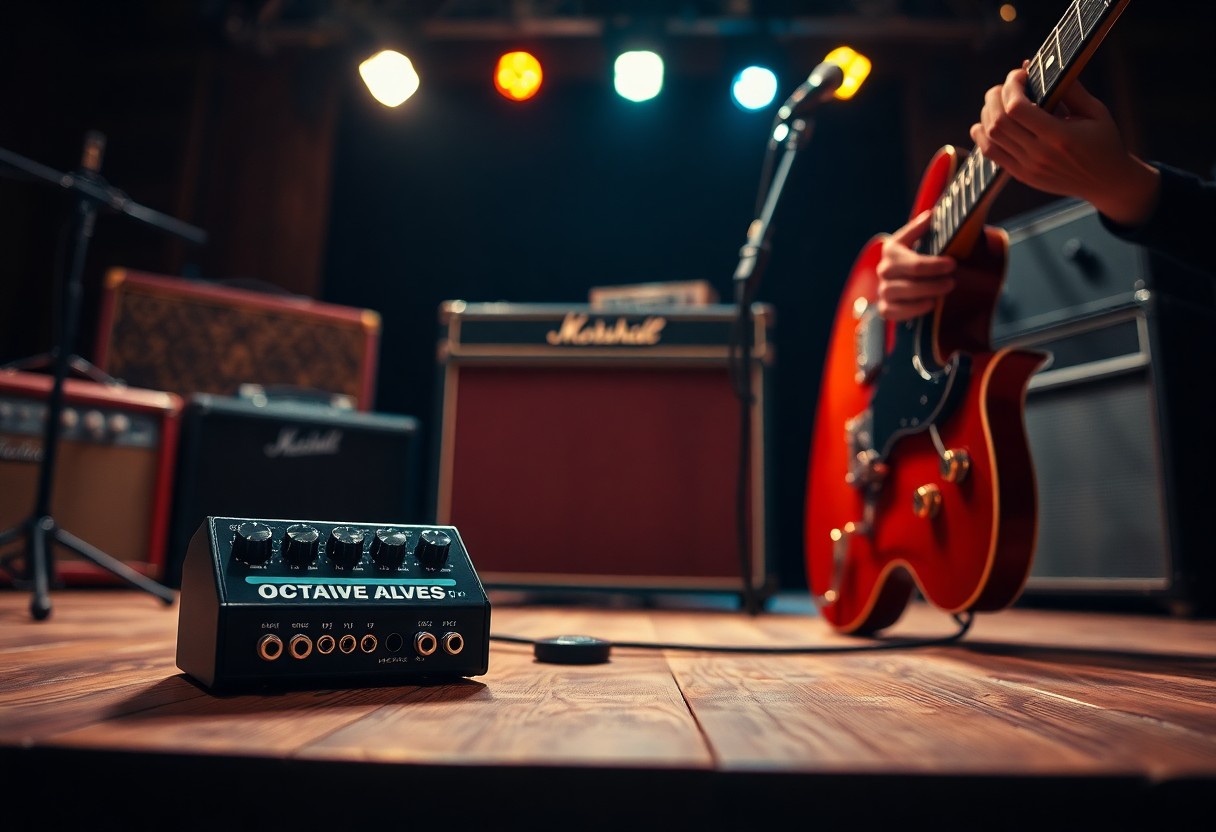
Your sound is a reflection of your individuality, and an octave pedal can play a pivotal role in shaping that unique tonal identity. By manipulating pitch and texture, you can blend octave effects into your riffs or solos, allowing for a rich and layered auditory experience. Experimenting with different settings and combinations will help you discover what resonates with your style, whether that’s a deep growl in a bass-heavy rock context or a bright, airy quality in a clean jazz passage.
Choosing the Right Octave Pedal for Your Style
Selecting an octave pedal tailored to your musical style can elevate your playing significantly. For instance, if you’re into heavy rock or metal, a pedal with a robust tracking capability and multiple octave additions might suit you best. On the other hand, if you lean towards blues or jazz, consider pedals that allow for subtle octave shifts for a warmer sound. Research models like the Boss OC-3 for versatility or the Electro-Harmonix POG for pristine sound quality.
Understanding the Signal Chain and Placement
Knowing where to place your octave pedal in the signal chain makes a significant difference in sound quality. Typically, octave pedals function well near the front of your effects chain, ideally positioned after distortion but before modulation effects. This arrangement helps maintain clarity and definition in your tones, especially if you’re using other pedals to shape your sound.
In practice, placing your octave pedal right after your distortion means that the complex tone generated by your amp can receive the octaves cleanly, preserving the harmonic content. If your octave pedal is placed after modulation effects like chorus or reverb, the added effects can muddy the pitch shift, resulting in a less distinct tone. Try experimenting with various placements to find the sweet spot that works with your signal chain, ensuring that your octave effects remain articulated and enhance your overall sound. Remember to adjust the settings in tandem with your other gear, as this will create a harmonious blend within your rig.
Mastering Techniques for Octave Effects
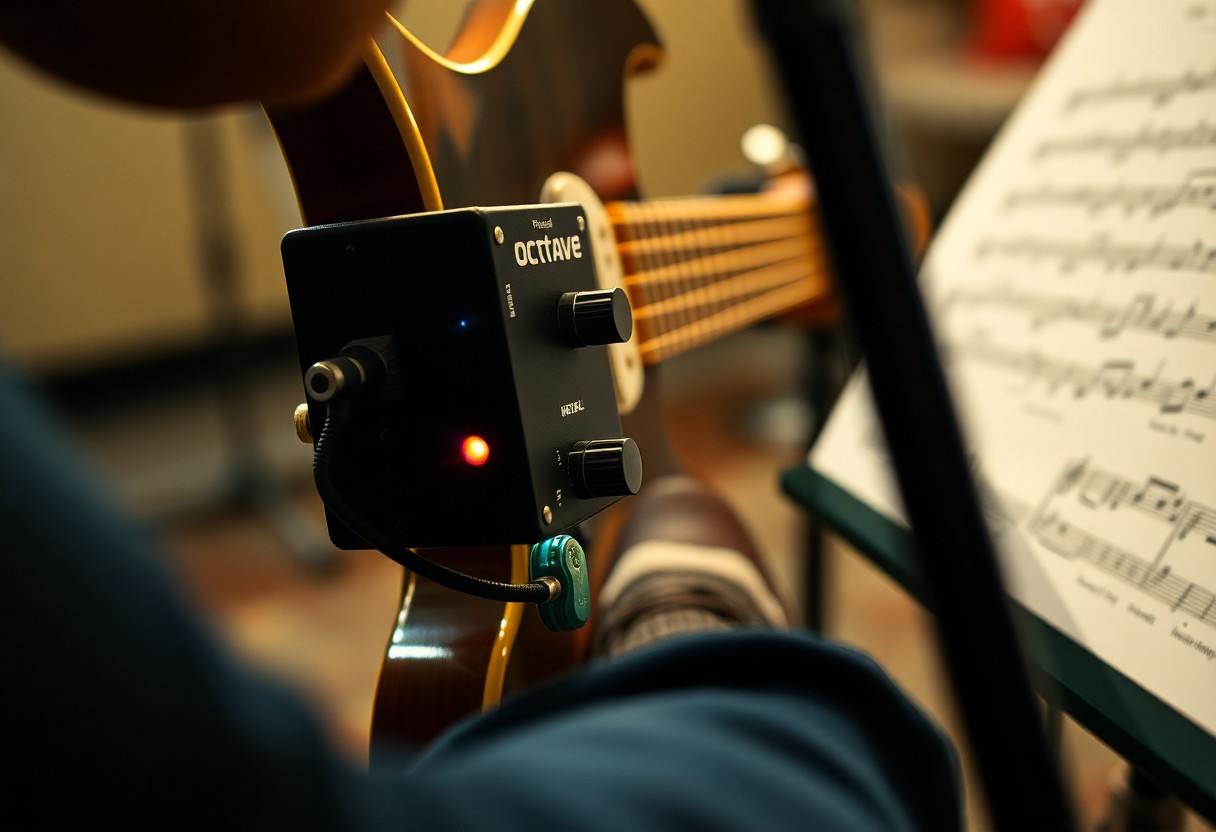
Exploring octave effects elevates your guitar playing to new heights. Mastering these techniques allows you to create powerful sounds that resonate with your musical style. Whether you prefer expressive solos or rich chord progressions, octave pedals can enhance your creativity. Delve into the specifics of using octave pedals to truly understand their potential, as you unlock the ability to layer sounds and manipulate melodies effortlessly.
Using Octave Pedals for Monophonic Melodies
Octave pedals excel at transforming simple, single-note lines into a lush sonic landscape. By connecting the pedal in your signal chain and selecting a higher or lower octave, your monophonic melodies take on a new dimension. Playing an ascending melody while the pedal duplicates your notes can create an evocative, harmonized effect that draws listeners in. This technique is especially effective for solos, allowing your musicality to shine through.
Layering Harmonies: The Power of Octave Doubling
Employing octave doubling adds depth and richness to your playing by layering harmonies that enhance the overall sound. By playing the same riff or melody in different octaves simultaneously, you produce a fuller tone that’s particularly effective in both live and studio settings. This approach works wonders for rhythm guitar parts, where the added harmonic texture can transform a simple progression into a dynamic, engaging performance. Imagine strumming a triad while the octave pedal generates a supporting bass note; this technique provides a robust foundation for any piece.
For instance, consider a C major chord played alongside its octave counterpart. This combination not only fills out the sound but also enriches the harmonic palette, creating lush soundscapes that beautifully complement your primary guitar work. Experimenting with varying degrees of gain and modulation on the octave pedal will let you discover how to articulate your sound uniquely, giving your audience an immersive listening experience that keeps them captivated throughout your performance.

Unlocking the Potential of Dynamic Expression
Dynamic expression transforms how you communicate emotion through your guitar playing. An octave pedal can enhance this aspect by allowing for swell effects, where intricate volume control results in a haunting, ethereal quality. It’s not just about sound; how you control the dynamics gives your performance depth and pushes the boundaries of what you can express, turning simple melodies into rich soundscapes that captivate your audience.
Exploring Volume and Tone Control with an Octave Pedal
Volume and tone control are necessary when using an octave pedal to maximize its effectiveness. Adjusting the pedal’s input and output levels enables you to blend the octave sound seamlessly with your original tone. Exploring different settings allows you to achieve everything from a subtle, airy supplement to a powerful, dominating presence in your mixes, enhancing your overall dynamic range and adding a layer of complexity to your sound.
Utilizing Octave Effects in Different Genres
Octave effects can brilliantly complement a variety of musical genres, from rock and blues to jazz and electronic music. Rock guitarists often use octave pedals to accentuate solos, achieving a fuller sound, while jazz musicians may blend octaves to create harmonious textures and intricate melodies. Additionally, electronic genres frequently employ these effects to add depth and uniqueness to synthesized sounds, often utilizing modulation alongside octave shifts, which helps to craft distinctive soundscapes that captivate listeners.
In rock, you might choose a low octave to thicken your power chords, adding an aggressive punch to your riffs; in contrast, a bright high octave could be used to cut through the mix during solos. For blues, consider sliding between octaves for expressive bent notes, while jazz players can experiment with intricate combinations for improvisation. In electronic music, layering octaves can create atmospheric pads or driving basslines. Don’t hesitate to experiment—the key is using the octave pedal creatively to enhance your style across various genres, making each performance uniquely your own.
Overcoming Common Octave Pedal Pitfalls
Despite their versatility, octave pedals can lead to some common issues that can detract from your overall sound. From muddiness to harshness, these pitfalls can be avoided with a few simple adjustments in your playing technique and settings. With a good understanding of these challenges and how to navigate them, you can make the most of your octave pedal and achieve a clear, professional sound that enhances your music rather than complicates it.
Avoiding Muddy Sounds: Clarity in Octave Applications
Muddy sounds often arise from overlapping frequencies that can blur your tone. To prevent this, focus on using your octave pedal in conjunction with your guitar’s EQ settings. Keeping your tone slightly brighter on your amp can cut through the low-end frequencies created by the octave effect. Using a clean boost can also help maintain clarity and definition in your sound while allowing the octave to shine.
Finding the Balance: When Less is More
Finding the right balance with your octave pedal means recognizing that sometimes, subtlety can be more effective than aggression. Overusing the effect can cause your sound to become congested and lose its uniqueness. Instead, consider dialing back the mix level, perhaps even favoring single-note leads or sparse chord progressions where the octave can add depth without overwhelming your primary tone.
While it may be tempting to crank the octave settings for a pronounced effect, you might find that dialing it back can lead to musical breakthroughs. For example, when playing solos, a softer octave can add dimension without overshadowing your main melody. Even when playing rhythm parts, using just a hint of octave can fill out your tone more effectively than full saturation, allowing for greater expressiveness and a more harmonious interplay with other instruments in the mix.
Creative Ways to Experiment with Octave Sounds
Diving into octave sounds can unlock a treasure trove of creativity. Try layering your guitar tracks by using an octave pedal to create harmonies or thicker textures. For instance, play a simple chord progression while introducing a third or fifth above or below with the pedal. Explore contrasting rhythms, pushing different sounds against each other, or setting your pedal to subtle adjustments that shift both pitch and tone. This variety allows for intricate sonic landscapes that can enhance your songwriting and performance, bringing new dimensions to your music.
Incorporating Octave Pedals into Live Performances
Using octave pedals in live performances breathes fresh life into your set. By combining various effects, you can create dynamic shifts that captivate your audience. Start with a clean sound, then unleash a full, layered effect during solos or pivotal moments within your songs. Consider leveraging an octave pedal for signature riffs to make them stand out, or even for call-and-response sections between you and the rest of your band, driving the audience’s energy sky high.
Unleashing Innovations: Composing with Octave Manipulations
Octave manipulations can revolutionize your composition process, pushing your musical boundaries. Experiment with layering multiple octave effects, creating a harmonious blend that provides an enriched soundscape. You might find that playing a melody in a higher octave with an underlying bass octave not only adds depth but can also inspire new lyrical themes. Don’t hesitate to record these explorations; you may capture unique ideas ranging from haunting melodies to upbeat tracks that resonate with listeners on deeper levels.
Final Words
Now that you understand how to effectively use an octave pedal in your guitar playing, you can explore new sound textures and create richer musical experiences. By adjusting the pedal settings and experimenting with different musical styles, you can enhance your originality and expression. Whether you’re playing alone or with a band, the octave pedal can elevate your sound. Take your time to practice, and don’t hesitate to incorporate it into your routines; it could just lead to your next favorite riff or song. Happy playing!
FAQ: How to Play Guitar with an Octave Pedal
Q: What is an octave pedal and how does it work with a guitar?
A: An octave pedal is an effects device that alters the pitch of your guitar signal, enabling you to play notes that are either one or more octaves higher or lower than the original note. It works by detecting the frequency of the notes being played and then generating additional harmonies that correspond to the specified octave intervals. For guitars, it can create rich, layered sounds and can be used for various genres from rock to jazz, enhancing your playing experience.
Q: How do I set up my octave pedal for optimal sound quality?
A: To achieve the best sound quality from your octave pedal, first ensure that it is connected in the right order within your pedal chain. Typically, you want to place it after distortion or overdrive pedals but before modulation effects like chorus or delay. Adjust the wet/dry mix to your preference, experimenting with the settings to see how much of your original sound you want to blend with the octave effect. Additionally, play around with the pitch settings—most pedals offer options for one or two octaves up or down—to find the tonal balance that suits your style.
Q: Can I use an octave pedal in live performances, and if so, how?
A: Yes, using an octave pedal in live performances can significantly enhance your sound. To effectively incorporate it, make sure you familiarize yourself with the settings during rehearsals. You might use the octave effect during specific sections of songs, such as solos or choruses, to add intensity or depth. Practice transitioning between normal and octave sounds smoothly, and consider using a footswitch or expression pedal for real-time control. Lastly, ensure that your overall tone balances well with the rest of the band, allowing the octave effect to support rather than overpower the live mix.